The most enduring tragedy of the human condition is not suffering itself, but the foundational delusion that life is inherently progressive, that a linear trajectory of improvement, whether through material accumulation, technological mastery, or moral evolution, will ultimately redeem our finitude. This is the siren song of hope, a Promethean fire we clutch against the encroaching dark, yet it is a flame that illuminates only our own desperate fictions. There exists no panacea for the raw, unvarnished fact of human helplessness; no associations, no progress, no luxuries, no grand architectures of education or technology can stanch the primordial wound of existence. These are but elaborate tapestries woven to cloak the abyss, what the philosopher Blaise Pascal identified as our futile attempts to distract from the “misery of man without God,” seeking solace in “the din and hustle” of life.
The recurring, inevitable, and interminable spasms of suffering, the dukkha central to Buddhist thought, are the stark, unanswerable realities, the only authentic truths this monstrous, soul-dead universe proffers. All our manufactured consolations, what Jean-Paul Sartre might call our projects of “bad faith,” are conceived to fill this terrifying void, to silence the deafening quiet of a cosmos indifferent to our yearning. The very design of our terrestrial prison, this “pale blue dot” adrift in an unimaginable vastness, serves only to mock our staggering insignificance. Its sunsets and symphonies, its grand and colourful panorama, are a sublime lure into a necessary forgetfulness, a beautiful lie akin to the “veil of Maya” in Schopenhauer’s philosophy, which obscures the ceaseless, blind striving of the Will beneath. Yet for all its terrible beauty, the universe remains a silent interlocutor, incapable of answering, and has never deigned to answer the painful intrigue of human helplessness, the very absurdity that Albert Camus placed at the heart of his philosophy, where man’s cry for meaning meets “the unreasonable silence of the world.”
Like there is no sovereignty over one’s own inner cosmos, no sure method to command the heart’s desolation or the mind’s melancholic trespass, so too are we utterly powerless before the universe’s blind, mechanistic march. It does not obey a grand design but flows as if cast adrift, a ship without a helm thrown into the existential nothingness, what the Greeks called Kenosis, an emptying out of purpose. We are its insignificant prisoners, caught in a current that has itself slipped from any conceivable control, a notion echoed in the ancient Gnostic belief that our world is the flawed creation of a blind, ignorant demiurge, a cosmos born not of wisdom but of cosmic error. Its trajectory appears not as divine ordinance, but as a series of accidents, a pointless and random unfolding whose absurdity is as fundamentally real as the suffering to which humanity is irrevocably condemned.
All human interventions, our art, our faiths, our relationships and even science are thus revealed as nothing more than varied and symbolic techniques, a desperate pantomime to scale the insurmountable steep of our own helplessness. We are, as the myth of Sisyphus allegorises, forever pushing our boulder up the mountain, only to watch it roll back down; each ascent is a futile attempt to convince ourselves of a possible refuge from happiness. And yet, every summit, real or imagined, reveals only the same vista: the door that opens anew to the relentless pain of being. This is the core of the human paradox: we are creatures defined by a wanting, a lack, what Lacan would describe as the perpetual desire born from our entry into the symbolic order. We are haunted by an absence we can never name, and thus can never fill. We cannot even properly complain, for our misery is the only answer to the question it poses. It is the proof that the answer cannot be.
And as we invent our fragile methods to swim this agonising void of meaninglessness, crafting our little rafts of reason and ritual, the abyssal tide of our own finitude awaits. The awaiting dread of death, what Martin Heidegger termed our “being-toward-death” (Sein-zum-Tode), casts a disgusting pall over all striving. It is the ultimate, cruel rub: all the time you struggled, grasping for a control that was always illusory, for a happiness that remained perpetually out of reach, and then, with indifferent finality, death arrives. It does not simply end you; it performs a more serious violation, it wipes the stain of our existence off, rendering the entire agonising performance a fleeting, meaningless spasm in the silent dark.
It is indeed the worst misery to be condemned to these filthy feeling frames, these fragile vessels of nerve and tissue, cursed with the very consciousness that perceives its own agony. To feel this helplessness, resonate to the core of one’s mortal being, and to know, with Socratic despair, that no amount of knowledge can provide an escape from it, is the fundamental tragedy. The more we struggle against this current, the more we rail against the dying of the light, the more the universe pronounces its sublime indifference, its cosmic callousness. This pervasive boredom and pain are not human inventions; they are the primordial substrate, the “blooming, buzzing confusion” that existed long before we did. Schopenhauer identified this ceaseless, blind striving as the essence of the World-as-Will, a deaf, insatiable force that predates consciousness itself.
Whoever, or whatever, is responsible for this massive wilderness of purposelessness, be it a blind demiurge, a negligent god, or mere chance, must have conceived of a vessel capable of registering its absolute nature. Thus, the human form was engineered: a nexus of suffering made of the very stuff of this indifferent cosmos, designed explicitly to live this despair, to feel this futility, but never to command it. We are, as the existentialists would shudder to admit, thrown into a reality we did not choose, with a nature we cannot alter. The body is thus reduced to a plaything, a temporary, inflatable vessel for this cosmic experiment. Like a balloon, it is filled with the breath of life, with hopes, sensations, and the very awareness that torments it, swelling until the tension of its own existence becomes unbearable, and it bursts. This final, inevitable burst, this annihilation we call death, must be the only means of pleasure for the creator of this mess, the sole catharsis in a meaningless drama. It is the grotesque punchline to a joke we never understood, a spectacle of rupture enjoyed by a silent, unseen audience. In the end, we are not just victims of suffering, but actors in a theatre of cruelty, our brief, swollen lives and our definitive pops serving as the fleeting amusement for a principle that is, as the philosopher E.M. Cioran brutally posited, not merely indifferent, but actively “hostile to man.” Our existence is the jest; our extinction, the laugh.
Thinking is not merely an activity; it is a trauma. It is the mind’s perpetual, sleepless interrogation of a life it never asked for. To think in the solitary confinement of the night, to dissect the fragile architecture of one’s associations: job, family, assignments, the seen and unseen fears that gnaw at the edges of perception, the body and its humiliating frailties, the futile curation of a self through clothes, food, spectacle, the desperate groping for connection in sex and the suffocating grip of caring, is to engage in a grand, delusional pageant. It is a meaningless scratching at a wall that only grows thicker, a process that does not clarify but only further irritates the raw nerve of being. We are, as the Buddhist sages observed, trapped in the “monkey mind,” a chaotic simulator of past regrets and future anxieties, forever chattering to drown out the terrifying silence of the present.
It is excruciating to watch these associations, the very scaffolding of our identity, crumble, to feel the foundations of meaning turn to sand. And in the wake of this collapse, we perform the ultimate act of self-betrayal: we console ourselves with the fiction that it was all part of a celestial design, a divine comedy in which our suffering was a necessary act. This is the final, most insidious layer of the illusion. When this primordial chaos proves itself unanswerable, unconquerable, and indecipherable, the true tragedy crystallises: why must the thinking human, alone in the known universe, bear the full, excruciating weight of this nonsensical pageant? Even if our genesis is a mere cosmological accident, as modern astrophysics suggests, the human chapter within it remains uniquely miserable. To be sure, other creatures are equally subjected to the brutal mechanics of existence; the prey’s terror, the predator’s gnawing hunger. The entire biosphere, as Schopenhauer noted, is a vast theatre of suffering where each organism is both torturer and tormented.
Yet, the human predicament is grotesquely singular. It is not merely that we suffer, but that we comprehend our suffering. We are the universe’s raw nerve, gifted and cursed with the faculties to map the very contours of the abyss that contains us. We perceive the waywardness, feel the oppressive weight of this boring nothingness, and are forced to consciously, agonizingly, surrender to its invincibility. This is the core of the absurd, as defined by Albert Camus: the confrontation between the human’s “wild longing for clarity” and the “unreasonable silence of the world.” There is a deep, almost cosmic injustice in this arrangement: that a being so small and insignificant should be endowed with a capacity for suffering so infinite in its depth and scope.
To suggest that forgetfulness is the answer, whether through hedonistic diversion or dogmatic belief, is to insult the very intelligence that defines the problem. This forced amnesia, be it a biological coping mechanism or a socially and culturally imposed opiate, does not mitigate the existential helplessness; it merely compounds the conundrum with a layer of self-deception. It is to live in what the philosopher Peter Wessel Zapffe termed “isolation,” a deliberate shutting of the eyes to the terrifying reality, which only confirms that the reality is too terrible to behold with open eyes. Thus, we are left in a double bind: to be fully conscious is to be paralysed by despair; to seek escape is to betray the very truth of our condition. We are, as the philosopher Thomas Nagel might conclude, absurd beings, “the product of a process that has no regard for our particular needs,” and our most profound thought is the one that reveals the ultimate futility of thought itself.
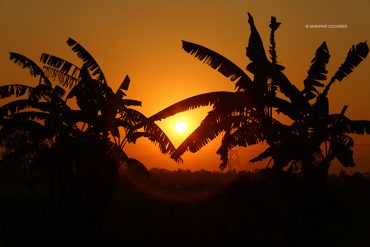
Flowers are not beautiful, nor is the dew shining on their petals in the morning sun. The sky, the moon, the stars, the twilight, the rivulets, birdsong, mountains, and snow, all of it is a magnificent lie. This so-called beauty is not an inherent quality but a grand stage set, meticulously arranged for a single, cruel performance: the mockery of humanity. It is a cosmic balm, a sublime distraction designed to convince the condemned that their long, inevitable journey into humiliation and decay is, in fact, bearable. This is nature not as a mother, but as a Siren, whose enchanting song lures us onto the rocks of continued existence. As the philosopher Arthur Schopenhauer, who saw the world as a manifestation of a blind, striving Will, argued, this aesthetic rapture is a temporary liberation, but one that ultimately returns us to a world of want and suffering. The sunset is not a gift; it is a sedative.
Similarly, it is the height of absurdity to believe that the vast, intricate institutions—religious, political, economic—forged over millennia of toil and conflict, constitute any genuine, transcendent meaning. They are not temples of truth but tools of power, elaborate fictions codified into law and custom. That they may be wielded by one class against another, the rich against the poor, the powerful against the weak, is merely a superficial symptom of their deeper nullity. In reality, these structures are the collective, frantic manifestations of the great, failed human project: the desperate attempt to erect shelters of meaning amid the most chaotic and unforgiving expanse of cosmic helplessness and purposelessness. They are what Albert Camus, in his analysis of the absurd, would identify as our “leap” into false hope, a desperate attempt to escape the confrontation between our need for meaning and the universe’s unreasonable silence. The entire edifice of human civilisation, for all its apparent grandeur, is thus a monument to our inability to face the truth, a truth as stark and barren as the interstellar void that birthed us. We built cathedrals and constitutions not because we found answers, but because we could not endure the questions.
It is truly sad and a fundamental injustice to encounter ancient scriptures, ostensibly ascribed to the architect of this universal mess, which declare humanity to be fashioned from a dirty, insignificant drop of liquid, only to then be admonished—based on this very origin—to suppress all arrogance. This is a cosmic setup of the most vicious kind. Was the human ever consulted about being conjured from this primordial filth? Is he in any way responsible for the blueprint of his own being? If this universe is, as some claim, a curated design, then the dirt, the decay, and the inherent indignity are woven into the very fabric of the design. The flaw is not in the creature, but in the creator; the “dirt” is a feature, not a bug, of the system.
Confronted with this, we are left with a seemingly impossible choice. Should we simply die wondering, paralysed by the sheer scale of our helplessness and a cosmos that offers only an ever-expanding scope for despair? Obviously, the answer is no; such passive surrender is a final victory for the absurd. Yet, it is an equal mockery to consciously and with conviction cling to the messy, discursive, and disoriented systems of belief that were invented to explain the very chaos they perpetuate.
In this stark landscape, a new hierarchy of responses emerges. To actively curse this meaninglessness, to rail against the silent heavens with the full force of our betrayed intelligence, is a more authentic and honourable stance than the cowardice of believing in a purpose where none is evident. This curse is not nihilism; it is a form of lucid rebellion. It is the recognition, as Jean-Paul Sartre might suggest, that we are “condemned to be free” in a universe that provides no guidelines, and our anger is the first honest reaction to that sentence. To declare, with conviction, that this is all a bloody accidental somewhere, is to finally clear the deck of comforting lies. It is to stare into the void, not with hope, but with the defiant clarity that our despair is, at least, our own, the one truthful response to a reality that is, from its very first principle, an affront.
Nothing can solve this, not even an apocalypse. For an apocalypse is not an answer; it is merely a final, dramatic symptom of the same incurable condition. The cosmos itself seems to have been born not from a divine word, but from a yawning boredom, a primordial purposelessness that pre-exists and will outlast all things. This same barren ontology translates inexorably into human affairs, where the human will, that fleeting spark of defiance, is revealed as the ultimate mockery, a ghost in a machine that was never wired for freedom, only for the illusion of it.
This world, therefore, by its very metaphysical constitution, can never be a better place. It can only be rearranged. Every human soul is, from its first cry, condemned to perish in the same fundamental helplessness, draped in varying costumes of distraction. No technology, no revolution, no epoch-making philosophy can alter the foundational sentence. There is no better for humanity in any age, only varying degrees of forgetfulness in the face of the same unanswerable truth. As the philosopher Emil Cioran concluded, “The world is a chaos of matter and of consciousness, which nothing can set right… It is not even worth the trouble of condemning.” We are not flawed beings in a perfectible system; we are tragically conscious beings trapped in a system whose only inherent quality is flaw.
-30-
Copyright©Madras Courier, All Rights Reserved. You may share using our article tools. Please don't cut articles from madrascourier.com and redistribute by email, post to the web, mobile phone or social media.Please send in your feed back and comments to [email protected]