At moments of great geopolitical rupture, the United Nations—that ambitious mid-twentieth-century experiment in institutional liberalism—finds itself subjected to a ritual of doubt. Each new war reopens the same question: what, precisely, is the organisation for, if not to prevent this?
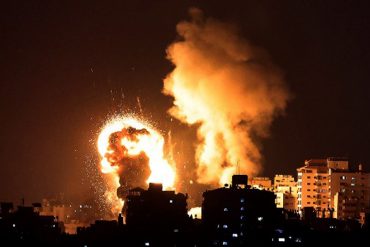
In the present context, when the United States and Israel attacked Iran, the UN’s capacity to restrain escalation or bring adversaries to the negotiating table seems limited. Its sessions are confined to carefully calibrated statements rather than to tangible action.
Predictably, this has revived a cyclical critique of institutional fatigue, diminishing utility, procedural inertia, and obsolescence. But describing the UN as an ineffective organisation overlooks the truth: the institution’s limitations are, in large part, reflections of the priorities and contradictions of its most powerful members, particularly those who occupy permanent seats on the Security Council.
The UN’s mandate rests on two interlocking pillars. First, maintenance of international peace and security, entrusted to the Security Council; second, to provide a forum—through the General Assembly—where states, irrespective of size or power, articulate grievances, assert legitimacy, and participate in shared diplomacy. This dual architecture was intended to balance authority with representation, coercive capacity with deliberative legitimacy.
Beyond these visible functions lies a quieter, diffuse network of activity. The UN’s affiliated bodies engage in slow, unglamorous work of coordination and standard-setting, shaping norms that govern everything from public health to telecommunications, from environmental protection to cultural preservation. Though these efforts rarely command headlines, they constitute a global infrastructure through which states exchange knowledge, negotiate technical standards, and, occasionally, build trust.
However, it is in the Security Council, which bears the clearest responsibility for questions of war and peace, that the system’s tensions are most acute. The five permanent members—China, France, Russia, the United Kingdom, and the United States—retain veto power, a procedural inheritance designed to ensure that the post-war order would not fracture along the fault lines of great-power rivalry. In practice, this privilege has often translated into paralysis, as competing strategic interests override collective decision-making.
Even governments that publicly disparage multilateralism continue to engage the UN as a stage upon which legitimacy is performed. In the United States, figures such as Donald Trump have criticised the organisation’s effectiveness, withdrawing from initiatives like the UN Framework Convention on Climate Change and the UN Human Rights Council, while curtailing support for agencies such as UNRWA. However, the symbolic and procedural utility of the UN endures; its chambers remain a site where narratives are constructed, contested, and, at times, codified into international consent—particularly when the use of force is at issue.
The shaping of such narratives can span decades. Benjamin Netanyahu, for instance, has long framed Iran’s nuclear ambitions as an existential threat, advancing a discourse that positions Tehran as a violator of international norms despite its status as a signatory to the Nuclear Non-Proliferation Treaty. Israel, notably, remains outside that treaty framework, maintaining a long-standing policy of nuclear ambiguity that complicates the moral symmetry often invoked in such debates.
Historical precedent underscores how legitimacy can be mobilised and misused. In 2003, the United States presented its case for the invasion of Iraq before the Security Council, with Secretary of State Colin Powell asserting that claims regarding weapons of mass destruction were grounded in reliable intelligence. Subsequent inspections failed to substantiate these assertions, and Powell later expressed regret. Nonetheless, the invasion proceeded, supported by coalition partners including the United Kingdom, illustrating the limits of institutional verification when confronted with determined state action.
The UN Charter delineates the lawful use of force, privileges collective authorisation and self-defence, and discourages unilateral intervention. Its framework envisions a system in which disputes are mediated through diplomatic channels, overseen by the Security Council, and, where necessary, adjudicated by institutions such as the International Court of Justice. But such mechanisms depend on compliance; when states circumvent or disregard them, the architecture remains intact but functionally diminished.
In the current context, the legal justification for the US-Israel’s ‘military action’ on Iran has been widely contested. The invocation of an imminent threat has been drummed up through political rhetoric and strategic framing; there was no substantiation of a clear, immediate danger. The absence of Security Council authorisation, coupled with the lack of a direct attack, places the intervention in a contested legal space.
The Council, meanwhile, struggles to act as a mediator when its permanent members are entangled in the conflicts it is considering. The United States’ direct involvement complicates its role, while Russia’s involvement in Ukraine and China’s posture in its regional sphere further erode perceptions of neutrality. The expectation that such actors might seamlessly transition from participants to peacemakers reflects a tension at the heart of the system.
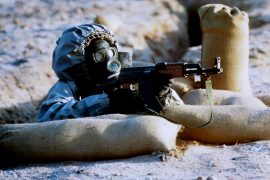
This tension extends to the political economy of conflict. The permanent members collectively account for a substantial share of global defence exports, and their strategic interests are often intertwined with the dynamics of militarisation. Historically, each has participated in or instigated conflicts that have reshaped regions: the Suez Crisis of 1956, involving France and the United Kingdom; Russia’s prolonged engagement in Ukraine; and the United States’ interventions in Afghanistan, Iraq, and Libya. These episodes reveal patterns in which geopolitical ambition, resource considerations, and ideological framing converge, often with destabilising consequences for the states involved.
Procedural developments within the Security Council further illustrate the interplay of power and narrative. During the early phase of the U.S.-Israel war on Iran, when the United States held the Council presidency, a resolution was advanced that emphasised Iranian actions in the Gulf, omitting broader contextual factors.
By April, under Bahrain’s presidency, the tone shifted, incorporating regional consultations and proposing collective defence measures for the Strait of Hormuz. This initiative, however, encountered vetoes from Russia and China, which characterised it as imbalanced. The episode underscores not only the persistence of veto politics but also the fluidity of diplomatic framing.
The veto power is often criticised as the central impediment to effective action, but its existence reflects a deeper reality: the system was designed to accommodate, rather than eliminate, great-power rivalry. During the Cold War, the United States and the Soviet Union employed vetoes to block initiatives perceived as threatening to their respective spheres of influence. The pattern has endured, suggesting that the issue lies less in the mechanism than in its strategic deployment.
Proposals that call for reform frequently return to questions of representation and accountability. Expanding the Security Council to include emerging powers, or introducing procedural thresholds to override vetoes in cases of acute humanitarian or security concern, are among the ideas periodically advanced. Such changes, however, would require the consent of the actors whose privileges they seek to recalibrate; it’s a paradox that has long constrained institutional evolution.
Recent years have seen a resurgence of interstate conflict and a normalisation of unilateral force, trends that complicate the UN’s foundational premise of collective security. Economic variables—energy markets, commodity prices, and their geopolitical reverberations—have become increasingly entangled with decisions of war and peace. At the same time, major powers such as Russia and China appear poised to navigate, and potentially reshape, an international order they regard as in flux.
In this landscape, the call for reform is less an abstract ideal than a pragmatic response to structural imbalance. Middle and emerging powers, whose interests are often unrepresented within the current framework, may find an impetus to press for change. Whether such efforts can translate into substantive transformation remains uncertain. However, the alternative—a continuation of the existing equilibrium—suggests a system in which the promise of collective security persists, even as its realisation remains elusive.
-30-
Copyright©Madras Courier, All Rights Reserved. You may share using our article tools. Please don't cut articles from madrascourier.com and redistribute by email, post to the web, mobile phone or social media.Please send in your feed back and comments to editor@madrascourier.com