There is a kind of language that societies once treated as an alarm bell—a signal that something had gone terribly wrong. It was the language of extermination, of ethnic cleansing, of annihilation. Such words were not merely rhetorical but historical warnings, echoes of catastrophes whose consequences are etched into cemeteries, archives, and collective memory.
In recent years, however, this vocabulary has slipped back into political discourse. The language of mass destruction—directed at people—has begun to circulate again in speeches, interviews, parliamentary chants, and social media feeds, often dressed in the garb of patriotism, sovereignty, or security. When such language appears today, it rarely arrives with a sense of shame. Instead, it is delivered with confidence, even applause.
The normalisation of this rhetoric is not confined to one country, ideology, or faith. Across political and religious divides, leaders have begun to speak about enemies—sometimes entire populations—in terms that reduce them to obstacles to be eliminated.
It is an old pattern with a new velocity. Modern technology ensures that words once confined to a rally or a parliament now ricochet instantly across millions of screens. Algorithms amplify outrage and aggression, rewarding the most incendiary formulations with the widest reach. The result is a polarisation, an acceleration of hate, that shifts the boundaries of what is considered acceptable speech.
One can hear this drift in the blunt militaristic rhetoric emerging from Washington. In remarks about the conflict involving the United States, Israel, and Iran, the U.S. “Secretary of War,’ Pete Hegseth, has spoken with a candour that borders on extermination. “This is not a fair fight,” he said, emphasising that American capabilities were “overwhelming” compared to Iran’s. “That’s on purpose.”
Acknowledging that American troops would return home in coffins, he added that such losses would not weaken resolve but “stiffen our spine.” The war, he suggested, would continue until the enemy was brought “to their knees.” None of these words explicitly calls for genocide, yet their cumulative logic frames war not as a tragic last resort but as a demonstration of irresistible force, a process that ends only when the opponent is exterminated. The moral distance between defeating an adversary and annihilating him can shrink quickly once such language becomes habitual.
Political rhetoric in the United States, especially the kind that glorifies extermination and annihilation, has grown more permissive of such absolutism over the past decade. Donald Trump, whose presidency normalised a style of political speech built on humiliation and hyperbole, frequently described adversaries in sweeping, existential terms.
The language of total victory and unconditional surrender, once largely confined to twentieth-century world wars, has crept back into political discourse. When leaders speak as though conflict must end with one side completely broken, diplomacy begins to look like weakness and compromise like betrayal. Words narrow the political imagination long before bombs narrow the physical landscape.
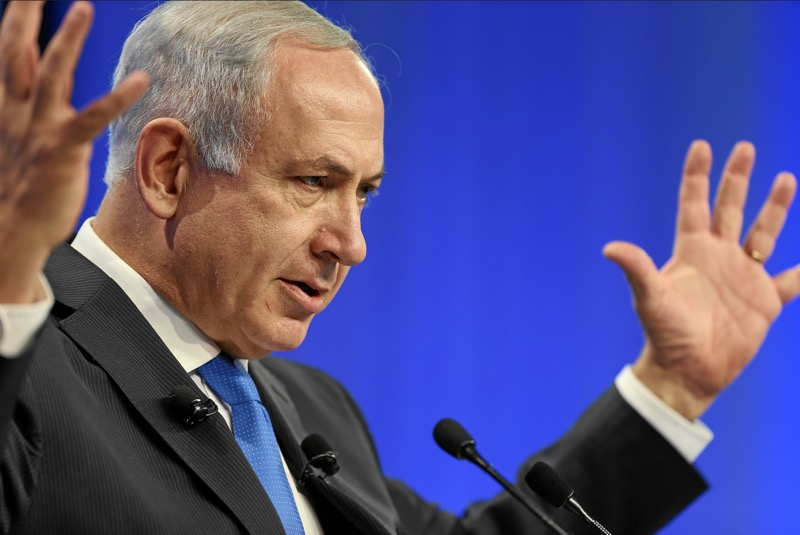
Nowhere is the power of language more visible than when it draws on sacred texts. Religious references carry a resonance that ordinary rhetoric cannot match; they invoke cosmic authority, framing political conflict as a moral duty stretching across centuries. In early March, Israeli Prime Minister Benjamin Netanyahu invoked a phrase from the Torah: “Remember what Amalek did to you. We remember and we act.” For those unfamiliar with the reference, the passage concerns an ancient enemy of the Israelites whom God, according to the biblical narrative, commands King Saul to destroy utterly—“Kill both man and woman, child and baby.”
The invocation of Amalek has long been controversial within Israeli political discourse precisely because of its implications. In the Bible, it represents a command not merely to defeat an enemy but to erase a people. When such language enters modern politics, it functions as symbolic permission for total extermination.
For years, Israeli officials have generally avoided emphasising the reference in international settings, aware that Western audiences might recoil at the suggestion of scripturally sanctioned extermination. Yet in moments of intense conflict, the metaphor returns, a coded phrase that many listeners understand as a call for uncompromising destruction.
Netanyahu has used this language repeatedly. Shortly after Israel launched its campaign in Gaza, he spoke of eradicating “this evil from the world,” describing Israeli soldiers as part of a heroic chain stretching back three thousand years to biblical warriors. “Remember what Amalek did to you,” he said. “We remember and we fight.” The war, he declared, would continue until the “murderous enemy” was destroyed above ground and below ground. “Never again,” he added, transforming a phrase associated with the Holocaust, as a justification for relentless military action.
These statements illustrate how quickly the language of existential struggle can blur moral distinctions. A government that frames an entire people as evil leaves little room for the possibility that they include civilians, children, or political opponents rather than metaphysical demons. Once a conflict is cast in religious terms, the vocabulary of compromise begins to sound almost sacrilegious.
If the rhetoric of annihilation appears in Israeli and American discourse, it is no less present in Iran. For decades, the Islamic Republic has elevated the slogan “Death to America, death to Israel” into a ritual of political identity. The chant, repeated in parliament and at public demonstrations, is both a symbolic gesture and a literal incantation of hostility.
Iran’s Supreme Leader Ali Khamenei has defended it explicitly, insisting that the slogan does not create enmity but merely expresses an existing conflict rooted in what he calls the “imperialist system” of the United States. In other words, the chant is presented as a statement of principle rather than a call to violence.
But the distinction is a convenient fiction. Words that call for death, repeated often enough, begin to sound less like metaphors and more like expectations. When Iranian lawmakers chant “Death to America” inside the country’s parliament, they are not merely venting anger at foreign policy; they are rehearsing a worldview in which entire nations are legitimate targets of annihilation. The language collapses distinctions between governments and citizens, between political opposition and human life.
What is striking about these examples is their symmetry. Leaders who otherwise regard each other as mortal enemies increasingly mirror one another’s rhetoric. Each side speaks of the other not as a rival state but as an existential evil. They frame conflict as a test of survival in which victory requires the extermination of the opponent. In such an environment, escalation becomes inevitable.
If the political opponent is presented as barbaric, subhuman, or satanic, restraint appears not as morality but as cowardice.
History teaches that mass violence rarely begins with bullets. It begins with metaphors that strip the opponent of humanity. The twentieth century offered a grim tutorial in this progression: Armenians described as traitors, Jews as vermin, Tutsis as cockroaches. The pattern is depressingly familiar. First comes the claim that the enemy is less than human. Then comes the suggestion that eliminating them would purify or protect the nation. Finally, the extermination becomes a necessity.
What has changed in the twenty-first century is the speed at which such rhetoric spreads. Digital platforms reward statements that provoke anger or fear, pushing them to the top of feeds and timelines. A speech that once might have reached a few thousand listeners can now reach tens of millions within hours. Algorithms function as accelerants, amplifying the most aggressive language because it generates engagement.
This technological amplification does not absolve political leaders of responsibility. On the contrary, it heightens their obligation to speak carefully. Words that once might have been dismissed as overheated rhetoric now circulate globally, shaping perceptions far beyond the immediate audience. A biblical reference in Jerusalem, a chant in Tehran, or a declaration of overwhelming force in Washington can ripple outward, reinforcing the sense that the world is sliding toward an era in which annihilation is once again thinkable.
The danger is that such words inspire violence. It also leads to the gradual erosion of the moral vocabulary itself. When the language of extermination becomes routine, societies lose the linguistic tools needed to resist it. Terms like “human rights,” “dignity,” and “civilian protection” begin to sound naive against the drumbeat of existential conflict. Political debate shrinks to a binary choice between total victory and total defeat.
It is essential to reverse this trend. We must challenge and reject rhetoric that treats human life as expendable. Calling attention to dangerous language is not an exercise in pedantry; it is an act of civic defence. Democracies depend on the ability to argue fiercely without erasing the humanity of those on the other side.
None of this requires ignoring the reality of war or the brutality of state violence. But there remains a profound difference between defence and celebrating the extermination of an opponent. The first is tragic; the second is corrosive. A society that loses the ability to distinguish between them risks becoming what it fears.
Language does not merely describe the world. It shapes the boundaries of what people believe is possible. When leaders invoke ancient commands to exterminate enemies, when lawmakers chant for the death of entire nations, when officials speak casually about bringing adversaries to their knees, they are not just expressing anger or resolve. They are expanding the moral space in which mass violence can occur.
The lesson of the last century should have been clear: words matter long before weapons do. The vocabulary of extermination is not a harmless exaggeration. It is the first rehearsal of catastrophe. And once it becomes normal, history suggests that the next steps are rarely far behind.
-30-
Copyright©Madras Courier, All Rights Reserved. You may share using our article tools. Please don't cut articles from madrascourier.com and redistribute by email, post to the web, mobile phone or social media.Please send in your feed back and comments to [email protected]