
To an average person, innovation is a mystifying word. Politicians and industry leaders use it often because it conveys a vague promise of science and technology-driven economic prosperity and social well-being. It is not surprising that peddling innovation as a miracle waiting to happen has a special appeal in times when the hard socio-economic problems refuse to go away.
At the inauguration of “Bharat Innovates 2026” in France, the Prime Minister of India said, “Innovation is in India’s DNA.” One does not know what he meant by clubbing Indian DNA with innovation. Was he claiming once again that plastic surgery was invented 2000 years ago in India, like he did soon after the NDA-1 came to power?
Given his views on history and science, it is unlikely he was referring to the DNA-based scientific evidence for the Indian ancestry of fascinating diversity, which shows that most Indians derive ancestry from three ancestral groups related to ancient Iranian farmers, Eurasian Steppe pastoralists, and South Asian hunter-gatherers.
The event in France followed the AI impact summit held in Delhi. “The Economist” described that event as a giant trade show where the word “safety” was replaced by “impact” in the title. A full-page, colour advertisement by Google, featuring a picture of the Prime Minister shaking hands with Google’s CEO, Mr Sundar Pichai, appeared during the event. It mentioned a “new era of innovation” but did not say whether the “new era” is already upon us or yet to start, or whether it would be delivered by Google’s Gemini, one of the many large language model (LLM)- based AIs. If the latter, the fact that it is impossible to make LLMs fully secure against hacks (with frightening consequences) was not mentioned at all.
Be that as it may, the “new era of innovation” did not start well for Google, Meta or Amazon. Google was ordered to pay a fine of one billion dollars by the European Union regulators for undercutting competition. For misleading users on platform safety, Meta has been ordered to pay a $567 million penalty on top of a $375 million jury fine, and is facing thousands of cases. In 2025, Amazon settled with America’s Federal Trade Commission by paying a $ 2.5 billion fine for what has been called “predatory design.”
Thinking it over, one realises that these issues share a common thread that goes back a long way. After all, fifteen years ago the apathy of the private sector in India to invest in long-term research and development (R&D) had prompted one to say “talking about innovation may be the flavour of the month, what it takes to make it happen is either not understood or willingly glossed over.”
The background of that statement in 2010 was an investment proposal of rupees 10,000 crore for an innovation park in Mumbai. The stink of crony capitalism—the nexus between politicians and businessmen—was strong enough to merit suspicion about the plan. Corruption issues such as those implicit in the 2G scam, and efforts by lobbyists and corporates working for business interests to influence ministerial appointments in India, were all over the news.
In another article around the time of the centenary celebration of the Indian Science Congress in 2013, the importance of education and a change in ideological perspective had been pointed out: “the teaching and doing of science need to be innovation focussed,” and “a mechanism must be found by which Indian industry is forced and tempted to think long term…the dialectics of ‘licence raj’ and ‘crony capitalism’ cannot produce incremental innovations.”
Both these articles were written during the UPA regime. Soon after the NDA came to power, the new PM, in his speech at the Indian Science Congress of 2015, used the word innovation more than 10 times. However, the basic issues related to the absence of innovation remained unaddressed, as is evident from a recent article in “Times of India” (TOI) with the caption “We’ll innovate when we believe.”
According to this article, Indian corporate houses are adept at unproductive entrepreneurship, in which resources are used to generate profit through “rent seeking, regulatory tricks, and zero-sum activities”. The sudden loss of interest by “India’s most valuable company” in developing solid-state battery (SSB) technology is cited as an example. This, according to the author of the article, is due to a “deep cultural problem.”
A fuller appreciation of the ideological roots of the cultural problem requires a bird’s-eye view of innovation as an economic abstraction. Innovation is a multi-stage process of successfully implementing a new idea, method, or device, in short, an invention, to create measurable value. The basic ideological question is whether that value is measured entirely by profit or whether society must have some say in how it is created and shared.
Joseph Schumpeter called the big technological advances of the late 19th and early 20th century, innovations, or more famously “creative destructions”. Profit from those innovations, according to Schumpeter, was a reward sanctioned by society for entrepreneurs who lifted the economy to a higher plane. In Schumpeter’s words, those innovations were driven by “competition…which strikes not at the margins of the profits…but at their foundations and their very lives.” It is interesting to note that because they acted without the moral principles of the common people, men whom Schumpeter called entrepreneurs, have also been called “Robber Barons.”
The character of industrial innovations changed fundamentally over the next 100 years. First, an ecosystem of innovation—a complex network of educational, legal, and technical institutions—emerged. The basic purpose of the ecosystem was twofold: to ensure fair competition, respect for intellectual property rights, control of monopolies, etc., but also to ensure that, in the name of societal benefits, laws were not broken, risks associated with a new product or technology were adequately addressed, and no hidden damages were inflicted on society.
The second change was that industrial innovations became increasingly incremental and routinised. Rather than aiming at the “foundations and…very lives” of competitors, industrial innovations aimed to cut down the cost of manufacture of a product or a service, or improve these marginally by resorting to inter-firm collaboration if and when necessary. In the process, market valuation rather than long-term innovations became the focus of all “innovative” efforts.
The third and most important change was that big inventions that required a well-educated workforce, long-term R&D activities, and carried considerable risks of failure, came overwhelmingly from the non-profit environments of academic and Government laboratories. Well-known examples include computers, the internet, DNA forensics, and mRNA- or adenovirus-based vaccines against COVID. The two technologies mentioned earlier, SSB and AI, are also no exception. Both had their origins in academic research that won the Nobel Prizes in chemistry and physics in 2023 and 2024, respectively. While enormous amounts of profits were made from all these, very little of it came back to the State, or more precisely, for societal well-being.
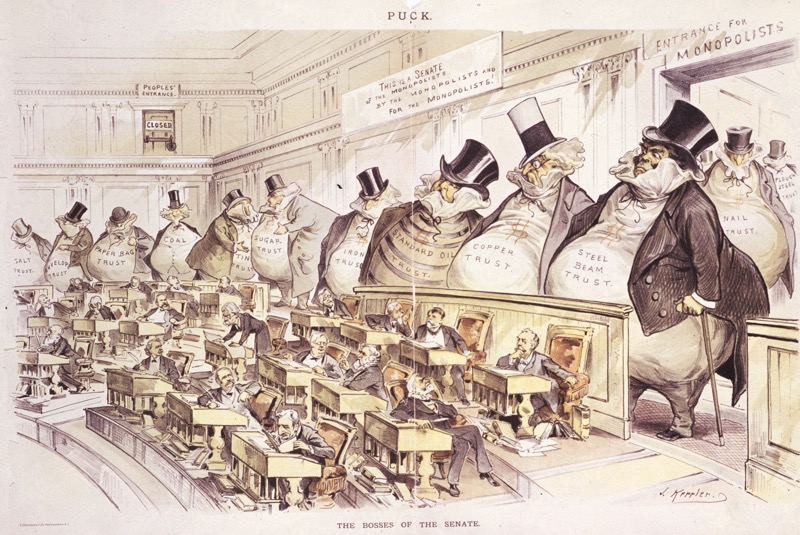
These three fundamental changes and their cumulative effect on the economy led William Baumol, a renowned economist and author of the book “The Free-Market Innovation Machine: The Growth Miracle of Capitalism,” to say “Capitalism Is Unique Not in Invention but in Innovation”. Baumol’s book was published in 2002, six years before the historic Wall Street crash, and ten years before another book, “Crony Capitalism in America 2008-2012”, was published. His analysis of capitalism’s innovativeness proved prophetic, though probably not in the way he had imagined. It turned out that capitalism’s innovativeness had converted the culture of “incremental innovation” into a culture of crony capitalism (CC).
The crash of 2008 exposed the longstanding Wall Street–Washington partnership. Many of the “innovative” financial products based on market-defined value turned out to be fictitious, if not downright fraudulent. Subsequently, it also came to light that, to maximise profit, many companies that boast of research and development (R&D)-driven innovations had manipulated, fabricated and suppressed scientific data and evidence, thereby harming society.
The phrase CC was invented in the early 1980s by George Taber, a former business editor of Time magazine, to describe the economy of the Philippines. What was incipient in the economies of many developing countries in the ’70s and ’80s became ubiquitous over the next few decades. Writing in 2015, Taber said “Philippine economy…is still stuck in a morass of crony capitalism…and a similar cosy relationship between big business and government politicians has…developed in the United States” (italics added). Last year, in an opinion piece titled “Crony capitalism is coming to America,” the Nobel laureate economist Paul Krugman echoed the same sentiment.
Books and articles on CC in India have also been written, but none of them focuses exclusively on CC’s impact on innovation. The appeal of CC to an entrepreneur as a strategy for quick profit is easy to understand. Anentrepreneur is neither an innovator nor an inventor. His interest in an invention or innovation begins only when it can be turned into a profit. That motivation is what Keynes called “animal spirit”- the psychological urge to compete for profit. Influencing politicians and regulators to kill competition or to bypass regulations takes less time and is less expensive and riskier than implementing incremental or long-term science-driven innovations.
In India, the innovativeness of capitalism has gone one step further. It has turned the license raj into a billionaire raj and, to use a euphemism attributed to the founder of the most valuable company in India, added two more “C” s to “Crony”, viz. “Chamchas and Chelas.”
Prosperity, instead of trickling down, cascaded up to the billionaires with the help of the political class. From 2009 to 2023, the number of dollar billionaires in India increased from 24 to about 200. The approximate average assets of the Members of the Indian Parliament grew at the astounding rate of 15.6%, from 5 crores to about 38 crores, while the average growth rate of the Indian economy was 6.3%.
Spectacular would be a grossly inadequate adjective to describe the growth of the Adani group of companies in India over the last 20 years. From 2005-2009 and 2009-2025, the market capitalisation of the group of companies has gone up by about 5 and 15 times, respectively. It is not surprising that the relationship between a powerful individual and Gautam Adani has been described, with justification and verifiable documentation, as “crony capitalism on a scale unprecedented in India’s history.”
Innovation in India will only happen if there is a change in ideology and in the political power that ensures the State unapologetically assumes its entrepreneurial role.
-30-
Copyright©Madras Courier, All Rights Reserved. You may share using our article tools. Please don't cut articles from madrascourier.com and redistribute by email, post to the web, mobile phone or social media.Please send in your feed back and comments to [email protected]