If elections are reflections of democracy, the recent developments surrounding the Special Intensive Revision (SIR) and voter roll irregularities reveal what that reflection has become—fractured, distorted, and selectively erased. The moral anxieties raised earlier were not abstract fears; they are now materialised through bureaucratic precision and digital silence.
What was once a question of electoral ethics has turned into a crisis of representation. The cornerstone of Indian democracy—a free and fair electoral process built on participatory, accurate, and transparent voter rolls—is now under severe strain.
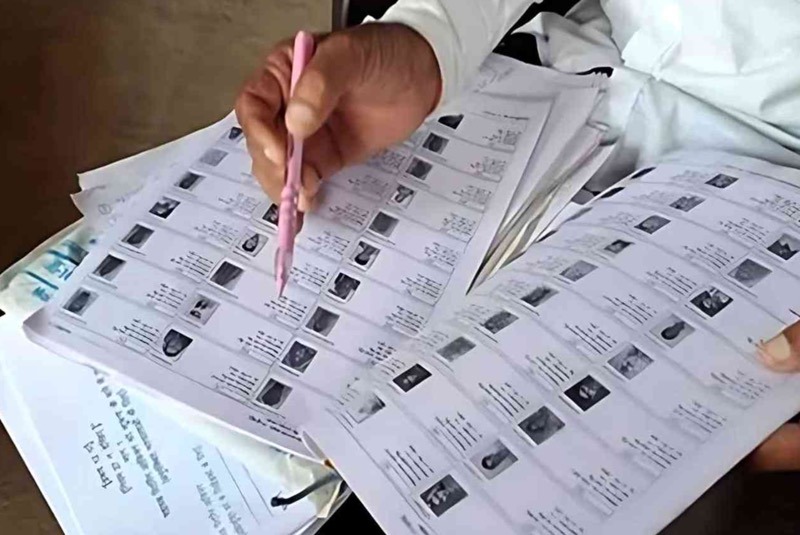
Two disturbing trends have emerged: the inclusion of ineligible voters and the exclusion of eligible ones. The former is evident from incidents exposed in Karnataka’s Mahadevapura constituency and the recent Haryana Files, where inflated, duplicate, or fraudulent entries distorted the will of the people. The latter is increasingly visible in the Aland constituency scandal and SIR drives, ostensibly intended to “purify” electoral rolls, but now functioning as potent political instruments of voter suppression and exclusion.
The need for accurate and transparent voter rolls cannot be denied. However, paradoxically, the ongoing exercise has failed to ensure precision and instead deepens existing fault lines.
Bihar’s SIR has drawn nationwide attention for its timing and its cumbersome, opaque process. Coming at a politically sensitive juncture, it threatens to alter the state’s demographic and electoral equations.
Over 68 lakh names have been deleted, and the total number of electors is around 80 lakh (about 10 per cent) lower than the estimated adult population. The gender ratio has also declined—from 907 to 892 in the final roll.
Disturbingly, similar SIR drives have been announced in 12 other states and union territories, including Tamil Nadu, Kerala, West Bengal, and Puducherry—states headed toward Assembly elections in 2026. Opposition parties and several state governments have objected, citing undue haste, documentation hurdles, and the impracticality of achieving accuracy within the limited timeframe.
The process has caused widespread confusion among the public, prompting the Tamil Nadu government to file a petition in the Supreme Court in protest. Behind the bureaucratic language of “revision” lies a deeper political intent.
Shocking irregularities have been unravelled in Karnataka’s Mahadevapura constituency, and a scandal has surfaced in Aland (Kalaburagi district). In February 2023, 5,994 voter names were targeted for deletion using fraudulent Form 7 applications.
A recent investigation unearthed that a call centre-like firm was allegedly paid ₹80 per application to execute these deletions. The election in question was won by a margin of just 10,348 votes—barely twice the number of attempted deletions.
The Leader of Opposition, Rahul Gandhi, has alleged that CID officials sought critical technical data 18 times in writing, yet received no response from the Election Commission. This silence raises serious questions about institutional integrity and transparency. This mirrors the Mahadevapura case, where, instead of addressing the issue, the Election Commission issued an ultimatum to the Leader of the Opposition.
The recently uncovered irregularities in Haryana’s electoral rolls are staggering. The state’s voter list contained 25.4 lakh “vote chori” out of roughly two crore voters. This included 5.2 lakh duplicate voters, 93,000 invalid addresses, and 19.2 lakh bulk voters. In some cases, the same photograph was repeated across hundreds of entries—even a Brazilian model’s stock image appeared 22 times under different names.
Between the 2024 Lok Sabha and Assembly elections, nearly 3.5 lakh voters were deleted from Haryana’s rolls. When one-eighth of a state’s electorate is tainted by duplication or vote chori, the very principle of one person, one vote, one value stands shattered, especially when the margin of victory in Haryana was just 22,779 votes, and the total vote difference was merely 1.18 lakh.
The Election Commission of India, once the pride of India’s democratic framework, now faces a credibility crisis. Its reluctance to share data from Forms 6 and 7, the lack of transparency in its digital operations, and the refusal to share machine-readable voter rolls or make CCTV footage publicly available raise serious doubts about its institutional neutrality.
The pattern emerging across states indicates a systematic undermining of electoral integrity. Political justice is being paralysed in the name of procedural cleansing. The SIR, in its current form, has become a tool of voter suppression rather than correction.
The narrative used by the ruling regime to justify these SIR drives—that of infiltration and illegal immigration—has long been a conventional far-right trope deployed across the world. From Donald Trump’s anti-immigrant rhetoric in the United States to similar movements across Europe, such narratives are employed to deflect attention from governance failures and polarise societies along ethnic and communal lines. In India, this rhetoric is now being institutionalised through these drives, transforming administrative revision into an ideological exercise.
Most dangerously, the SIR conflates citizenship verification with voter roll revision—a conflation with no constitutional basis. In effect, it functions as a de facto NRC–CAA, transforming an electoral exercise into an instrument of exclusion. This conflation infringes upon the fundamental right to vote, which is a democratic guarantee under the Constitution.
By forcing citizens to “prove” their eligibility themselves to remain on the voter rolls, the State abdicates its constitutional duty to enhance political participation. The ongoing developments are in sync with earlier exclusionary exercises like the CAA and NRC, which disproportionately targeted marginalised communities. What appears administrative thus becomes deeply political—redefining who counts as a citizen and who does not.
When the machinery of elections becomes exclusionary, political justice—one of the foundational promises of the Constitution—begins to erode. As the Preamble proclaims, India seeks to secure social, economic, and political justice for all its citizens; yet when representation becomes conditional, that promise is paralysed.
Political justice—one of the promises enshrined in the Preamble—demands equality in political participation, representation, and access to power. It is the moral foundation upon which social and economic justice can be achieved. When the machinery of elections becomes exclusionary, political justice ceases to exist in practice.
Electoral rolls that erase citizens are not mere administrative errors; they constitute an attack on the constitutional promise of equality in public life. To deny the vote is to deny visibility, voice, and the right to shape the nation’s collective destiny. This erosion does not merely affect today’s electorate; it imperils the future of India’s youth—their right to vote is vital for their political space.
The right to vote is fundamental to creating an equitable political space. Stealing one’s vote is tantamount to stealing one’s space. A vote is the embodiment of equality. Once political equality is eroded, social and economic equality cannot be achieved.
For Gen Z and youngsters, this is a question of their future. Millions of people have sacrificed their lives for this right. It is now this generation’s duty to guard and uphold it—because when disenfranchisement becomes normalised, democracy dies.
From Bihar, Aland, Mahadevapura, and Haryana, the pattern is clear. What we are witnessing is the systematic erosion of democratic participation. The Special Intensive Revision, in its current avatar, is neither “special” nor “corrective”—it is corrosive.
Mass disenfranchisement is mass destruction of democracy. India’s future now depends on whether its citizens—especially its youth—rise to defend not just their votes, but their space and the very idea of political justice enshrined in the Constitution.
-30-
Copyright©Madras Courier, All Rights Reserved. You may share using our article tools. Please don't cut articles from madrascourier.com and redistribute by email, post to the web, mobile phone or social media.Please send in your feed back and comments to [email protected]