In Defence Of Pessimism

Pessimism-Madras-Courier
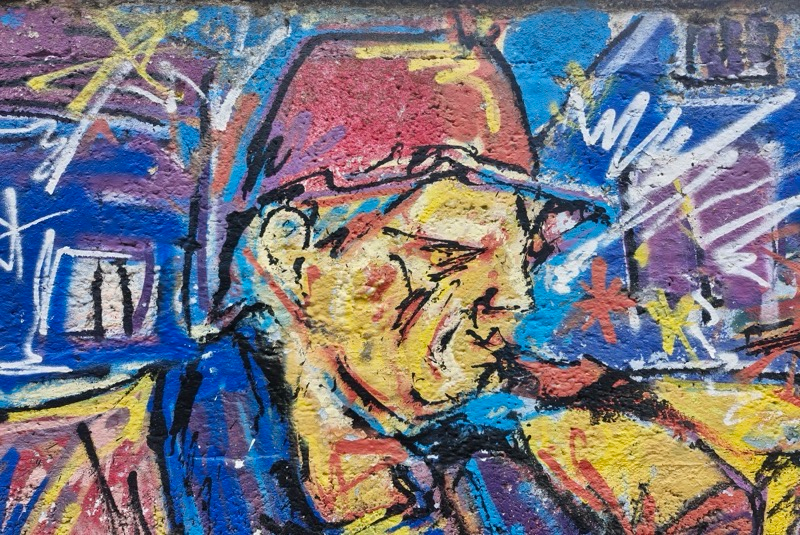
Representational Image:7MB
Is pessimism an undeniable current running through human existence?

The purpose of this essay is not to defend pessimism because it is indefensible, but because it is inevitable, unavoidable, and imperishable. Yet, across cultures, it is considered a vice; a sign of bad character, a deviation from the natural, a sin against religious hope, or even a kind of madness.

This bias is deeply ingrained; where its linguistic binary, optimism, evokes the sunny resolve of a Voltairean Candide, who insists we “cultivate our garden” in the “best of all possible worlds,” pessimism is cast as the unwelcome guest, speaking of meaninglessness, boredom, and a profound absence of fulfilment. The point, however, is not to negate optimism but to reclaim pessimism’s essential nature.

It is not a negative posture, nor a foreign affliction thrust upon humanity from without. Rather, it is the very foundation of life, the silent music to which our existence is set. As Arthur Schopenhauer, who made pessimism a central doctrine, argued, Will fundamentally constitutes life and its attendant suffering; to deny this is to deny reality itself.

Pessimism is as intrinsic as fragrance to a flower. It is the basis of the human condition, and to say no to it is, in the words of the Spanish philosopher Miguel de Unamuno, a futile argument with one’s own flesh and bone. It is, as the poet and pessimist Giacomo Leopardi knew, not a philosophy one chooses, but one that chooses you—a recognition, in the words of Emil Cioran, that “we are born without knowing why, we die without knowing how.” It is, and that is it.

Like the human Will, that blind, striving engine of existence which no philosophical debate can extinguish, pessimism persists as the imperishable mood of the human condition, a haunting melody underscoring our strivings. It does not merely exist in what Schopenhauer termed the “world as representation,” the phenomenal realm of appearances we perceive; rather, it is an intrinsic addendum, a fundamental constituent of this strange universe itself.

It must be everywhere because the universe is, at its core, a question mark, a riddle, and the unattainability of an answer that humanity can never afford. This constitutes the very substance of our pessimism. This cosmic indifference is what Albert Camus identified as the “benign indifference of the universe,” a silence that does not hate us, but, far worse, does not know us. It is a force beyond human control, utterly unmoved by our suffering.

Even if humanity were granted an eternal reprieve from death, the fundamental structure of existence would remain devoid of inherent meaning; as the German nihilist philosopher Philipp Mainländer, a disciple of Schopenhauer, might have argued, such immortality would merely amplify the boredom and torture of endless willing. Death, in this bleak calculus, does not create meaninglessness; it only renders the verdict final, making a bad situation tragically worse.

The primary wellspring of human pessimism cannot be relegated to God or the unseen, for the pessimism we experience is immediate, visceral, and resident in the very fabric of consciousness itself. It is not a theological postulate but a phenomenological fact, as fundamental as sight or breath. This pessimism inheres in the perception of our own being, in our associations, strivings, and all that is created in their wake. It does not dissipate simply because we denounce it as a moral failing, an intransigent attitude, or a betrayal of life.

To believe so is to commit a category error, akin to commanding the sun not to rise because its heat scorches; it is an act of profound futility, for the sun operates by laws indifferent to our appeals. Long before the advent of science, humanity undertook a monumental project to fill this existential void with the plaster of meaning. This endeavour, as Nietzsche famously warned, was always in danger of becoming a refuge for a “will to nothingness,” a life-denying ascetic ideal that, while often co-opted by institutions, served the deeper, more desperate human need to reduce the terrifying uncertainty regarding our origin and purpose.

People have always scrambled to construct bulwarks against the abyss of existential doubt. Yet, no revolution—not even the ascendancy of science, which so powerfully challenged centuries of dogmatic belief—has succeeded in alleviating the core human insecurity that begets pessimism. While science has constructed its own formidable aura of certitude and exactitude, it remains, as the philosopher William James might argue, a magnificent answer to “how” but a silent witness to “why.” It has meticulously mapped the mechanisms of the universe, yet it remains profoundly mute on the question of who originated this unseen mess, leaving the fundamental ground of our pessimism untouched.

The human will, no matter the intensity or duration of its striving, must ultimately capitulate before the indifference of nature. This cosmos does not speak in the language of purpose or compassion, but only in the silent, immutable dialect of its own laws, laws that cannot be petitioned and will not bend for human anguish. As the philosopher John Stuart Mill observed, nature’s conduct is marked by “absolute disregard of good and ill,” standing as an impassive witness to our greatest tragedies, never flinching at our most desperate pleas for intervention.

It is precisely this unyielding indifference that has, throughout history, compelled humanity to envision a compensatory world beyond, a great imaginary realm of peace and justice. In this light, the concepts of paradise and hell in the hereafter can be interpreted not as divine revelations but as human-born constructs, direct psychological consequences of an unbearable cosmic apathy. They are the desperate, imaginative refuge from what the novelist Thomas Hardy termed the “Crass Casualty” that obstructs the sun and rain, and the “dicing Time” that shapes our ends. Therefore, pessimism cannot be dismissed as a mere attitude; it is the logical, intrinsic response to this very process, the sober acknowledgement of a reality where our deepest needs find no echo in the universe that contains us.

Descending from the cosmic to the world of representation—the realm where humanity, in a desperate bid to fill the void of indifference, constructs its own meanings and engagements—we find the pessimistic strain not diminished, but amplified. The very features of the indifferent and incoherent nature are, it seems, etched into the human blueprint. Despite our will toward benevolence, humanity cannot transcend its inherent vice, a flaw that manifests with terrifying clarity in our political architectures.

These institutions, which Hobbes once argued were necessary to save us from a life that would otherwise be “solitary, poor, nasty, brutish, and short,” have now become the very agents of a miserable domination, choking populations globally. In a tragic inversion of reason, people are systematically killed for causes that can never be greater than a single life lost. The same uncivilised brute force that characterised our primordial struggle for survival now operates with chilling efficiency under the guise of a civilised order.

Even our grandest tools for meaning-making have been co-opted; science and technology, which the optimist Bacon believed would “enlarge the bounds of human empire,” have become little more than convincing and interesting distractions, new opiates for the masses whose devastating wake—from the existential threat of annihilation to the quiet despair of the screen—cannot be ignored. From the cosmic scale to the intimately human, the evidence is incontrovertible: there is pessimism all around.

Our world is, as Shakespeare might have revised, a stage presenting a farce that ends not in comedy, but in tragedy, a performance where the absurdity of existence is awkwardly disguised as meaning, a disguise that miserably fails to hold until the final act. This performance cannot be meaningful because our relationships with the very structures we create are fundamentally arbitrary, as contingent and empty of inherent significance as the relationship between binary signifiers in a language.

We are all trapped in a complementary mess, a collective enterprise in which we contribute to each other’s misery and nothingness. Consider our relationship with one of the greatest institutions of all time: religion. In the spirit of Voltaire’s cri de coeur against fanaticism, we see that it has solved nothing of the human condition, while gifting humanity a litany of ills it can never justify: sanctified wars, intense conflicts, deep-seated division, comforting delusions, cognitive fixity, the very inequalities it claims to eradicate, dogmatic confusion, and oppressive orthodoxy.

While it claims to teach honest living—a virtue not its sole province—such living is rendered nearly impossible in a world where human nature is not cut from that entire cloth. From the Crusades to modern fundamentalism, ghastly tragedies with vast killing often bear a religious imprint. The purpose here is not to scapegoat religion as the sole source of pessimism, which would exist without it, but to demonstrate that even our most revered institutions, our most earnest attempts to impose order, become, in the hands of a flawed and striving humanity, not a balm but an accelerant—further proof that our relations with the world are destined to augment suffering, revealing the ultimate meaninglessness of the pact.

Similarly, politics, that green-eyed monster which finds its purest form in the machinery of the state, feeds on the very dependence, subjugation, and manufactured helplessness of the majority. It cannot be the answer to our inherently miserable condition; it is its chief administrator. In this age, where anyone can dismiss these words from the comfort of their own screen, upholding facile philosophies of belief and optimism, I am instead subjected to a daily, digital memento mori. I am forced to watch, on the cold glass of my phone, a necropolitical spectacle, a term Achille Mbembe coined to describe politics as the power to dictate who may live and who must die.

This is a theatre of the macabre, where death and mutilation from places like Gaza become a relentless scroll: children dying, relationships and houses bombed and burnt alike with a chilling equivalence. I can only watch, paralysed, because this horror is a bloody, unmanageable part of a scheme far vaster than any single will. And this abstract violence echoes in the intimate geography of my own life. I watch from a place where, since the first hair on my chin, I have miserably failed to prove the most basic fact of my existence: that I belong where I was born, my identity contested just outside my own home. In such a world, where one is stripped of the very power to shape or control their own identity, a fundamental violence that Frantz Fanon so searingly detailed, how can one possibly conceive of an optimistic world? What possible motivation remains when the very ground of the self is rendered a disputed territory?

It is not one or two institutions, but the entire network of all social structures that conspire in this grand illusion. These structures, generally aimed at carving a fragile symmetry amidst an incorrigible natural asymmetry, have never succeeded in lending any authentic meaning to the fundamental quandary of human existence. Like the arbitrary but binding rules of a sport, they function not to liberate but to control, bind, and dominate human potential. In what Albert Camus would recognise as an ‘absurd drama,’ both the ruler and the ruled are complicit actors in a pageant of ultimate futility, their roles prescribed by a script they did not write.

The outcome, the relentless unfolding of this scheme, was never in anyone’s control. From a cosmic perspective, all human strivings are mutually insignificant, their proposed meanings cancelling each other out into a silent, indifferent void. Our bloody categorisations and classifications are thus nothing more than a desperate, blind attempt to impose a temporary order upon primordial, random chaos. The entire endeavour is blind in its own grand and indifferent way, a furious and elaborate dance performed for no audience, in a universe that does not care.

In this grand drama, you are cast onto the stage from a place you never chose, forced to chart a path through a terrain of inherent suffering, a trial that some well-meaning believers might euphemistically label ‘resilience’ or a ‘divine examination.’ Yet, you fail continually. Despite the fleeting moments of pleasure your body registers as respite, you consciously wither, realising you are losing everything because you never truly possessed anything to begin with.

You are a spectator to a world trapped in the same condition: some fates are apparently worse, some are masked by the sophisticated illusions of progress, but from a height of just a few meters, it all looks the same. Some die without ever knowing why they were killed; others, like Sisyphus, are ceaselessly keen to find meaning in the massive chaos; some are so consumed by their personal turmoil that they never get a moment to ponder the abstract one. Some perish from the weakness that cannot say ‘no’ to a system demanding only submission; others disappear without a trace, lost in the banal distractions of this grand deception. And some, the most tragic, are so expectant of a recovery, of that bloody, elusive hope, that they are slowly silenced by its perpetual absence. They all perish in different ways, but they perish. And from entrance to exit, they had no true agency in the script. They only perish. In the midst of this undeniable truth, to demand optimism is to add insult to annihilation; to call pessimism a sin is to humiliate the afflicted for their clear-eyed sight.

There is an inescapable pessimism lurking within the most commonplace events. Our ignorance of the next moment is not a failure of effort, but a testament to a fundamental truth: our lives were never meant to be under our sovereign control. This helplessness manifests in a thousand daily wounds: you don’t receive the recognition you crave at work; you are ambushed by a sudden, inexplicable sadness; you cannot command the affection of another. A disease crumbles your body without reason; circumstances shift, forcing you to confront powerful forces at great personal risk. You strive endlessly for a job, for the good opinion of others, for the simple pleasures that seem to come so easily to some, yet leave them perpetually unsatisfied. You might feel a glimmer of peace at the dawn of a beautiful day, only to have it shattered by afternoon—a narrow escape from an accident, a failed interview, or the devastating news of a sudden loss.

This is the human condition in its rawest form, a relentless demonstration of what the ancient Stoics called the dichotomy of control, the realisation that the external world, in its entirety, is beyond our command. We are not the authors of our fate, but merely its readers, often stumbling through a text full of unforeseen tragedies and arbitrary cruelties. And there is a deep, undeniable pessimism in this stark and universal powerlessness.

There are, undoubtedly, fleeting moments of pleasure, yet what remains as the foundational substrate of existence is a profound silence, a submission to the incorrigible indifference of nature and the ultimate purposelessness of it all. In this stark context, our fleeting joys must be nothing more than transient playthings, or even less. These momentary pleasures are merely the instants when the oppressive hold of life loosens its grip, offering a reprieve. But when the cold realisation of our fundamental helplessness reawakens, a silent sadness wells up within, filling us to the brim.

The true sound of this helplessness is, in fact, a deafening silence. It is therefore a grave error to categorically claim pessimism is a sin, a prejudice we have inherited from institutions that equate it with behavioural failure. 

The purpose of this piece was never to encourage pessimism, but rather to acknowledge it as the unavoidable, fundamental force that it is, an undeniable current running through human existence, intervening at every point, in every life, in a thousand different ways.

-30-

Copyright©Madras Courier, All Rights Reserved. You may share using our article tools. Please don't cut articles from madrascourier.com and redistribute by email, post to the web, mobile phone or social media.
Please send in your feed back and comments to [email protected]

0 replies on “In Defence Of Pessimism”