How Nationalism Threatens Nations

Nationalism-Madras-Courier
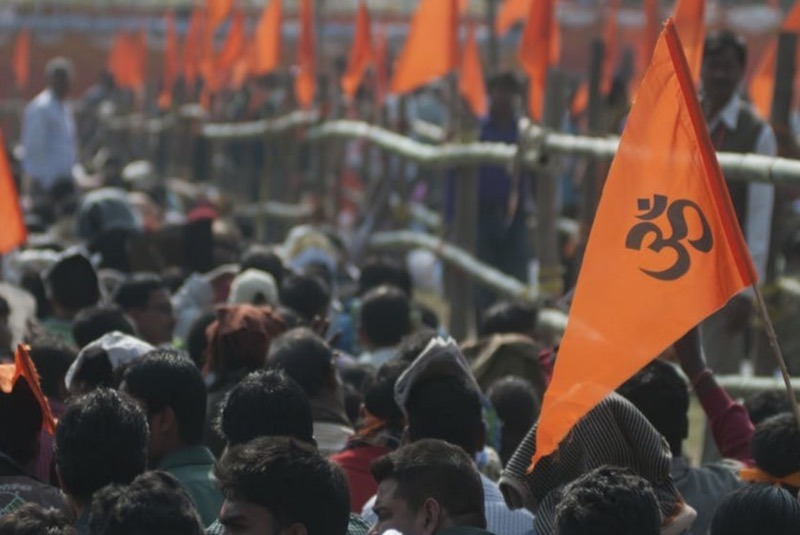
Representational image: Public domain.
Modern nationalism propagates a paradox: it increasingly demands what citizens can do for the nation, while obfuscating the state’s fundamental duty to its citizens.

The term “nationalism” has become increasingly difficult to define, as its semantic connotations evolve as dynamically as language itself. In this gradual, often imperceptible process of linguistic evolution, certain terms can undergo a profound transformation, even to the point of semantically becoming their binary opposites. This is precisely the trajectory nationalism has followed. In its incipient phase, during the formative periods of modern nation-states, nationalism was not only considered necessary but was championed as a vital, unifying emotion. As scholars like Benedict Anderson argued in Imagined Communities, nations are “imagined political communities”, constructed through print capitalism and shared narratives. Building these nations required leaders to forge a collective sense of identity, security, and unity in the minds of the populace. Thinkers like Ernest Gellner argued that nationalism was a functional prerequisite of industrial society, creating the shared high cultures and standardised languages necessary for modern administration and economic life. Leaders, from Germany’s Otto von Bismarck to Italy’s Giuseppe Garibaldi, leveraged this sentiment to forge a sense of shared identity, security, and common destiny among disparate populations. Initially, this project was not inherently divisive; it was a parallel process of binding people to a place while other similar political entities were also coalescing. The nation thus became a potent emotion; irrefutable, sacred, and powerful. However, as political theorist Isaiah Berlin cautioned, this very power contains the seeds of its own distortion. The circle is now complete: the signified of the signifier ‘nationalism’ in contemporary discourse is often what was once its binary opposite, a force of exclusionary division rather than unifying construction.

The very idea of nationalism has been profoundly corrupted, its mobilising power co-opted by regimes and political institutions to serve as a threatening and divisive instrument of realpolitik. In the contemporary landscape, as evidenced by the rise of populist leaders from Hungary to India to the United States, nationalism is frequently weaponised to justify illiberal tactics and ensure political survival. Philosopher Hannah Arendt, in her analysis of totalitarianism, identified the isolation and atomization of individuals as a precursor to authoritarian control, a process that modern nationalist rhetoric accelerates by manufacturing existential threats. It is a corrupt practice that corrupts power by empowering it through the cultivation of fear. This manipulated nationalism is no longer invoked to harmonise diversity under a civic umbrella, but to deliberately fracture it; minority communities, their traditions and values, are systematically framed as a peril to the majority’s hegemony. Political scientists like Rogers Brubaker term this “the securitization of migration” and minority rights, where governance shifts from providing public goods to managing perceived demographic threats. This strategy serves as a potent form of appeasement, offering psychological dividends of belonging and superiority to a majority group, often in lieu of material ones. Consequently, external nations are cast as enemies, while internal decay, crumbling educational infrastructure, a healthcare system exposed as perilously fragile by the COVID-19 pandemic, and a lack of basic public services are ignored. A true, constructive nationalism would prioritise these very fundamentals of communal welfare, yet its distorted contemporary variant thrives precisely by diverting attention from them.

Indeed, contemporary nationalism has been largely reconfigured into a doctrine that justifies a nexus of economic interests, state suppression, and autocratic consolidation. This modern iteration, as economist Thomas Piketty might argue, serves as a powerful narrative to sanctify extreme inequality and what is often termed “woke capitalism,” where corporate entities perform symbolic allegiance to national ideals while often undermining the economic sovereignty of the citizenry. Nationalism becomes a spectacular narrative, reduced to manipulated GDP numbers, jingoistic media spectacles, and imaginary wars against manufactured adversaries, all designed to mask a hollowing out of the social contract. This apparatus not only defines a toxic modern patriotism but also actively does a disservice to the nation’s long-term health by stifling dissent, penalising critique, and normalising a repressive state machinery against its own people. In this light, as argued by critical theorists like Wendy Brown, this form of nationalism is essentially anti-nation: it parasitically consumes the social and political bonds it purports to protect, leaving behind not a united community, but a polarised populace governed by fear and perpetually primed for conflict.

The fusion of brutality and oppression with nationalist discourse is now achieved with such lexical dexterity that it often defies common-sense rebuttals, creating a hegemonic narrative where violence is recast as patriotism. Nations increasingly project a public semblance of institutionalised intolerance, normalising what political theorist Judith Shklar would identify as a “liberalism of fear” in reverse. The United States, for instance, has recently exhibited a spectacle of aversion, transcending mere policy to encompass racial, geographical, and ethnic dimensions, toward immigrants, systematically attempting to integrate this nativism into a revised definition of American nationalism. Similarly, Israel’s military campaign in Gaza, launched in response to Hamas’s October 7 attack, presents a stark case study. Even after a devastating human cost, over 70,000 fatalities according to Gaza Health Ministry figures and destruction amounting to billions of dollars, the state frames its prolonged offensive not merely as security but as the essential expression of a national will to survive, a form of what historian Daniel Byman terms “catastrophic nationalism.” The response from other democratic nations, often characterised by silence or a steadfast defence of Israel’s “right to defend itself,” underscores how a perceived nationalist imperative can supersede international law and humanitarian principles, creating a consensus that shields extreme actions from substantive condemnation.

Modern nationalism propagates a paradox: it increasingly demands what citizens can do for the nation, while obfuscating the state’s fundamental duty to its citizens. This paradigm inverts the classical social contract, behaving as if the abstract concept of the nation holds primacy over the well-being of the individuals who constitute it. In truth, the most authentic indicator of a strong and secure nation is the happiness of its citizens, reflected in their hassle-free access to fundamental needs, affordable healthcare, quality education, clean air and water, and freedom from pervasive surveillance. Yet, ironically, the modern state increasingly brags of its strength through performative metrics: advanced warfare technology, GDP growth, and the spectacle of foreign relations. India serves as a poignant example. The government’s relentless narrative celebrating its ascent to becoming the world’s ‘third-largest economy’ (World Bank, 2024) rings hollow against the reality where, as economists like Thomas Piketty and Lucas Chancel have documented, inequality has soared, with a concentration of wealth among a few while the majority languish. This also aligns with economist Joseph Stiglitz’s critique that GDP alone is a poor measure of well-being. The nation’s capital, Delhi, consistently faces an air quality index (AQI) that is catastrophic, crossing 500 (‘severe plus’ emergency levels) compared to London’s average of around 35 (‘good’). When citizens dare to grumble about these existential crises, the very breath they breathe, their dissent is strategically re-categorised through this distorted nationalist lens as an act of anti-national sedition, completing the inversion of civic responsibility.

This reconfigured nationalism is increasingly fortified with fascistic and autocratic elements, where dissent is equated with treason. In Russia, the state has come down heavily on citizens who voice opposition to the war in Ukraine, silencing them under a brutal nationalist doctrine. Critics like Vladimir Kara-Murza face decades in prison, while others have been subjected to punitive psychiatric treatment, a chilling revival of Soviet-era tactics that perverts the state’s duty to protect its citizens into a mechanism for their persecution. Similarly, in Pakistan, the military establishment, despite decades of touting a firebrand nationalism, has presided over a system where corrupt bureaucratic practices have flourished, exacerbating public deprivation in the name of national security. This pattern of lawlessness and deprivation, evident across poor nations in Asia and Africa, stems directly from a misguided “nation-first” ideology that sacrifices the living conditions of the present generation for an abstract future. Even in Europe, the legacy of imperialism finds new expression; the United Kingdom has witnessed thousands thronging the streets in support of far-right causes recently, channelling anti-immigration sentiment into a virulent new nationalism. This movement, which rallies against the very human resource that sustains its economy, represents a paradoxical form of cultural imperialism turned inward. Ultimately, the world is witnessing a global contest of nationalisms vying for preeminence, a struggle where the state, the military, and populist spectacles are paramount, and the people, the purported heart of the nation, no longer count.

Conversely, the nations that most effectively serve their citizens demonstrate that authentic strength, what political economist Amartya Sen would frame as the expansion of human “capabilities” and freedoms, renders the spectacle of nationalism superfluous. The Scandinavian model, exemplified by countries like Norway, Denmark, and Finland, which consistently top the UN Human Development Index and World Happiness Report, presents a compelling alternative. In these societies, high life expectancy, universally accessible education, robust healthcare systems, and transparent legal institutions are not just policy outcomes but the very foundation of the social contract. This results in a high GDP per capita that reflects broad-based prosperity rather than extreme inequality. Notably, these nations maintain strong international standing without relying on the spectacle of massive arsenals or strained geopolitical relationships. In this paradigm, the state’s legitimacy is derived from its tangible delivery of security, opportunity, and well-being to its citizens. Consequently, there is no demand for the performative, emotional excess of nationalism because the nation’s value is self-evident in the quality of life it affords. The citizen, not the abstract nation, is the ultimate priority. This contrast reveals a fundamental truth: the most secure and successful nations are those that feel no need to loudly proclaim their nationalism, because their success is quietly embodied in the lives of their people.

-30-

Copyright©Madras Courier, All Rights Reserved. You may share using our article tools. Please don't cut articles from madrascourier.com and redistribute by email, post to the web, mobile phone or social media.
Please send in your feed back and comments to [email protected]

0 replies on “How Nationalism Threatens Nations”