On 25 December 1991, Mikhail Gorbachev watched the Soviet flag lowered over the Kremlin for the last time. In the West, the moment signalled the triumph of liberal democracy and the end of the Cold War. Missing from the jubilation was any effort — equivalent to the Marshall Plan — to integrate post-Soviet Russia into a shared security and economic order.
Instead, Russia underwent rapid market liberalisation and privatisation without the institutional foundations needed for a stable transition. Rather than broadening ownership, these reforms concentrated vast public assets in the hands of an oligarchic elite. For Russians, the 1990s came to represent not democratic renewal but national diminishment: a period in which economic hardship and geopolitical marginalisation combined to erode the country’s global standing.
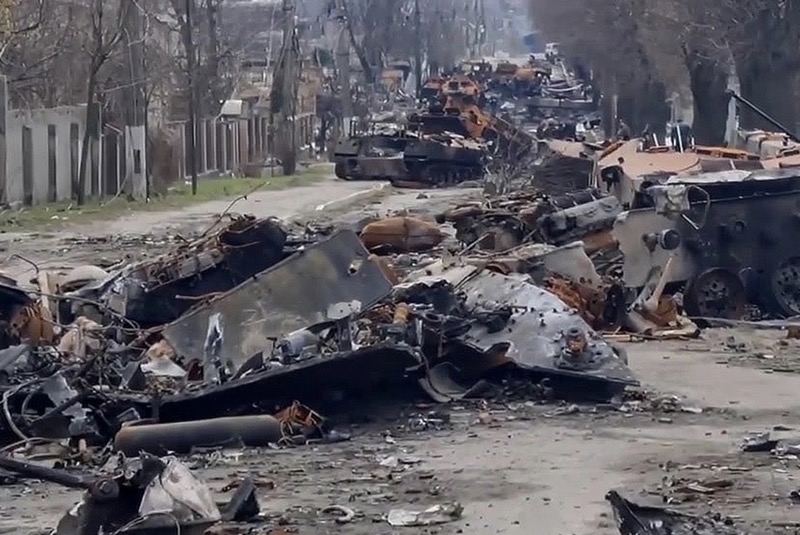
Russia’s grievance was never only material. It was also about recognition, status, and dignity — the belief that Russia was no longer treated as a respected power but as another object to be managed within a post-Cold War order operating from a playbook largely written in Washington. That failure of recognition helped set in motion consequences the world is still paying for in blood and rubble.
Some of the most consequential failures in international politics never appear on balance sheets, cannot be measured in defence budgets, and leave no trace on maps of alliances. They are intangible but no less fateful: the denial of dignity to nations that demand to be taken seriously.
The dominant explanations for today’s crises — Russian revanchism, Chinese assertiveness, Global South defection, Iranian intransigence — rest overwhelmingly on material foundations: NATO expansion, trade imbalances, sanctions regimes and control of oil. None of these explanations accounts for the oldest truth in politics: that people and the nations they form will absorb material loss far more readily than they will absorb contempt. Deprive a nation of its resources, and it may negotiate. Deny it dignity, and it may wait generations to settle the score.
Georg Wilhelm Friedrich Hegel built a political philosophy around Anerkennung –recognition – the proposition that individuals and communities require acknowledgement of their worth and standing. Thomas Scheff later argued that humiliation is among the most politically explosive of human emotions, capable of persisting across generations and reshaping history.
Rather than offering Russia a place of dignity within the emerging order, the West offered integration on its own conditions. IMF-backed shock therapy devastated Russian living standards and enriched a narrow oligarchic class. NATO expanded eastward in successive waves, despite assurances given to Soviet leaders during the negotiations surrounding German reunification. These enlargements, stretching from the Balkans to the Baltic to the Black Sea, were presented in Washington and Brussels as the sovereign choices of nations seeking security and integration with the West, but registered in Moscow as strategic encirclement and a security threat.
Putin’s 2007 Munich Security Conference speech was not, as it is routinely portrayed, the beginning of Russian revanchism. It culminated in fifteen years of accumulated grievances being expressed on a global stage. Putin inherited and weaponised grievances rooted in the Soviet collapse and Russia’s perceived decline. But the grievance was rooted not in his psychology but in the West’s sustained failure to offer Russia recognition as a legitimate and respected stakeholder.
The war in Ukraine cannot be explained by this failure alone. Yet any analysis that treats the conflict solely as a product of Putin’s expansionist worldview, while ignoring the conditions that made his invasion resonate with much of the Russian public, will continue to misread the crisis and mismanage its consequences.
In China, the memory of humiliation is not a recent concern; it has become the organising narrative of modern Chinese political identity. The period Chinese historians call Bǎinián Guóchǐ – the Century of Humiliation – spans from the First Opium War of 1839 to the founding of the People’s Republic in 1949, highlighted by unequal treaties, territorial dismemberment, foreign concessions, and systematic erosion of sovereignty at the hands of European powers, Japan and the United States.
The Treaty of Versailles in 1919, which transferred German concessions in Shandong to Japan, triggered the May Fourth Movement, a nationalist awakening whose reverberations are still felt today. When Xi Jinping speaks of the “great rejuvenation of the Chinese nation,” he is mobilising a century of accumulated wounds toward a specific political project: the restoration of Chinese dignity on the world stage, on Chinese terms.
From President Nixon onwards, the United States’ engagement policy rested on the assumption that economic integration would produce political liberalisation and a China willing to accept the existing order as legitimate. What it consistently underestimated was the Chinese conviction that the existing order was itself a product of humiliation – its rules written when China was a weak player in global affairs and accepting them without revision would be tantamount to acquiescing to an international order constructed during that subordination. A diplomacy attentive to recognition would have offered institutional voice — real reform of IMF voting weights, meaningful representation in global financial governance — rather than token gestures that preserved Western dominance while performing the theatre of inclusion.
The COVID-19 pandemic exposed something equally corrosive: the Global South’s discovery that the liberal international order’s commitment to universal human dignity was conditional on geography. Wealthy nations pre-purchased vaccine doses far in excess of their populations. The COVAX facility, intended to ensure equitable access, remained chronically underfunded. By mid-2021, while wealthy nations were administering booster doses, vaccination rates across large parts of Sub-Saharan Africa, South Asia, and Latin America remained in the low single digits.
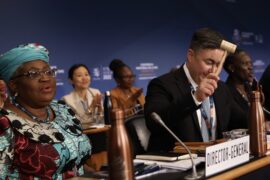
When India and South Africa proposed a temporary TRIPS intellectual property waiver at the WTO to enable developing nations to manufacture generic vaccines, it was blocked for months by the EU, the UK, and others amid intense lobbying from the pharmaceutical industry. The message was unambiguous: when the needs of poorer societies conflicted with the commercial interests of powerful corporations and states, the rules-based international order served power and profit before principle.
Aggrieved nations perceived it as confirmation of a long-held suspicion: that the liberal order’s universalist language concealed a hierarchy of worth, in which some lives mattered more than others. When Russia invaded Ukraine in 2022 and Western capitals expected unified global condemnation, they encountered a Global South that declined to perform outrage on schedule. The abstentions at the UN General Assembly were not expressions of sympathy for Putin. They were expressions of accumulated contempt for Western hypocrisy, a sentiment vaccine nationalism had further intensified.
Iran’s relationship with Western power is inseparable from a history of external intervention that has never been adequately acknowledged. The 1953 CIA and MI6-orchestrated coup that overthrew the democratically elected Prime Minister Mohammad Mosaddegh, whose offence was to nationalise Iranian oil, remains, for Iranian political memory, the original sin of Western interventionism.
It was written in the ink of democratic betrayal, confirming that liberal rhetoric has always been subordinate to imperial interests. Decades of support for the Shah’s authoritarian rule, followed by American support for Iraq during the Iran-Iraq War, even as Saddam’s forces employed chemical weapons, layered grievance upon grievance.
The Joint Comprehensive Plan of Action (JCPOA), concluded in 2015, was not merely a nuclear agreement but also a diplomatic acknowledgement that Iran could be engaged as a legitimate interlocutor rather than coerced into the role of a pariah. For Iranian hardliners, it was humiliation beyond measure for a civilisation that was inscribing human rights on the Cyrus Cylinder in 539 BCE, to be lectured on legitimacy by foreign powers.
For moderates, it represented recognition and the possibility of re-entry into the community of nations. When Trump unilaterally withdrew in May 2018, despite Iran’s verified compliance, UN Security Council endorsement and objections of every other signatory, the message received in Tehran was that American promises were worthless and engagement was a trap. The consequences were predictable: collapsed diplomatic trust, an expanding Iranian nuclear programme, and escalating tensions that eventually brought Iran, Israel, and the United States into direct military confrontation.
Russia, China, Iran — the cases differ in geography, ideology, and history. Yet they converge on a truth that Western policymakers repeatedly underestimated: states remember how they are treated. Time and again, the West chose control over recognition, treating rising powers as supplicants rather than stakeholders and assuming that others would accept the place assigned to them. It is amplified by the amnesia of power — forgetting coups, occupations, interventions, and colonial extractions, which permits moral judgment without historical self-awareness.
Frantz Fanon argued that the deepest violence of colonial power was not physical but psychological. The insight he articulated in Black Skin, White Masks has not disappeared with the formal empire. It now arrives not as a gunboat but as a conditionality clause in a loan, the colonial governor replaced by an IMF structural adjustment programme, the ubiquitous civilising mission transformed into governance standards defined in Washington and Brussels and applied universally. The instruments of power changed, but the experience of humiliation endured.
The deficit of recognition is not confined to adversaries. It shapes how Washington treats even those it nominally respects. In November 2009, Barack Obama bowed to Emperor Akihito of Japan. The gesture lasted two seconds. Yet it triggered outrage from US commentators and politicians alike, who declared the bow an act of national humiliation, a surrender of American dignity before a foreign throne. No American president bows; they affirmed as though the physical acknowledgement of another civilisation’s worth were a form of self-abasement rather than simple respect. The episode revealed an uncomfortable truth beneath Western diplomacy: that dignity is something power bestows, rather than something that should be mutual.
Donald Trump’s presidency stripped dignity of its varnish. Where previous administrations disguised the dignity deficit in the rhetoric of liberal internationalism — partnerships, shared values, rules-based order — Trump translated it into the vernacular of Truth Social. Nations that resisted American diktat were “shithole countries.”Allies who sought equitable terms were “freeloaders” and “thieves,” living off American protection.
The scandal was not Trump’s vulgarity. It was the recognition that beneath decades of diplomatic refinement lay the same conviction that some nations were entitled to deference while others were expected to comply. Between Obama’s bow and Trump’s sneers lay the same conceit: dignity was expected from others but not necessarily returned.
A foreign policy that took dignity seriously would require acknowledging that status, recognition, and standing matter to nations every bit as much as security and prosperity. Abraham Maslow identified esteem as a fundamental human need, while Axel Honneth’s Recognition Theory holds that the denial of recognition produces moral injury. Behind many struggles for power lies a deeper struggle for recognition.
The statecraft tradition understood this long before modern psychology named it. Kautilya, advising the Mauryan empire in the fourth century BCE, counselled rulers to cultivate legitimacy as assiduously as military capacity, because a respected population is easier to govern than a humiliated one. Similarly, Machiavelli’s The Prince is often remembered as a handbook of ruthless power. Yet, one of its central warnings was that rulers should avoid actions that make them hated or despised.
History is remarkably clear. After the Napoleonic Wars, Metternich’s Congress of Vienna restored defeated France as a legitimate co-guarantor of the new order, producing not revanchism but sustained French participation in the system it helped build. Contrast this with Versailles in 1919, where Germany’s exclusion and humiliation contributed to the political conditions that later enabled the rise of Hitler and the Nazi Party, culminating in the Second World War, which claimed 85 million lives. The lesson for the twenty-first century is substantive reform of international institutions – giving rising powers a meaningful voice rather than allowing the G7 to remain the effective steering committee of the global economy while paying lip service to G20 inclusion.
The dignity deficit is not merely a moral failure. It is a strategic one. Humiliation rarely disappears. It accumulates across generations, hardens into civilizational memory and eventually returns as history.
-30-
Copyright©Madras Courier, All Rights Reserved. You may share using our article tools. Please don't cut articles from madrascourier.com and redistribute by email, post to the web, mobile phone or social media.Please send in your feed back and comments to editor@madrascourier.com