Hungary’s approach to its 2026 parliamentary election suggests that even entrenched political systems can, under pressure, begin to resemble the competitive environments they have long resisted. For more than a decade and a half, Hungary’s governing party has not only won elections but shaped the terrain on which they are fought. However, the current contest points to a shift: incumbents who once set the terms now find themselves responding to them.
In earlier campaigns, opposition forces largely reacted to cues issued by those in power, often scrambling to counter narratives that cast them as risks to national stability. This time, challengers have proved more adept at defining the agenda. By emphasising concerns that bear directly on voters’ daily lives—household finances, public services and corruption—they have compelled the government to engage on terrain it would once have preferred to avoid, loosening its grip over what matters politically.
This change is striking because Hungary’s electoral landscape has long been shaped by structural asymmetries. Elections and the broader informational and institutional environment favour the governing side. A dense network of supportive media amplifies official messaging, while alternative voices struggle to achieve comparable reach. The result is a form of contestation that is uneven.
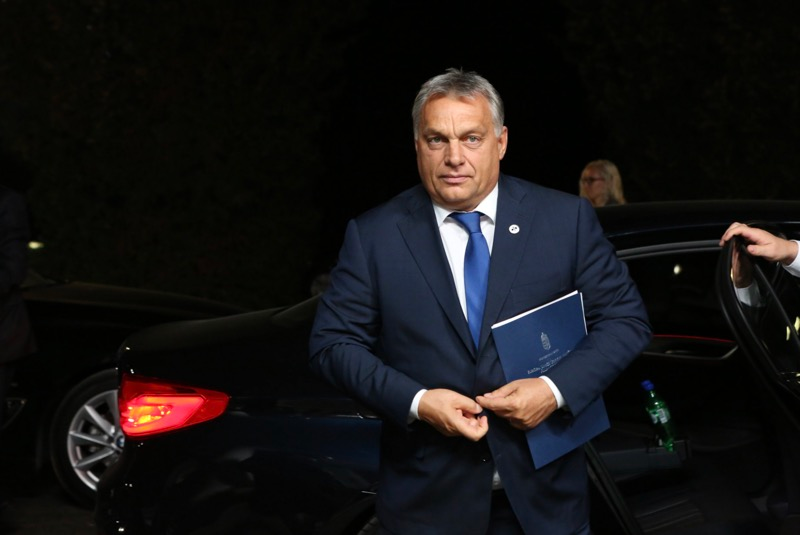
For years, these advantages translated into consistent victories for Orban. Since returning to power in 2010, the government has reconfigured electoral rules and extended its influence across key institutions, entrenching a durable advantage. Campaign practices followed suit: televised debates disappeared, communication became increasingly centralised, and appearances by senior figures were tightly managed, limiting unpredictability.
The present campaign departs from that pattern. Rather than relying predominantly on controlled channels, senior figures have taken to the road more frequently, engaging directly with voters. This heightened visibility reflects mounting electoral pressure and recognition that traditional methods of message control may no longer suffice as digital platforms enable challengers to reach audiences more effectively.
Greater exposure, however, brings greater risk. Increased interaction reduces the extent to which incumbents can manage their image. Controversies have emerged, widening the scope of debate. Campaign events, once carefully orchestrated, have at times become arenas of confrontation, with demonstrators openly challenging government representatives.
At the same time, the governing party has expanded its presence on social media. But amplification alone does not guarantee persuasion. Where dissatisfaction is rising, credibility matters as much as reach, and dominance of information flows does not ensure control over how messages are received.
In this context, the emergence of a single, cohesive challenger has become particularly important. Opposition politics in Hungary have long been marked by fragmentation, with uneasy alliances that proved difficult to sustain. This disunity allowed incumbents to portray their rivals as incoherent. The current contest marks a departure, with one formation consolidating support across a broader spectrum of voters.
This challenger has positioned itself as an alternative that cuts across conventional ideological lines. Drawing on leadership with experience inside the governing establishment, it presents its appeal as renewal rather than rupture. Its emphasis on transparency, accountability and improvements in living standards has resonated beyond traditional partisan divides.
The background of its leader has contributed to this momentum. Formerly associated with the ruling camp, he entered frontline politics following controversies that exposed tensions within the system. His decision to publicise allegations of interference in a corruption case reinforced his message of reform and helped propel his movement into prominence. Since then, he has worked to build organisational capacity while maintaining a strong public profile.
A notable feature of this effort has been responsiveness. By reacting quickly to developments and returning to them in subsequent appearances, he has cultivated a sense of immediacy that contrasts with the more scripted communication style of his opponents, helping sustain attention and frame the campaign as a contest between accountability and entrenchment.
Public mobilisation has further illustrated the changing dynamics. On a recent national holiday, both the government and the opposition staged large gatherings in the capital. Estimates varied, but the opposition’s ability to draw comparable crowds suggested a shift in momentum. Symbolism played an important role, with each side invoking national history to reinforce its message.
Economic conditions have provided fertile ground for this contestation. Hungary remains among the less affluent members of the European Union, and recent years have brought elevated inflation, rising living costs and sluggish growth. Such pressures are difficult to obscure indefinitely. As strains on household finances intensify, they force economic realities into the centre of political debate.
The opposition has capitalised on this by placing living standards at the heart of its campaign. This contrasts with the government’s longstanding emphasis on security and sovereignty, themes that appear less dominant than in previous elections. Efforts to return the campaign to these issues have met with limited success.
Questions of international alignment have also surfaced. The government has continued to cast itself as a guarantor of peace, warning that closer alignment with European institutions could expose the country to external risks. The opposition has instead drawn attention to the administration’s external relationships and raised questions about Hungary’s strategic direction.
As polling day approaches, the outcome remains uncertain, though the race appears more competitive than at any point in recent memory. The prospect of a strong opposition would have seemed unlikely only a few years ago. Whether such momentum can be converted into votes is another matter. Structural advantages continue to favour the incumbents, but the presence of a credible challenger has introduced some unpredictability.
For voters, the choice increasingly extends beyond specific policies to the nature of the political system. One path offers continuity, preserving a model that has concentrated power while maintaining stability. The other promises change, though their contours remain less clearly defined.
Whatever the result, the campaign has demonstrated that competitive dynamics can reassert themselves even within constrained environments. When opposition forces unify, articulate resonant messages and exploit evolving channels of communication, they can erode the incumbents’ advantages and compel more direct engagement with the electorate.
Hungary’s 2026 election may therefore be remembered less for its immediate outcome than for how it has altered the mechanics of political competition. By forcing a dominant party into a genuinely contested campaign, it has exposed both the resilience and the limits of a system long regarded as tightly controlled. Once a measure of open contest takes hold, even imperfectly, it creates expectations that are hard to contain.
-30-
Copyright©Madras Courier, All Rights Reserved. You may share using our article tools. Please don't cut articles from madrascourier.com and redistribute by email, post to the web, mobile phone or social media.Please send in your feed back and comments to editor@madrascourier.com