
Bombs that bombard Tehran or Tel Aviv, Kyiv or Kuwait can have a dramatic impact on families in distant parts of the world. Bread becomes expensive. Cooking oil disappears from shelves. Farmers, thousands of miles from missile strikes, are forced to plant less.
The real story is not what the war is doing to the Middle East, but what it is doing to dinner tables elsewhere. Households in Europe, North America, sub-Saharan Africa, or South Asia that spend a large share of their income on food is drastically affected. In such a circumstance, a small increase in the price of wheat or rice is not an abstraction.
Global food markets are sensitive to shocks. Prices jump up. Within days of disruptions in global supply chains, their effects are felt locally, causing considerable long-term damage.
Indeed, recent frost risks in parts of Europe and North America have already tightened global grain markets. It is equally tempting to point to the lingering complications of the Russia-Ukraine war, which has made the Black Sea a persistent source of logistical friction. But these explanations, while true, are incomplete. They miss the catalytic role of energy—specifically, the sudden and violent disruption of energy flows that has followed the escalation in the Gulf.
The Strait of Hormuz is often described as a “chokepoint,” which sounds almost benign, like a narrowing of a river. In reality, it is more like a valve. Through this narrow corridor flows a substantial share of the world’s oil and natural gas, the essential inputs that power not just cars and factories, but the entire architecture of modern agriculture. When that valve is tightened—whether by direct military action, the threat of attack, or the simple fear of transit—pressure builds everywhere else.
The closure of this passage, combined with attacks on energy infrastructure in nearby Gulf states, altered the cost structure of food. Agriculture is an energy-intensive enterprise. Fuel runs tractors, pumps water, and carries harvests across continents.
Natural gas is not merely a source of heat or electricity; it is a fundamental ingredient in the production of nitrogen-based fertilisers. When energy prices rise, they do not stay confined to fuel bills. They seep into the soil.
Fertiliser, for instance, is rarely discussed outside agricultural circles, yet it accounts for a substantial share of the cost of growing staple crops. When the price of urea—a widely used nitrogen fertiliser—jumps sharply, as it has in recent days, farmers face a difficult calculus. They can absorb the cost, reduce application and risk lower yields, or pass the increase along. In practice, all three occur, leading is a tightening of supply and higher prices.
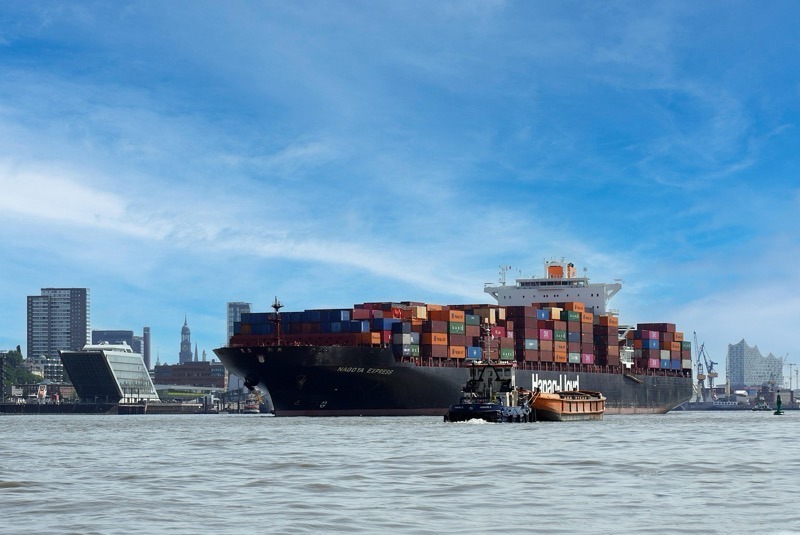
And then there is transport, the invisible thread connecting field to market. The conflict that disrupts energy flows also snarls shipping routes. Tankers and container ships, wary of transiting contested waters, are rerouting or halting altogether. Insurance premiums have surged. War risk surcharges—once an obscure line item—have become a high cost. Some vessels, carrying everything from grain to refrigerated perishables, now sit idle, their cargo at risk of delay or spoilage.
During previous crises, such as the disruptions in the Red Sea, freight rates surged dramatically as capacity tightened. This time, the global shipping industry entered the crisis with excess capacity, which may blunt the most extreme price spikes. But that does not mean consumers are insulated. The problem shifts from price to reliability. Delays become unpredictable. Supply chains, already stretched thin, lose their rhythm.
Consider the Gulf region itself, which relies heavily on imported food. Countries like Qatar import the vast majority of what they consume, much of it by sea. When maritime routes are compromised, and air transport remains constrained, alternatives exist—overland routes from neighbouring regions, for instance—but they are limited and costly. The immediate concern becomes availability. The longer-term concern is affordability.
The most consequential effects are likely to unfold far from the Gulf. In many developing economies, domestic food prices are tethered to international markets. Research shows that increases in global prices are rapidly transmitted to the local level, often within a month. The transmission is not uniform.
Wheat, for example, tends to be particularly sensitive to global shocks, with local prices sometimes rising even more sharply than their international counterparts. Rice and maize exhibit different patterns depending on regional dependencies. Sorghum, a crop largely produced and consumed in parts of Africa and South Asia, is an outlier—its relative insulation from global trade makes it less volatile.
This variation matters because it shapes vulnerability. Countries that rely heavily on imported staples are exposed not just to price increases but to volatility. A brief spike can have outsized consequences when households are already operating on narrow margins. It is not the duration of the shock that matters most, but its timing and intensity.
Political systems, too, play a role in mediating these effects. Governments that are more responsive to public pressure tend to act more quickly to cushion the blow through subsidies, trade policies, or direct support. Others may respond more slowly, allowing price increases to pass through more fully. The difference can be measured not just in economic terms, but in human ones.
What makes the current situation particularly precarious is the convergence of pressures. Energy prices were already rising. Agricultural markets were already tight. Supply chains were already strained. The conflict has not created these vulnerabilities. It has amplified them, pushing interconnected systems toward their limits.
This brings us back to the initial inversion: the idea that the most significant impact of a distant war is not where the bombs fall, but where the costs accumulate. The price of bread in a city far removed from the conflict zone becomes a barometer, reflecting the complex interplay of energy markets, shipping routes, agricultural inputs, and political decisions.
There is a tendency, in discussions of globalisation, to emphasise efficiency—the ability to move goods cheaply and quickly across vast distances. What is less acknowledged is the fragility that accompanies that efficiency. Systems optimised for cost and speed can be exquisitely sensitive to disruption. A chokepoint closes, a shipment is delayed, a price ticks upward, and the effects cascade.
None of this is inevitable. There are ways to build resilience into food systems: investing in domestic production, particularly of crops suited to local conditions; maintaining strategic reserves; improving storage and transport infrastructure; designing social safety nets that can be activated quickly in times of stress. These measures do not eliminate vulnerability, but they can reduce its severity.
Such solutions require foresight and coordination, qualities that are often in short supply during crises. It is easier to respond to visible threats than to anticipate invisible ones. Missiles command attention. Fertiliser prices do not.
If there is a lesson to be drawn from the current moment, it is that the latter may matter just as much as the former. Wars, after all, are not only fought on battlefields. They are fought in markets, supply chains, and in the decisions of farmers and consumers. They are fought in the space between what is available and what is affordable.
In the end, the question is not whether the conflict will affect global food security—it already has—but how those effects will be distributed. Who will bear the cost, and how quickly will it be felt?
The answers will not be found in military briefings or diplomatic communiqués. They will be found in the ordinary, daily transactions that sustain life: the purchase of grain, the price of cooking fuel, the contents of a family meal.
It is there, far from the headlines, that the true consequences of this war are unfolding.
-30-
Copyright©Madras Courier, All Rights Reserved. You may share using our article tools. Please don't cut articles from madrascourier.com and redistribute by email, post to the web, mobile phone or social media.Please send in your feed back and comments to editor@madrascourier.com