
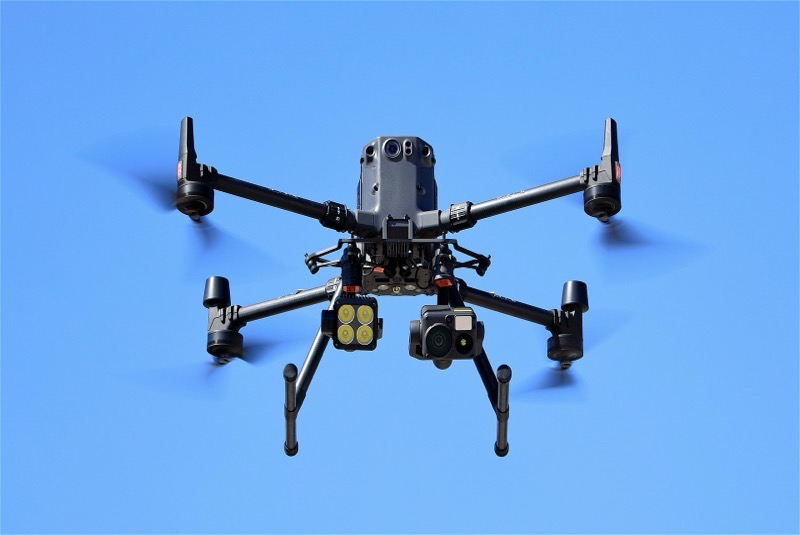
In the opening hours of the U.S.–Israeli “military operation” against Iran, artificial intelligence systems reportedly generated more than a thousand potential targets in a single day. Algorithms processed satellite images, signals intelligence, and surveillance feeds, identifying sites that analysts might once have spent weeks evaluating.
The system suggested targets of roughly 40 per hour—faster than any human team could analyse independently. However, the speed of AI-assisted warfare came with grim consequences. Investigations began after a missile strike on a school in Minab reportedly killed more than one hundred and sixty children, raising concerns that AI-generated data may have guided decision-making.
The episode did not involve fully autonomous weapons, also called “killer robots.” Humans authorised the strikes. But the scale and speed of AI-assisted targeting reveal that in the new battlefield, decisions about life and death are increasingly shaped by machines.
Artificial intelligence is now embedded into the infrastructure of military decision-making. Target identification, threat classification, surveillance analysis, and operational planning—tasks once performed by analysts and officers—are increasingly delegated to machine learning systems capable of processing vast quantities of data.
In theory, humans remain in control. But in practice, AI systems shape the choices of decision-makers and determine what is plausible and what is not. By the time a human operator approves a strike, the judgments are already made by software.
To address these concerns, governments and international institutions frequently emphasise a single reassuring principle: human oversight. Machines may analyse data or recommend targets, but humans must retain the authority to approve the use of lethal force.
This concept has become central to emerging regulatory frameworks for artificial intelligence. The European Union’s Artificial Intelligence Act, for instance, requires high-risk AI systems to include mechanisms that allow trained personnel to verify and override automated outputs.
In military contexts, policymakers use similar language, speaking of “meaningful human control” over autonomous systems. The promise is that human judgment will serve as the ultimate ethical safeguard.
However, the reality of modern military technology raises doubts about whether such oversight is meaningful. Artificial intelligence systems are accelerating the pace of warfare. Machine learning models analyse satellite images, intercept communications, and identify patterns across millions of data points within seconds.
When an AI system produces a prioritised list of potential targets, human operators reviewing it are not making independent judgments. Instead, they are responding to machine-generated recommendations. The faster and more complex the system becomes, the harder it is for humans to question its conclusions.
This transformation is not hypothetical. In 2017, the United States launched Project Maven, an initiative designed to apply AI to the analysis of drone footage and other intelligence sources. Initially, the system’s role was limited to identifying objects in video feeds—vehicles, buildings, or individuals that analysts might want to examine more closely. However, over time, Maven evolved into an analytical platform that synthesises multiple streams of intelligence and generates recommendations for military planners. By 2026, such systems were capable of compressing weeks of battle planning into near-real-time operations.
The efficiency gains are undeniable. Modern battlefields generate extraordinary volumes of data, and human analysts cannot process it all. Algorithms sift through information at machine speed and highlight what appears strategically significant. But efficiency is not the same as wisdom. The central ethical problem of AI-assisted warfare is not whether machines can help identify targets. It is whether humans can meaningfully question the conclusions produced by systems whose reasoning is opaque.
Decades of research in human–computer interaction suggest that the answer is not reassuring. People working alongside automated systems often exhibit what psychologists call “automation bias”—a tendency to trust machine-generated outputs even when they are flawed.
When an algorithm produces a recommendation backed by complex data analysis, human operators may assume that the system possesses information they lack. The more sophisticated the technology appears, the more reluctant people become to challenge it. Under conditions of time pressure—precisely the conditions that characterise modern warfare—this tendency becomes even stronger.
The consequences of automation bias are not limited to technical mistakes. They also affect how individuals perceive moral responsibility. When layers of data-driven algorithmic recommendations mediate decisions, the psychological sense of agency begins to erode.
Operators will view themselves less as decision-makers and more as supervisors of a process unfolding outside their control. The presence of a human in the decision chain, often cited as proof of ethical oversight, can therefore mask a shift: responsibility dispersing across a network of machines, engineers, analysts, and commanders.
Even small errors have terrifying consequences. Machine learning systems operate based on probabilities and identify patterns rather than certainties. A targeting algorithm with a 90 per cent accuracy rate might sound impressive in technical terms. But in a battlefield environment, the remaining 10 per cent translates into real people mistakenly identified as threats. When those errors occur at scale—across hundreds or thousands of algorithmically generated targets—the humanitarian consequences will be catastrophic.
The growing partnership between governments and technology companies further complicates the ethical landscape. Today, research on artificial intelligence is driven by private corporations, whose models are deployed across a wide range of civilian and military applications. Defence agencies increasingly rely on these companies to provide advanced analytical tools, data platforms, and machine-learning systems. In recent years, some firms have attempted to establish ethical boundaries around how their technologies may be used. But those boundaries have proven fragile once geopolitical competition enters the equation.
The tension between commercial AI companies and military institutions has become increasingly visible. Some firms have attempted to prohibit the use of their systems in fully autonomous weapons or mass surveillance. Others have loosened earlier restrictions as defence contracts and national security pressures have mounted.
Meanwhile, military planners argue that limiting the use of AI could place them at a strategic disadvantage against adversaries willing to deploy the technology without similar constraints. The result is a gradual erosion of ethical red lines—less a deliberate policy shift than a slow drift driven by competition and fear.
In this environment, the language of “responsible AI” risks becoming rhetorical, not substantive. Companies publish ethical guidelines, governments invoke principles of human control, and international organisations debate regulatory frameworks. But the underlying technological trajectory continues unchanged. Artificial intelligence systems are becoming faster, deadlier, and more deeply embedded in military infrastructure with each passing year.
What is missing is a clear recognition that the ethical challenge posed by military AI is not merely technical. It is fundamentally political and moral. The question is not simply how to design safer algorithms or more transparent systems. The deeper issue is whether societies are willing to place limits on the role of machines in lethal decision-making.
Such limits would likely involve more than procedural oversight. They require strict constraints on the autonomy permitted in targeting systems, rigorous independent auditing of AI models used in military contexts, and clearer lines of accountability when algorithmic decisions result in civilian harm. Most importantly, they would require acknowledging that technological capability does not automatically justify deployment.
History offers many examples of weapons that transformed warfare—from machine guns to nuclear bombs. In each case, societies eventually confronted the ethical implications of technologies capable of unprecedented destruction. Artificial intelligence presents a similar moment of reckoning. The difference is clear: AI does not merely increase destructive power; it reshapes the process through which decisions about ‘death and destruction’ are taken.
When algorithms filter intelligence, prioritise targets, and recommend strikes, they become silent participants in the chain of command. Their influence is profound and at times, deadly. The danger, of course, is that machines will eventually take control of warfare. The bigger danger is that humans will relinquish responsibility to systems whose speed and complexity make genuine oversight impossible.
The tragedy in Minab, where over 160 children were killed, illustrates the stakes. The episode highlights the fragile ethics of machine-assisted warfare. When decisions move at machine speed, ethical considerations struggle to keep pace. Human oversight becomes a formality.
Artificial intelligence will remain part of the future battlefield. The technology is too powerful for militaries to ignore it. But the presence of AI in warfare does not absolve human beings of responsibility for how it is used. If anything, it makes ethical governance more urgent than ever. Without clear rules and accountability, the promise of human control may prove to be little more than an illusion which fades when it is needed most.
-30-
Copyright©Madras Courier, All Rights Reserved. You may share using our article tools. Please don't cut articles from madrascourier.com and redistribute by email, post to the web, mobile phone or social media.Please send in your feed back and comments to editor@madrascourier.com