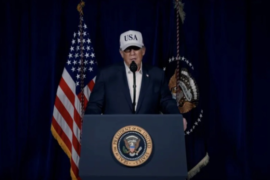
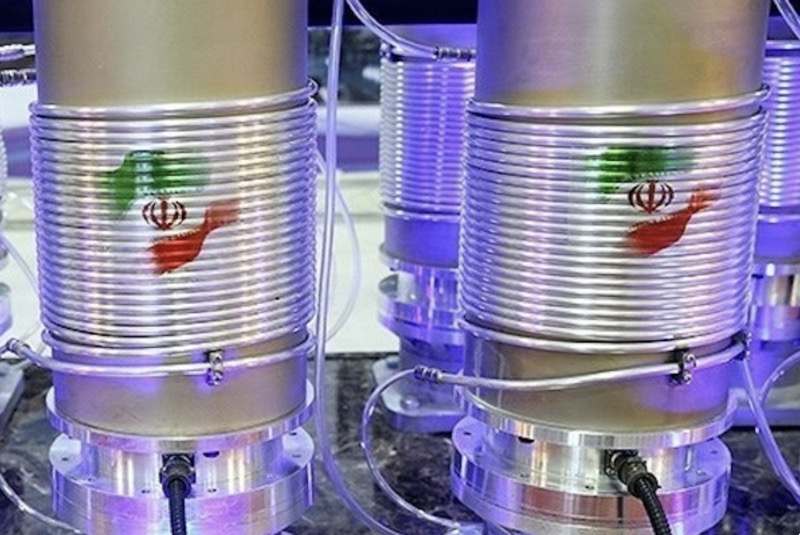
In January, President Donald Trump stood at the White House briefing room podium and said: Iran cannot have nuclear weapons—no ifs, ands, or buts. “Time is running out,” he tweeted, urging Tehran to come to the table or face consequences even “far worse” than the strikes of the previous year that had obliterated Iranian nuclear facilities. The imagery—*“massive armada”—was a warning from a leader who unilaterally pulled the United States out of the 2015 international nuclear deal.
In reality, Iran’s pursuit of nuclear weapons remains contested: U.S. intelligence officials repeatedly concluded that Tehran had not made the political decision to build a bomb; the Supreme Leader Ayatollah Ali Khamenei, they said, had not re-authorised a weapons program that had been formally suspended in 2003. However, highly enriched uranium existed in Iran’s stockpiles at unprecedented levels; whether that constituted a weapons program was a matter of interpretation—scientifically and politically.
Across the Gulf in Muscat and then in Oman, U.S. and Iranian envoys sat down under the watchful eyes of diplomats from Europe and the International Atomic Energy Agency. Iran insisted on its right to enrich uranium for peaceful energy under the Nuclear Non-Proliferation Treaty (NPT), a treaty it had ratified in 1970, which allows non-nuclear states to pursue nuclear energy for civilian purposes while forswearing weapons.
“We will continue to insist that enrichment is not negotiable,” the Iranian foreign minister told reporters, insisting that this was a matter of national sovereignty as much as technical capability.
Trump’s critics, within and outside the United States, have argued that the president’s framing was less about nuclear armament than about U.S. dominance in a region where America’s strategic and military interests have long clashed with Iran’s. One commentator even argued that Washington’s posture was not truly about nuclear weapons but about “removing Iran as the only actor in the region beyond U.S. control.”
This dispute—framed as a standoff between an expansive superpower and a defiant regional state—casts an ethical dilemma in the modern non-proliferation regime: the states that hold the most powerful bombs on Earth also claim a duty to prevent others from acquiring them. As of 2025, the United States’ nuclear stockpile numbered in the thousands of warheads, surpassing any other country and dwarfing any plausible Iranian arsenal.
However, the Nuclear Non-Proliferation Treaty, which underpins the entire global architecture meant to curb the spread of atomic arms, does not give special moral license to nuclear powers. Instead, it enshrines a bargain: non-nuclear states agree not to pursue weapons; nuclear-armed states agree to pursue disarmament and share peaceful nuclear technology. The moral weight of this legal framework rests as much on reciprocity as on deterrence, and it imposes obligations on all sides—America and Iran alike.
Critically, the NPT also charges nuclear states with pursuing negotiations toward general and complete disarmament. While critics argue that this clause is ‘vague,’ lacking enforceability, it reflects an ethical premise: states that hold nuclear weapons should not treat them as permanent fixtures of power but as temporary, dangerous tools to be given up.
Scholars have long debated whether the possession of nuclear weapons confers any moral authority in non-proliferation matters. Some analyses suggest that the size of a nuclear arsenal has little to do with whether other states choose to pursue nuclear weapons; instead, proliferation decisions are more closely tied to security dilemmas, regional rivalries, and domestic politics.
Yet others argue that if the nuclear powers—especially the United States and Russia—were genuinely committed to disarmament, their moral standing would be stronger, and the non-proliferation regime might be more robust. Since the end of the Cold War, both nuclear powers have ostensibly reduced their arsenals, but treaty obligations to move toward elimination have never been fully realised.
In international law and ethics, the possession of nuclear weapons by a state does not automatically justify compelling another state to abstain from them; instead, it creates a shared responsibility to reduce nuclear dangers globally. Many experts argue that moral legitimacy arises not from the mere possession of nuclear weapons but from leading by example toward disarmament and addressing the insecurities that drive states to consider nuclear options.
If the treaty meant to calm atomic fears is eroding, then the question of moral authority becomes more acute: how can nuclear states justify compelling others when they are themselves stepping back from constraints that once made proliferation less urgent?
In Washington, Trump’s posture was framed by the threat of military force if diplomacy faltered—a posture that carries its own moral hazards. Tehran’s leaders warned that any attack would unleash a regional war, pointing to Iran’s ability and willingness to strike U.S. forces and allies throughout the Middle East, a potential escalation that could have catastrophic humanitarian consequences.
Academics have studied questions of coercive diplomacy for decades. The classic dilemma is this: the more a powerful state combines threats with negotiations, the more it risks undermining the rules meant to govern peaceful restraint. A multilateral and multi-dimensional approach—one that includes sanctions, inspections, incentives for compliance, and credible security guarantees—has been shown to yield better prospects for restraint than unilateral threats.
For many Iranians, the memory of the 2018 U.S. withdrawal from the 2015 nuclear deal was not just a diplomatic setback but a signal that American pledges are fragile. Tehran’s insistence on enrichment rights therefore became not only a technical demand but a symbol of sovereignty.
And yet in the capitals of Europe and Asia, diplomats fret that ambiguity on this issue will invite more states to test the boundaries of the non-proliferation regime—perhaps through shuttle diplomacy, intrusive inspections, or even new forms of verification involving emerging technologies.
What, then, gives a nuclear superpower moral authority on this issue? Is it deterrence, history, might, or the fear of calamity that drives U.S. policy? The answer, if it exists, lies not in warships or the deployment of strike groups, but in the willingness to balance power with principle, coercion with cooperation, and national interest with global stability.
In the moments between meetings in Oman and New York and in corridors of academic conferences, diplomats and scholars alike return to a simple fact of the NPT: every state, whether possessing thousands of warheads or none, agreed to aspire to a world free of nuclear weapons. It is an aspiration that binds the powerful and the weak, and it is the only moral foundation on which the prohibition of nuclear proliferation can rest.
In February, a foreign correspondent asked a senior diplomat: “If nuclear weapons are such a threat to peace, why should the United States have them at all while telling Iran it cannot?” The diplomat paused, then replied: “The moral right doesn’t come from possessing them. It comes from working to eliminate them—and demanding that others do the same, under the same rules.” Whether that principle can survive the storms of present geopolitics remains the gravest question of all.
-30-
Copyright©Madras Courier, All Rights Reserved. You may share using our article tools. Please don't cut articles from madrascourier.com and redistribute by email, post to the web, mobile phone or social media.Please send in your feed back and comments to [email protected]