Why Far-Right Racists Target Indian Immigrants

Anti-India-Racism-Madras-courier
Representational image: Public domain/Wikipedia.
It is unfortunate that countries such as Canada, Ireland & Australia have high incidences of ongoing anti-India hate campaigns.

Robert Clive, who emerged victorious in the Battle of Plassey in 1757, was mesmerised by the opulence and grandeur of Murshidabad, the capital of the Nawab of Bengal, Siraj-ud-Daulah, whom he had defeated. He wrote, “The city of Murshidabad is as extensive, populous and rich as the city of London, with this difference: That there are individuals in the first possessing infinitely greater wealth than the whole of the Lombard Street joined together.”

The ensuing plunder of its wealth, called the “financial bleeding of Bengal”, made Clive one of the “richest self-made man in Europe”, according to British historian William Darlymple. He is a personification of the colonial state and the insidious designs of the metropole, culminating in the systematic loot and organised plunder of the colonised. And moral compunction of such injustice is effectively dissociated through the dehumanisation of the native people as sub-humans. Winston Churchill’s phobia of Indians, as “They are beastly people with beastly religion,” ratifies such psychology.

The legacy of British imperial rule in India remains disputed, but the economic depredations it had inflicted is indubitable. Angus Maddison reported India’s GDP dropped from over 60 per cent of Britain’s in 1600 to just 15 per cent by 1871. Research by William Dalrymple found that India produced 22.5 per cent of global GDP before British arrival compared to Britain’s 1.8 per cent; by independence in 1947, India’s share had fallen to 4.2 per cent.The British rhetoric of its accomplishments in India was overshadowed by a sordid history of colonial subjugation, leaving India a breathing misery of famine, deprivation and economic stagnation.

Though Indian migration to the West commenced in the late 19th century – mostly as indentured labourers shipped by the British – the exodus of professionals gained momentum in the 1960s, through policy changes in Western countries, notably the US Immigration and Nationality Act of 1965. It abolished the requirements of the national origins job quota system that discriminated against non-Western Europeans and Asians. Such revoking of restrictive policies in the United States, Australia, New Zealand, the UK, Ireland and Canada have witnessed a steady growth of expatriate Indians in the West and by the turn of the 21st century had established themselves in myriad professions across diverse fields ranging from doctors, engineers, software professionals, scientists, academics, entrepreneurs, to cab drivers and employees in the hospitality industry.

Indian professionals have made remarkable contributions to various sectors across the Western world, particularly in healthcare and technology. In the United States, Indians represent a significant portion of the healthcare workforce. Specifically, they account for 7 per cent of all healthcare workers, holding an impressive 26.5. per centof doctor positions and 6 per cent of nursing roles. This prominent presence is mirrored in the United Kingdom, where India serves as the largest single source of skilled healthcare professionals. Indian doctors make up 20 per cent of the total, while Indian nurses constitute 36 per cent of the nursing workforce.

The influence of Indian professionals is also noticeable in Ireland, where one out of every seven nurses is of Indian origin, and data published by the Central Statistics Office (CSO) indicates that Indians are the highest-paid foreign workers.  Similarly, the Australian healthcare system heavily relies on Indian medical staff. Data shows that 5.6 per cent of doctors, 3 per cent of specialists, and 2.8 per cent of nurses in Australia received their initial medical education in India. These figures are substantially higher when including the second generation of Australian-born Indians.

Beyond healthcare, Indian talent is highly visible in the technology sector. A 2018 study revealed that more than 17 per cent of software engineers in the United States are of Indian origin. The demand for Indian tech expertise is further highlighted by H1-B visa allocations: 72 per cent of these visas are granted to Indian software engineers, with Chinese professionals receiving 12 per cent. In technology-driven cities such as Seattle, Indians make up more than 40 Per cent of all foreign-born engineers, underscoring their vital role in the advancement of the Western technology industry.

Such quantum changes in representation and excellence have prompted Eric Garcetti, the erstwhile US ambassador to India, to make a jocular yet compelling statement during an interview in New Delhi, “The old joke was you couldn’t become a CEO in the US if you are an Indian. Now the joke is you cannot become a CEO in America if you are not an Indian.”  This stellar achievement bears testimony in the 2025 edition of Fortune 500, which reports that 11 companies are led by CEOs of Indian heritage. Collectively, these companies represent a combined market capitalisation of $6.5 trillion, underscoring the scale and significance of Indian leadership on the global stage.

Despite the socioeconomic progress and meritorious contributions to Western societies, Indians are subjected to racism and stereotyping within their adopted nations. With upward social mobility and economic success, Indians are now targets who are vilified and incriminated for all the economic ills of Western societies. It had intensified with the neo-confederate white nativist Make America Great Again (MAGA) movement spearheaded by US President Donald Trump. The racial prejudice and hostility have expanded to countries such as Canada, the UK, Ireland and Australia. These regions have witnessed a wave of anti-immigration protests and xenophobic rhetoric, much of which is specifically directed at Indian communities.

From demeaning stereotypes and derogatory tropes in Hollywood movies, the anti-India tirade has transformed into a clarion call for legislative action aimed at restricting Indian immigration. The subtle slights in popular culture have evolved into escalating hostilities and have manifested in periodic episodes of violence and physical assaults targeting Indians. Major cities across the Western world -from Los Angeles, Dublin, Toronto, London, to Melbourne- the vitriolic chant of the white protesters and aggressors is universal: “Go back to your own country.” These confrontations are not isolated but reflect a broader sentiment rooted in the assertion of white superiority and gnawing apprehensions of losing centuries-old privileges.

In the US, the MAGA anti-Indian campaign exploded with the appointment of Indian-origin technologist Sriram Krishnan as advisor to the Trump administration on Artificial Intelligence. The slander is rampant on X (formerly Twitter), owned by Elon Musk. Soon, this short messaging social media platform was bustling with stereotyping Indians as liars and deceivers to obtain H-1B visas, that they are smelly, defecating in public, unhygienic and uncivilised. Laura Loomer, the far-right activist and agent provocateur, leads the fray in opposing Sriram’s appointment as the MAGA movement perceived it as antithetical to the “America First”, a byword for favouring white native Americans. All other races and communities, whether they hold American citizenship or have been fully integrated into the mainstream American way of life, are still deemed inferior.

The recently assassinated white supremacist, Charlie Kirk, posted on X, “America does not need more visas from India. Perhaps no form of legal immigration has so displaced American workers as those from India. Enough already. We’re full. Let’s finally put our own people first.” The assertion that Indians have replaced American workers is an egregious lie and lacks empirical evidence. In reality, data reveals that 62 per cent of positions in the U.S. tech sector are held by White Americans, while Asian Americans – including those of Indian origin – occupy 20 per cent. Furthermore, over 83 per cent of technology executives in the United States are White. Despite these facts, the technology industry remains the primary target of white ultra-nationalist backlash, with accusations that Indians are usurping jobs from native White Americans.

Vivek Ramaswamy, the 2024 Presidential candidate, biotech billionaire and Trump supporter, criticised the decline of white American standards to a patronisation of mediocrity. Being a US citizen of Indian origin, his statements drew further indignation from the MAGA verse.  He argued:

Our American culture has venerated mediocrity over excellence for way too long (at least since the 90s and likely longer). That doesn’t start in college, it starts YOUNG. A culture that celebrates the prom queen over the math Olympiad champ, or the jock over the valedictorian, will not produce the best engineers.

To counteract this trend, Ramaswamy prescribed a more rigorous and intellectually stimulating upbringing: “More math tutoring, fewer sleepovers, more weekend science competitions and fewer Saturday morning cartoons. More books, less TV, more creating, less ‘chillin.” He also forewarned, “If you grow up aspiring to normalcy, normalcy is what you achieve…normalcy doesn’t cut in a hypercompetitive global market for technical talent.” A paradigm shift is long overdue, that the mainstream United States retrace its steps back to a culture of excellence and meritocracy envisioned by the founding fathers, rather than wallowing in victimhood and clamouring for legislation to curtail exemplary global talent.

It is highly unfortunate that historically immigration friendly countries such as Canada, Ireland and Australia have high incidences of ongoing anti-India hate campaigns. The burgeoning housing crisis is these countries is the primary malefactor for this hatred, for which Indians have been erroneously scapegoated. In Canada, the shortage of affordable housing is not a consequence of rising Indian immigration, but rather, it is rooted in demographic and policy challenges. Many ageing Baby Boomers prefer to remain in their lifelong homes, reducing the turnover in the housing market and government policies stifling the construction of new real estate.

Additionally, private colleges have played a significant role in exacerbating the housing crisis. By enticing large numbers of Indian students with promises of lucrative job opportunities and a prosperous future in Canada, these institutions contribute to the influx of international arrivals. The outcome is overcrowded living conditions, with students often forced to reside in cramped accommodations. Many are compelled to accept low-paying jobs, which can depress standard wage rates across the labour market while at the same time enduring anti-brown racism.

The Irish and Australian experiences of housing crises exhibit similar patterns of administrative oversight and racist overtones. For example, thirty years of lopsided government policies in Ireland have resulted in hawkish property developers charging exorbitant rents. Ireland once had the highest home ownership in the EU, but it has now reduced to 66 per cent despite strong economic growth and near full-time employment.

The decimation of social housing projects and the supplanting of them with developer-funded, for-rent real estate units has left many Irish homeless when tenants are evicted. The home prices have spiralled, averaging eight timesthe national average wage. The government colludes with the real estate players by providing tax incentives and tax breaks. This mutually beneficial relationship has prioritised developer profits over public welfare, further aggravating the housing shortage. And when the native white Irish see high-paying Indian immigrants owning multiple properties, they vent their grievances and racial animosity on them.

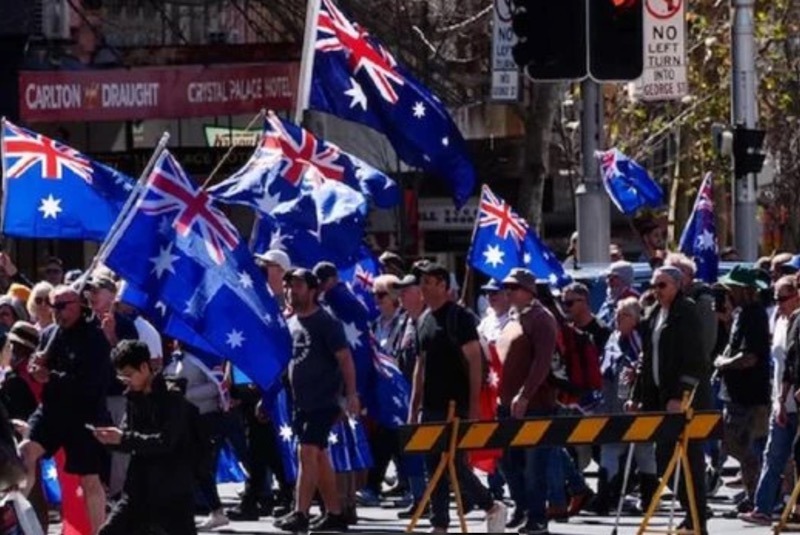
The racial prejudices and assaults on Indians in Western countries are the manifestation of shadowy, organised far-right movements, partly attributed to subjective grievances and mostly employed as a weapon of political expediency and opportunism. Notably, movements such as MAGA in the United States, Pegida Canada and La Muerte in Quebec, the Coolock Says No protests and the Northern Irish Loyalists Network have all played significant roles in corrupting public perception. Similarly, Unite the Kingdom in the UK and March for Australia rallies, which neo-Nazi groups frequently lead, capitalise on growing public dissatisfaction and economic malaise, channelling these sentiments into a collective consciousness directed against brown-skinned immigrants.

The rationalisations presented for this antagonism — such as complaints about loud Indian communities disrupting quiet neighbourhoods, alleged lack of civic sense, accusations of scamming, public displays of cultural festivities, and perceived failure to integrate into Western values and customs — are largely superficial. These cited incidents are isolated and do not represent the broader Indian diaspora. Instead, they serve as convenient pretexts for stirring resentment and justifying exclusionary rhetoric and actions.

Indians have consistently demonstrated a non-confrontational and law-abiding nature in the Western countries to which they have migrated. Historically, India has opened its doors to diverse communities fleeing persecution or seeking new opportunities, embracing them with respect and cordiality rooted in the ethos of “Adithi Devo Bhava,” meaning “The Guest is God.” Following the destruction of the Second Temple and the fall of Jerusalem in the 1st century AD, Jews began arriving in India, a migration that continued for many centuries. Conspicuously, Baghdadi Jews, including the prominent Sassoon dynasty, migrated to India as late as the 18th century, further enriching the country’s rich cultural tapestry.

Christianity was introduced in India as early as 52 AD, and Christians, including missionaries, began arriving in the 3rd century AD. Parsis fled persecution in their Iranian homeland and made India their home in the 8th century. Later in that century, Armenian settlements took root in the North Malabar coast of Kerala and in Bengal.

Long before Muslim conquerors invaded India, Muslim traders had established a substantial presence along the west coast. In the 19th century, persecuted Baha’is from Iran also sought and found sanctuary in India. The British traders were welcomed by the Mughal ruler Jahangir to establish their factory in 1613 in Surat, Gujarat. These acts of hospitality and warmth are glorious testimonies of India’s openness to foreigners.

Carl Sagan, the legendary cosmologist, summed up the futility of hatred and divisions in his 1994 book, Pale Blue Dot – our only shared home in the universe – in one of the most poignant verses:

… think of the endless cruelties visited by the inhabitants of one corner of this pixel on the scarcely distinguishable inhabitants of some other corner, how frequent their misunderstandings, how eager they are to kill one another, how fervent their hatreds. Think of the rivers of blood spilled by all those generals and emperors so that, in glory and triumph, they could become the momentary masters of a fraction of a dot.

-30-

Copyright©Madras Courier, All Rights Reserved. You may share using our article tools. Please don't cut articles from madrascourier.com and redistribute by email, post to the web, mobile phone or social media.
Please send in your feed back and comments to [email protected]

0 replies on “Why Far-Right Racists Target Indian Immigrants”