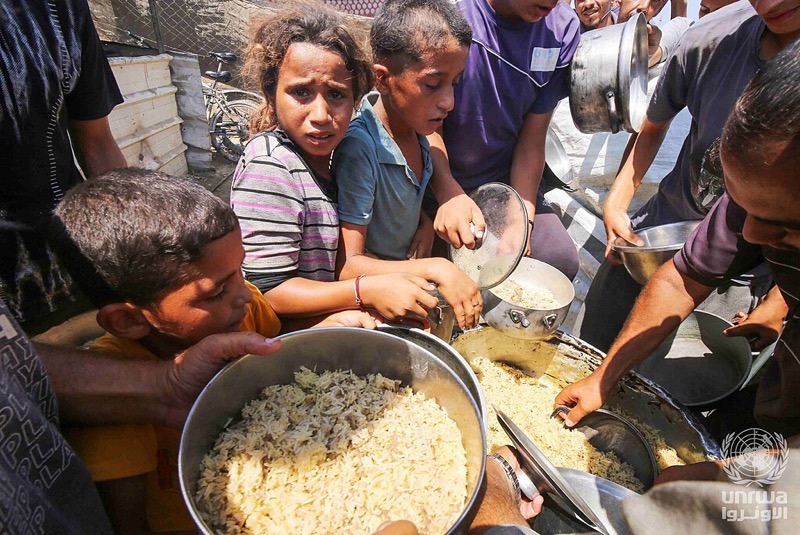
On January 20, 2026, the world’s political and financial elite gathered in Davos for the World Economic Forum’s fifty-sixth annual meeting. Heads of state, central bankers and celebrities attended an invitation-only dinner hosted by BlackRock CEO and interim WEF co-chair Larry Fink, raising glasses over a multi-course feast as millions edged closer to famine far beyond the banquet hall. Barely three months later, the Integrated Food Security Phase Classification (IPC), the global benchmark for famine, confirmed that the thresholds for IPC Phase 5 — its most severe designation — had been reached in Sudan and Gaza. It was the first time since IPC reporting began that famine was declared in two countries simultaneously. While dignitaries debated “improving the state of the world” in a Swiss ski resort, a quarter of a billion people faced starvation. In Gaza, nearly one in three people confront catastrophic food insecurity; in Sudan, well over nineteen million share that fate.
The tenth Global Report on Food Crises, released April 24, 2026, found that 266 million people across 47 countries — 22.9 per cent of those analysed — experienced acute food insecurity in 2025, nearly double the 2016 share. The 2024 tally was higher, at 296 million across 53 countries, but five countries, including Burkina Faso and Ethiopia, were omitted because data were unavailable; together, they accounted for more than 27 millionpeople previously facing high food insecurity. The apparent plateau therefore reflects declining data availability, not improvement. As fragile states collapse, hunger statistics become incomplete and monitoring weakens. FAO Director-General Qu Dongyu called hunger “persistent and recurring”, warning it has become a structural problem rather than a temporary emergency.
Copyright©Madras Courier, All Rights Reserved. You may share using our article tools. Please don't cut articles from madrascourier.com and redistribute by email, post to the web, mobile phone or social media.Please send in your feed back and comments to editor@madrascourier.com