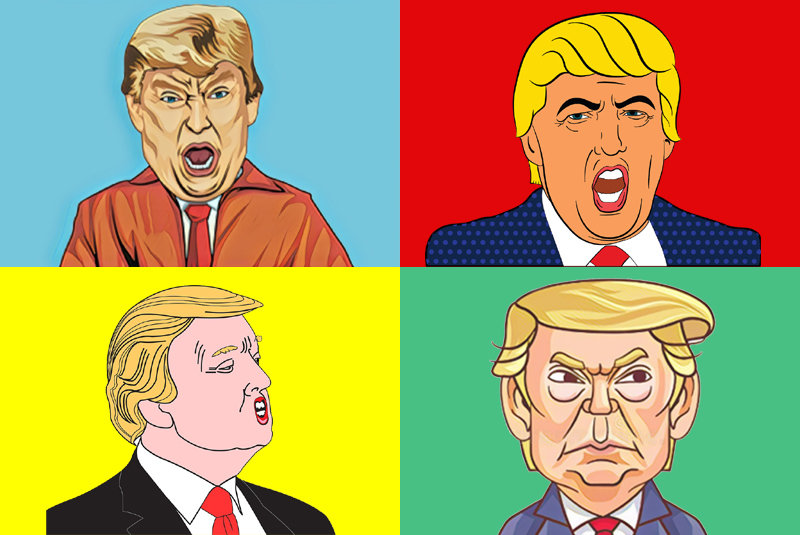
On 20 January 2017, Donald Trump announced to the world that his inauguration crowd was the largest in history. Photographs and the Washington Metro’s own ridership data told a different story. The following day, Press Secretary Sean Spicer persisted with the claim. However, when challenged, Trump’s advisor Kellyanne Conway coined the phrase that would become the administration’s operating doctrine: “alternative facts.” It was an egregious falsehood when the truth was demonstrable, verifiable, and photographed by credible sources. Over the years, it became a test of whether a democratic public could be deceived into believing what it had already seen. It set the template for four years of industrial-scale mendacity that now extends into his second presidency. This scale and normalisation of falsehood within a democratic system is rare and deeply destabilising. In effect, Trump’s presidency was launched by a lie and has remained defined by it ever since.
To understand a man’s deeply ingrained and enduring behavioural patterns, one must delve into the household that shaped them. Fred Trump Sr., Donald’s father, was a real estate developer of the old school. His moral ethos reportedly emphasised dominance, performance, and the rejection of weakness. The family home in Queens was not a place of unconditional love but a playground for confirming the “oughts” of childhood imposed by strict, disciplinarian parenting. Pleasing one’s parents becomes a life motto that remains entrenched even after they are long gone. Mary Trump, a licensed clinical psychologist and Donald’s niece, documented, with clinical precision in her 2020 study, Too Much and Never Enough, that Fred’s approval was the only currency that mattered in that household and was highly elusive. Donald’s older brother Freddy, who refused to follow his father’s model, was systematically humiliated and ultimately entered into a self-destruction mode, dying an alcoholic at forty-two. The lesson Donald Trump imbibed was defining and non-negotiable. He appears to have internalised a worldview that vulnerability is fatal, fabulism is survival, and reality is whatever you can make gullible people accept.
Pseudologia fantastica—pathological lying—was first identified in 1891 by German physician Anton Delbrück, who observed in certain patients an abnormal compulsion for lying, so excessive and elaborately constructed as to be disengaged from any clear external motive. A 2020 peer-reviewed study in Psychiatric Research and Clinical Practice confirmed the pattern: chronic, compulsive deceit operating independently of incentive or gain, typically rooted in childhood, as a coping mechanism for low self-esteem and conditional parenting. What begins as survival strategy becomes, over years, habitual and second nature – an internal system that generates lies automatically, dissociated from reality.
At thirteen, Trump was dispatched to the New York Military Academy—a move widely understood as his parents’ response to discipline problems and unruly behaviour. Instead of reforming, it further entrenched his worldview. His subsequent decades in New York real estate refined the childhood instinct into a professional method. Lying, within the Trump Organisation, was not an aberration; it was a strategy as courts would later establish with substantial documentary evidence. When the lie produced results—and in the leveraged, image-driven property markets of the 1980s and 1990s, it reliably did—it was neurologically reinforced. By the time he descended the escalator at Trump Tower in June 2015 to announce his presidential candidacy, the pattern was not just a habit but a personality unbeknownst to the average American voter.
What distinguishes the pathological liar from the ordinary liar is critical: the pseudologue lives incorrigibly in the distorted reality they have imagined to be true. Unlike conventional lying, which requires conscious awareness of falsehood and a specific motive deployed with full consent and choice of will, pseudologia fantastica is characterised by the subject’s iron-clad conviction in their own narratives. This is not hypocrisy, which requires knowing the truth, but something more dangerous: a psychopathological system that insulates the ego from any reality it cannot tolerate.
The natural consequence is that the pseudologue suffers from delusions of grandeur. Trump’s public behaviour frequently mirrors patterns described in clinical literature on pathological lying. Commensurate with NIH’s StatPearls database on narcissistic personality disorder, he perpetually demonstrates an exaggerated and inflated sense of self, social standing and accomplishments in superlative and absolute terms such as, “nobody knows real estate better than me,” “nobody knows trade better than I do,” “I know more about ISIS than the generals do,” “I have one of the greatest memories of all time,” “I’m an extraordinarily brilliant person.” Apart from public speeches, such lies and inaccuracies are posted on his social media page, ironically named Truth Social.
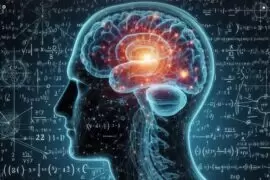
Neuroscience has begun to examine the anatomy of this disorder. One of the earliest structural MRI studies, conducted by Yaling Yang and Adrian Raine at the University of Southern California and published in 2005, found that individuals identified as pathological liars showed a 22 to 26 per cent increase in prefrontal white matter, alongside a 36 to 42 per cent reduction in grey-to-white matter ratios when compared with control groups.
A 2007 follow-up localised the increase to the orbitofrontal, inferior frontal, and middle frontal cortices—the regions governing moral reasoning and impulse control. The interpretation is compelling: pathological liars have more neurological tools to lie and fewer moral restraints against doing so. The DSM-5 does not classify pseudologia fantastica as a standalone disorder; instead, it treats it as a feature that may appear within broader personality structures, including narcissistic and antisocial types. This is not an in-person diagnosis of Donald Trump, and it adheres to the Goldwater Rule. It is about identifying familiar patterns that are empirically observed and their attendant behavioural manifestations meticulously documented.
Hannah Arendt observed in Crises of the Republic (1972) that political lying is as old as statecraft. Trump’s lies, unlike traditional political deception seeks to annihilate truth itself. He sneers at his opponents, impugns the media, and recruits millions into his alternative world. The language employed are often ribald and unparliamentary for a sitting US President. Mendacity combined with racially charged rhetoric becomes a subversive force with destabilising consequences for both domestic cohesion and international order.
The most scathing critics were not always his opponents. Before they bent the knee, his own lieutenants testified freely. Ted Cruz called Trump “a pathological liar” and “serial philanderer” in 2016. Marco Rubio called him “a con artist” on a national debate stage. JD Vance privately described him in leaked messages as “America’s Hitler.”Lindsey Graham warned that, “If we nominate Trump we will get destroyed…and we will deserve it.” These men knew. They chose power over truth and became complicit in everything that followed.
To date, the most devastating indictment of Trump has come from the judiciary. On 30 May 2024, a Manhattan jury found Donald Trump guilty on all 34 felony counts of falsifying business records — making him the first president in American history convicted of criminal charges. Payments to adult film actress Stormy Daniels, designed to suppress damaging information before the 2016 election, were concealed through fraudulent invoices and false ledger entries. This was fraud, proven beyond a reasonable doubt by documentary evidence, bank records, and witness testimony.
The parallel civil fraud case in New York was equally damning. After an 11-week trial, Justice Arthur Engoron found that Trump and the Trump Organisation had, for years, systematically inflated and deflated property values depending on what served their financial interests at any given moment — inflating them to impress lenders and deflating them to reduce tax obligations. Judge Engoron ordered Trump to pay $454 million in penalties and disgorgement, and he did not spare words: the defendants, he wrote, had “submitted blatantly false financial data,” and their conduct, he suggested, bordered on the pathological. It is an unusually severe characterisation for a court of law against a man who now holds the most powerful office on earth.
In both cases, Trump’s retaliatory diatribe was utterly predictable. He rejected the felony convictions, saying, “this was a rigged trial…a disgrace.” He called Judge Engoron “a rogue judge” and the case “a fraud on me.” It is alarming that an incumbent US President, whose malignant narcissism and megalomania appear to immunise him from personal wrongdoing, operates with a sense of infallibility. His reactions carry the impulsive volatility of a child in a tantrum as he increasingly treats US secular institutions and sovereign nations as instruments of his whims, however illogical and irrational. Instead of the resonance of leadership grounded in sound judgment and restraint, the world is witnessing perpetual noise, by the hour.
According to a database maintained by The Washington Post’s Fact Checker, Trump made 30,573 false or misleading claims during his first term—an average of more than twenty per day.
The consequences of institutionalised mendacity are not abstract; they are geopolitical and measurable. A Pew Research Centre survey across 24 countries in mid-2025 found a median of 62 per cent of respondents had no confidence in Trump’s leadership of global affairs. In Germany, 81 per cent expressed no confidence in Trump and 77 per cent in Canada. The numbers repeat across every major ally.
This decline in image has a beneficiary. By April 2025, China had overtaken the United States for the first time in global perceptions of positive influence on world affairs. They extend beyond domestic politics; it is a gift to adversaries who require nothing more than American unreliability to advance their own standing. Across 21 of 24 surveyed countries, majorities described Trump as “dangerous.” Only 28 per cent—fewer than one in three people globally—considered him “honest.” For a nation that spent the better part of a century building soft power on the premise that its word could be trusted, these numbers are not statistics. They are an epitaph.
The political lie is initially rewarding; it helps consolidate power, suppress dissent and manufacture some degree of loyalty. Eventually, it becomes a self-consuming fire. It requires layering of fabrications to sustain the preceding ones, progressively detaches the ruler from accurate intelligence about their own state, and eventually produces decisions dissociated from reality that collapse becomes not a possibility but a certainty. The tragedy is never that the liar is punished. It is the cost extracted from everyone else before the reckoning arrives. For the United States, the cost is already visible: erosion of global hegemony, weakening of institutional stability, and a growing distrust of its claims to uphold international law. On ideological, sociopolitical and geopolitical fronts, the damage has been unmistakable in the Trump era.
Alexis de Tocqueville, the French diplomat and historian, warned two centuries ago in Democracy in America that democratic societies carry a specific vulnerability: the rise of demagogues who tell citizens what they wish to hear rather than what they need to know. Trump is not an aberration in the American story. He is its logical endpoint—the product of institutional erosion, rising inequality, media complicity, and an electorate conditioned to value spectacle over accountability. This is not merely the story of one man’s pathology. It is the outcome of a civilisation’s moral failure and diminishing collective judgment.
Joseph de Maistre, the French political philosopher, famously wrote, “Every nation has the government it deserves.”
A republic that cannot punish the lie may set a precedent it cannot reverse. The courts convicted him. His allies condemned him. The world has withdrawn its trust. The verdict of history, when it comes, will not focus its harshest judgment on Donald Trump. It will ask, with quiet devastation, what kind of people knew what he was – and yet chose him anyway.
-30-
Copyright©Madras Courier, All Rights Reserved. You may share using our article tools. Please don't cut articles from madrascourier.com and redistribute by email, post to the web, mobile phone or social media.Please send in your feed back and comments to editor@madrascourier.com