The Performance Of Peace In An Age Of Religious Persecution

Christian-Violence_India_Madras_Courier
Representational image: Public domain/Wikimedia
As televised gestures celebrate harmony, Christians across India face intimidation, selective policing, and the steady erosion of constitutional religious freedoms.

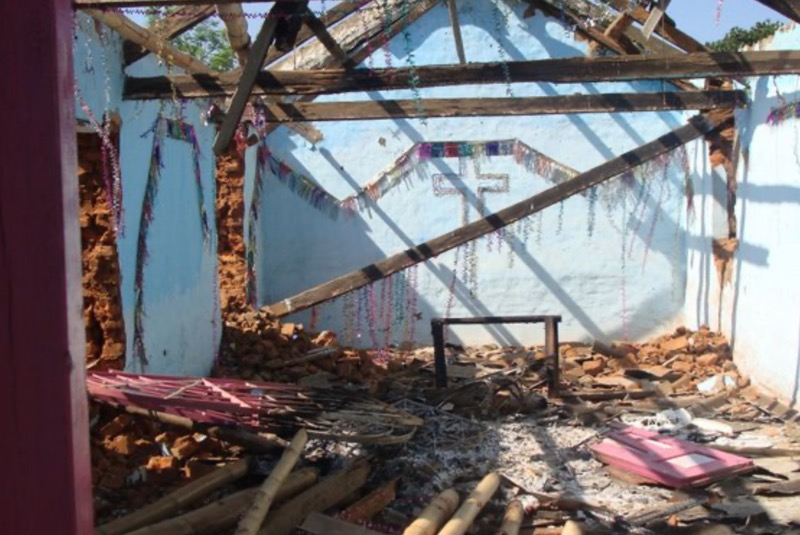
During Christmas last year, many places across North India witnessed incidents of violence against the Christian community. Some groups, with links to the Sangh Parivar, disturbed Carol services, vandalised church properties, and threatened the clergymen, among other things. Sadly, these incidents are no longer rare exceptions. 

Unfortunately, 2025 has been a particularly disturbing year, as such incidents have spread to new areas. For instance, Kerala, a state historically renowned for its communal harmony and social cohesion, witnessed an unruly incident that marred the Christmas celebration. It occurred at Pudussery, Palakkad, when a Carol group comprising children was visiting the homes of church members. Although there was no major violence, the very existence of such threats in Kerala signifies a negative trend.

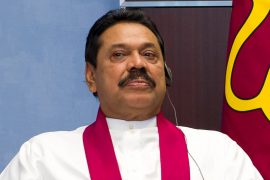
The paradox could not be starker. While the Prime Minister of India, Narendra Modi, was participating in a widely televised Christmas Eve night Mass at a church in Delhi—marked by messages praising harmony, compassion, and India’s multi-religious traditions—Christians celebrating Christmas came under vicious attack by the members of the various Sangh Parivar outfits.

Though the televised pictures sought to convey the message of peace and harmony, the lived experience of many Christians in states ruled or influenced by the BJP was one of intolerance, intimidation, and violence. This yawning gap between tokenism at the top and reality on the ground mirrors a political contradiction that has been the defining feature of public life in India for the last ten years. 

In northern India, the authorities do not often take kindly to Christmas celebrations. They view it as a colonial legacy, and accuse Christians of “forced conversions.” In December this year, self-appointed vigilante groups reportedly interrupted prayer meetings in the northern states of India, making accusations of “forced conversions.” Pastors were sometimes taken to police stations for questioning, even though the participants had made no formal complaints. Additionally, Carol singers in residential areas were asked to cease their activity, and churches reported being threatened by authorities.

The anti-conversion laws enacted by some states have significantly contributed to the uproar. These laws are poorly defined and weakly enforced. The onus of proof is shifted to the victims, thereby upending the presumption of innocence. Consequently, those guilty of intimidation and vandalism go scot-free.

This trend, especially in Kerala, is extremely worrying. The Christian minority in the state has been an integral part of the state’s history and a key player across education, healthcare, and social activism. Moreover, Christmas festivities in Kerala have traditionally been inclusive and not limited to any religious denomination. The fact that such celebrations are now getting controversial implies that ideological suspicion is slowly but surely taking over the long-lived tradition of coexistence.

Since the police in the BJP-ruled states always look the other way, the confidence that they can get away with anything emboldens the groups of vigilantes. In some of the reported instances, the law enforcement agencies did not even try to restrain the aggressors. Instead, they asked for explanations from those practising their religion. Eventually, this unjust response sends a loud and clear message: people will be intimidated, and sometimes the authorities back it up.

In such a scenario, the Prime Minister’s presence at a Christmas celebration service may come across to discerning people as an insincere attempt at managing the optics of his public image rather than a genuine act. On the face of it, there is nothing wrong with a Prime Minister being at a religious service of a minority community. In a genuinely plural democracy, such acts would be quite common. However, this becomes a matter of concern when the symbolism is not backed by deterrent action against the perpetrators of violence. 

The Indian Constitution assures the freedom of conscience and the right to profess, practice, and propagate religion. However, in reality, Christians are becoming isolated and are being constantly asked to justify their faith, worship, and even social service activities. Though religious liberty is constitutionally guaranteed, it is being increasingly restricted by administrative practices and societal antagonisms.

What is happening, therefore, is not just a temporary increase in intolerance during Christmas, but a slow and inevitable decay of constitutional morality. When Carol-singing children are seen as a threat, when the police regard prayer meetings as provocations, and when churches and educational institutions are vandalised or threatened without any punishment, then the damage goes beyond the people of a single faith. It undermines the concept of equal citizenship.

A similar concern is the political silence that goes with such events. Statements of condemnation, when they happen, are always cautious and weak. Hardly anyone is held accountable.

If the government really believes its claims about harmony and inclusion, its symbolism and rhetoric need to be backed up by real action on the ground. Law enforcement authorities should ensure they are impartial and safeguard constitutional rights. Additionally, political leaders should give up the habit of making statements affirming their commitment to pluralism and diversity while, behind the scenes, doing everything possible to sabotage it. 

Such inconsistencies risk damaging the country’s image abroad. A nation that aspires to global leadership cannot afford to be associated with discriminatory citizenship and a negative reputation for theatrical pluralism. The fact that Christmas is becoming an occasion for fear and violence should raise concerns among those who are really committed to protecting India’s democracy. All said and done, a country is judged by the extent of safety, respect, and freedom that it grants to all its people, not by the photos its leaders pose for.

-30-

Copyright©Madras Courier, All Rights Reserved. You may share using our article tools. Please don't cut articles from madrascourier.com and redistribute by email, post to the web, mobile phone or social media.
Please send in your feed back and comments to [email protected]

0 replies on “The Performance Of Peace In An Age Of Religious Persecution”