Now that the war on Iran, enthusiastically started by Prime Minister Netanyahu and President Trump, has entered the seventh month, with hardly any sign of an end, it is high time to conduct an audit from a holistic perspective- ethical, politico-diplomatic, and economic.
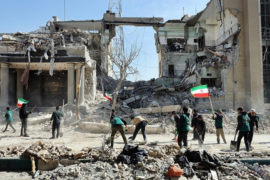
From an ethical point of view, attacking Iran while it was engaged in negotiations with the U.S., mediated by Oman, on Iran’s nuclear activities, shows the moral bankruptcy of the two men who, on 28 February, assassinated Ayatollah Ali Khamenei, the supreme leader of Iran, along with his family members and high officials who had come to meet him. Israel carried out the attack with the assistance, intelligence and more, from the U.S., which on its own carried out an attack, a few hours later, by a Tomahawk missile on an all-girls school in Minab, killing over 170 pupils and teachers.
What is even more revolting is that Trump initially argued that the U.S. was not responsible, as other countries too possessed the type of missile in question. An investigation, reluctantly and insincerely ordered by the Secretary of War, has yet to issue a report.
Netanyahu ordered the assassination of the supreme leader of Iran fully in keeping with the Israeli policy of carrying out assassinations, whether of Iranian scientists, political leaders of Hamas or Hezbollah or others. Israel has practically enjoyed impunity while transgressing international law, including the U.N. Charter, from time to time, primarily because Washington is morally bankrupt. However, the moral bankruptcy goes beyond the two men.
Australia’s Prime Minister Albanese declared that the late Ayatollah would not be mourned in Australia. Canada’s Prime Minister Carney supported the assassination, adding, rather inexplicably, that Canada was not involved in any manner. Reports suggest that Canadian forces under the U.S.-Canada Combined Command might have been involved, as 18 Canadians were with the U.S. Central Command, stationed in Bahrain and Qatar. The President of the European Commission, Ursula von der Leyen, stated that “with Khamenei gone, there is renewed hope for the people of Iran.” In short, assassination of a head of state is acceptable. The end justifies the means.
We conclude, sadly, that the moral bankruptcy is not confined to Netanyahu and Trump. Russia, China, Afghanistan and a few other countries roundly criticised the assassination of Ayatollah Ali Khamenei. India’s silence was loud. Four days after the Embassy of Iran opened a condolence register, Foreign Secretary Misri managed to find time to go and sign. Apparently, New Delhi was concerned that even expressing condolences might be resented by Israel. New Delhi has not uttered a word about the killing of the girls. We conclude that the land of the Buddha, Mahavir, Jain, Bhagavat Gita, and Mahatma Gandhi partakes of the fashionable moral bankruptcy.
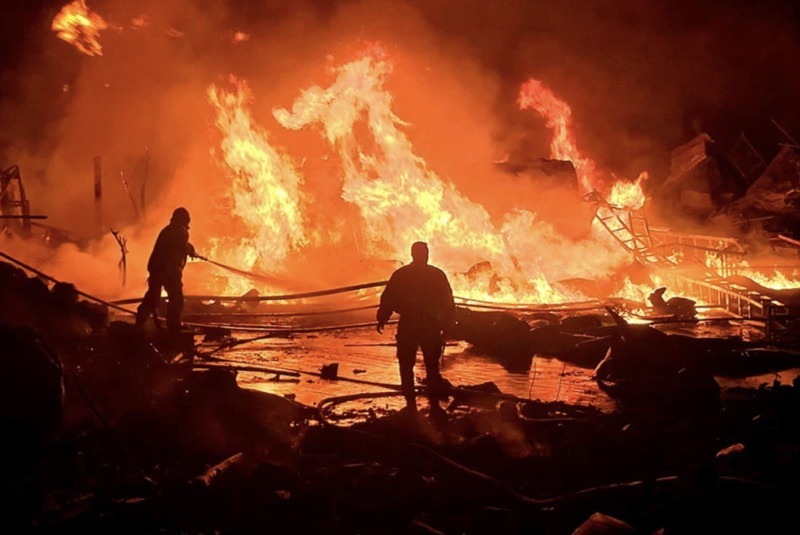
We do not have accurate figures on the grim toll of this war of choice. According to the latest official figures, at least 4,350 people are confirmed killed in Lebanon, 3,527 in Iran and 28 in Gulf states since the war began on February 28. 60 Israelis and 18 US service members have been killed in Iranian attacks. The Pentagon says 757 US personnel have been wounded.
The reader will note the asymmetry—100 to 1–between Iran, Lebanon, and the Gulf states, the victims, and Israel and America, the aggressors. This is an exceptionally asymmetric war. From a politico-diplomatic point of view, it follows that any country negotiating with the U.S. has to be on alert. It can be attacked militarily or economically by Trumpian tariffs during negotiations or even after an agreement is reached. Hardly any country issued a statement supporting the attack on Israel. However, actions matter more than words, spoken or unspoken.
India accelerated its military exports to Israel from the Adani group and others. The Amnesty International investigators have determined—conservatively—that since that date Indian companies have supplied Israel with at least 390,516 small arms parts for military-grade weapons; 564,970 parts of explosive ordnance (drone warheads, artillery shell casings and others); and 298 components of military vehicles to large Israeli companies that are direct suppliers of the Israeli armed forces. Amnesty International has systematically excluded from its research data any shipments that may have been destined for civilian use or for purely defensive purposes. However, India is not alone. Germany leads the list of European suppliers, followed by France, Greece, Romania, Serbia, Czechia, Finland, the U.K., and Italy.
In this context, it is important to correct a common misconception about Israel’s military invincibility in the region. However, we have to dig deeper: Why is Israel perceived to be invincible? Only because of America’s support—military, diplomatic, and financial. Did not Vice President Vance remind Israel that two-thirds of its weapons were made in America and paid for by American taxpayers?
The economic impact is stark. With the depleted stock of the arsenal, including Tomahawk missiles and interceptors, the Secretary of War has asked Congress for $90 billion. Additionally, he wants $1.5 trillion for his department in the 2027 financial year. He has not yet received it. Congress is yet to be convinced by his arguments.
Other nations, importers of hydrocarbon energy, were forced to pay an extra $ 330 billion; China was at the top, with $31.3 billion, followed by India at $20.5 billion. Trump’s family business has gained a lot by intervening in oil futures a few minutes before he makes a statement on the war that might raise or lower the price. The Joint Economic Committee of the Congress, established in 1946, has investigated the matter and, in its report dated 24th August, concluded that Trump Gains $15.5 Million From Oil & Gas Stocks After His Iran War Gives Big Oil Sky-High Profits.
We do not have figures for the cost of reconstruction in Iran or Lebanon. We note that, even when a war is on, the World Bank took the trouble to come up with figures for Ukraine.
Politically, it has been a self-goal for Netanyahu and Trump. They loudly proclaimed that the Iranian regime would fall, to be replaced by another of their choice. The regime, despite its repugnant authoritarian style and cruelty, has emerged stronger partly because the supreme leader was assassinated. That leader had issued a fatwa against building an atomic bomb, and Iran had scrupulously abstained from making a bomb despite possessing enough uranium and possibly the technology.
If Trump were seriously concerned, why did he assassinate that Ayatollah to be replaced by another who might go for the bomb? Why did Trump walk out of Obama’s JCPOA (Joint Comprehensive Plan of Action), which ensured that Iran would never go for a bomb, as the IAEA had complete oversight over its nuclear activities?
It follows that Trump’s repeated statements about his determination to prevent an Iranian nuclear bomb is a calculated charade. Ergo, he is bankrupt politically too.
Barbara Tuchman, in her book The March of Folly: From Troy to Vietnam, defined folly in government as the pursuit of policies contrary to one’s own self-interest, despite the availability of feasible and recognisable alternatives. The book, published in 1984, should be compulsory reading for presidents and prime ministers.
Netanyahu and Trump wanted a regime change in Iran. Instead, we might witness a regime change in Israel and a lame-duck president in the U.S. The law of unintended consequences does indeed play its part in history. We will bear witness to this.
-30-
Copyright©Madras Courier, All Rights Reserved. You may share using our article tools. Please don't cut articles from madrascourier.com and redistribute by email, post to the web, mobile phone or social media.Please send in your feed back and comments to [email protected]