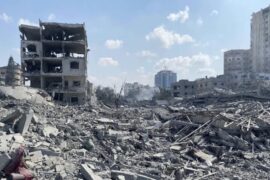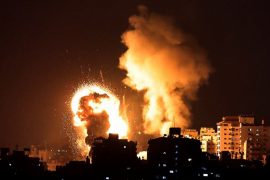
Global attention is selective in its view of conflicts. The unending war in Ukraine holds attention due to the involvement of Russia. Over the last two years, the crisis in Gaza has been in the focus of the world due to initial Hamas thrusts into Israel and the subsequent near annihilation of the population of Gaza by Israel.
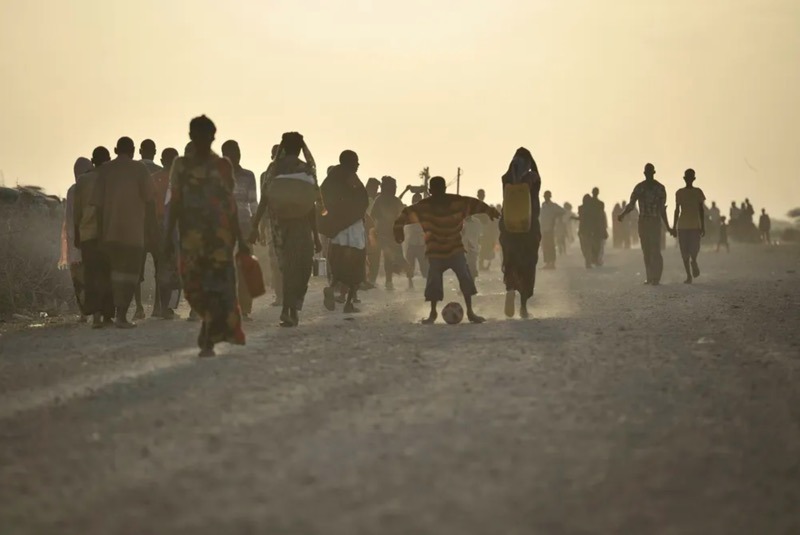
In this crisis, about 70,000 people have died on both sides, and about 2 million are displaced internally. Yet the world’s attention barely goes to the civil war in Sudan, which is now in its third year. In this war, over 150,000 people are reportedly dead. Five hundred twenty-two thousand children have reportedly perished due to malnutrition. 8.8 million people are internally displaced, and 3.5 million Sudanese have fled the country as refugees. Sudan today is widely regarded as one of the globe’s worst humanitarian catastrophes, with nearly 25 million people suffering extreme hunger.
This civil war between two factions of the military government of Sudan essentially involves the Sudanese Armed Forces (SAF) led by General Abdel Fattah Al Burhan and the paramilitary Rapid Support Forces (RSF) commanded by General Mohammed Hamdan Dagallo, known as Hemedti, who leads the successor outfits of the cruel Janjaweed coalition from Darfur.
While the Civil War is on, ethnic cleansing or genocide is reported in the non-Arab parts. In recent weeks, the RSF has consolidated its hold over the Darfur region, often executing anyone opposed to them or supporting the Khartoum forces. In many ways, this looks like ethnic cleansing; essentially, it is a domination exercise to have a population beholden only to the RSF.
Since 2017, the RSF has had the status of an independent security force. Initially, in collusion with then-President Bashir, the RSF became a tactical mercenary arm fighting in Yemen and Libya, and sometimes with the Wagner group. Since the Bashir government fell in April 2019, the Sudan Liberation Movement(SLM) became more active in Darfur with the base of non-Arab ethnic groups. Following the 2021 coup, which led to Sudan’s suspension from the African Union, tensions between the RSF, a regional power within Sudan, and the SAF escalated to the point where the RSF could potentially control Khartoum.
No agreement was reached on how the RSF would be integrated into the National Military, nor on the role and status of RSF elites under al-Burhan as Sudan’s commander-in-chief. The RSF forces have also had success in controlling parts of Khartoum. However, the SLM and other anti-RSF Islamic groups, such as the al-Baraa Bin Malik Brigade and Sudan Shield Forces, have supported the SAF in holding onto Khartoum. The SAF is now not an effective power in Darfur and holds on to Khartoum with the help of Islamic groups and militia.
In 2025, the SAF regained control of North Khartoum, while the RSF declared a rival government based in Nairobi. By May 2025, Khartoum had been reclaimed by the SAF. The RSF now started a focus on North Darfur, aiming to capture El Fasher, the last state capital in the region under SAF control. In late October, Al Fasher finally fell after immense civilian casualties and genocidal ethnic cleansing.
In May, the RSF also took control of strategic cities in West Kordofan, which is important because it produces gum Arabica, used by the food processing industry in the United States, and is perhaps the only item of export from Sudan that is not currently sanctioned. Local analysts told me that the capture of strategic cities in West Kordofan represents not just a military victory, but also an economic control point that could further destabilise Sudan’s economic prospects during the ongoing civil war.
In June, the border areas around Sudan, Libya and Egypt and Gabal El Uweinat, were attacked by the RSF in tandem with the Libyan National Army of Khalifa Haftar, which attacked SAF-controlled areas. The RSF is now noted to have captured the entire Sudan-Libya border, easing their role in support of Libyan factions or receiving their support in return.
In July 2025, the International Criminal Court reported to the UNSC that war crimes and crimes against humanity are being committed in the Sudan Darfur region with immense humanitarian cost. Weapons are reportedly entering Sudan from China, Russia, Turkey, Yemen, the UAE, Serbia and others, as per reports from local observers. The role of external powers is complex and often murky.
The changing alignments in the Horn of Africa and in the Libyan crisis have contributed to the crisis. The leading players come from Saudi Arabia and the UAE. The contention here is that Saudi Arabia would not like the UAE to have access to the Red Sea. According to analysts, the UAE would like the RSF, which it backs, to take over Port Sudan. The UAE would also look at Assab in Eritrea as another avenue of reaching the Red Sea. Observers of thw Horn of Africa confirm this.
The RSF appears to enjoy backing from the UAE, which now views it as the lesser Islamist threat compared to the Khartoum-based coalition. The SAF, in its bid to maintain power, has aligned with several Islamist factions, drawing support from Saudi Arabia, Qatar, and, seemingly, Egypt as well. The growing dominance of the SAF has, in turn, prompted the UAE to push for a stronger role for the RSF, whose leadership remains closely tied to Abu Dhabi.
Control over large tracts of south-western Sudan, and particularly Darfur, gives the RSF access to Libya and Chad. If they take over the Kordofan province, they will be on the border of South Sudan.
What was previously a proxy fight in Somalia, where the Gulf states were involved in various factions, including Somaliland, Somalia, Puntland, and others, has now clearly spilt over into Sudan. The partnerships are not always the same due to changing interests.
In this, the African Union and IGAD, who were supposed to maintain the peace, have fallen by the wayside. The African Union issues condemnations, but can do precious little in Sudan, which is suspended from its membership due to the coup in 2021. IGAD would like to expand its efforts beyond its initial three-year plan, but it has been unable to do so due to Sudan’s refusal to participate in IGAD activities. The UN and the Red Crescent are working together to prevent a humanitarian crisis, but their workers are also subject to violence when the crisis is underway.
Along with the Sudan crisis, one must also consider the situation in Ethiopia. The current Ethiopian regime partnered with Eritrea to push Tigray into submission. At the same time, there have been rebellions in Amhara, Oromo, and other areas within Ethiopia, rendering areas outside Addis Ababa risky.
Now, in changed equations, the Emiratis have shifted from supporting Eritrea to backing the Abiy regime in Ethiopia and have massively funded its development, similar to what they do in Egypt. But they cannot bring Egypt and Ethiopia together due to their differences over the GERD dam. The rising Emirati influence in Ethiopia is funnelling Ethiopian ambitions to break out of its landlocked status and grasp a port. They had earlier tried through Somaliland and are now eyeing Assab in Eritrea, either through an agreement or by gaining control.
The Eritrea-Ethiopia partnership has broken down, and today, Eritrea reportedly supports the TPLF in Tigray and other rebel groups in Amhara and Oromo to keep the Abiy government on tenterhooks. Since the UAE’s push through Ethiopia to seize Assab is now evident, Saudi Arabia and Egypt would like to support Eritrea in holding on to Assab and preventing the UAE’s access to the Red Sea. This leads Eritrea to back the Khartoum faction in Sudan against the RSF, and consequently, Ethiopia now backs the RSF.
While these regional power plays are underway, there is no particular force or coalition which can control the civil war in Sudan, whose humanitarian cost is overlooked by the world in preference to more media-visible conflicts in Ukraine and Gaza.
The question now that remains is, what is the US doing here, since it is so keen to resolve more and more conflicts? The United States has found itself without levers and has created a ‘quad’ in which both Saudi Arabia and the UAE are present, along with Egypt; however, none of them are serious about the efforts and are joining this initiative only to avoid annoying the United States.
-30-
Copyright©Madras Courier, All Rights Reserved. You may share using our article tools. Please don't cut articles from madrascourier.com and redistribute by email, post to the web, mobile phone or social media.Please send in your feed back and comments to [email protected]