The Cape And The Kimono: How Western Superhero Comics Script Masculinity, Race And The Global Child

Superheroes-Madras-Courier
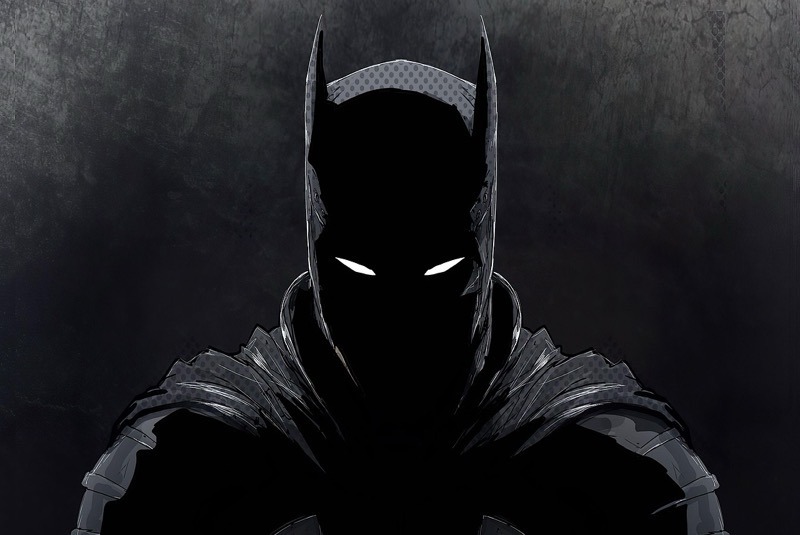
Representational Image: Public domain.
Western superheroes influence our thinking, shape our world views, and act as instruments of cultural imperialism.

On a May afternoon in 2001, nine-year-old Julian Roman climbed to his apartment roof in Bedford Park, the Bronx. Friends said he had jumped between rooftops, emulating his favourite superhero. This time, witnesses said, he yelled “Look, I’m Superman” before leaping. He fell five storeys and died. Three years later in Kolkata, nine-year-old Reshmi Roy died attempting to spin like Shaktimaan, a towel tied around her as a costume. In Santiago, a five-year-old in a Superman cape fell from a tenth-floor window and lost her life. These children absorbed the superhero not as a story but as a template for a powerful, admirable body, and acted accordingly.

These deaths are rare but expose an ordinary process in millions of children who read comics or play games. Albert Bandura’s early-1960s Bobo doll — social-learning experiments showed that children acquire behaviour by observing a model without direct reward or punishment; later research found identification deepens the effect. Children are especially receptive when the model is prestigious, distinctive and repeatedly rewarded, precisely the conditions superheroes supply. The genre repeatedly makes violence look like justice and invulnerability like courage. Public admiration usually confirms the hero’s infallibility. Before a child can articulate masculinity, comics entrench its stereotype: broad-shouldered, square-jawed, supremely confident, entitled to command and born to rescue. The superhero becomes an early curriculum in gender, virtue and civilisational hierarchy, delivered without the scrutiny applied to schoolbooks.

Superhero comics were long treated as juvenile ephemera, receiving a fraction of the scrutiny applied to film or literature. However, comics, gaming avatars and cinematic adaptations have built templates of masculinity, racial hierarchy and heroic legitimacy for children worldwide, often displacing traditions that ask different things of a hero.

Superman’s creators gave him a scriptural origin: an orphan of unimaginable power who restrains himself, driven by a chivalric duty to protect the weak, conspicuously women. Scholarship describes him as a saviour, a women’s “dream man” and an ideal for men—effectively a guidebook for expected manhood. Modesty, evidently, was not high on the syllabus.

Batman offers the darker variant: wealth is heroism’s precondition, physical dominance its expression and emotional restraint its price. Bruce Wayne’s fortune enables his vigilantism, making Gotham’s alternative welfare state one man in a rubber suit and Batmobile—lavishly funded, privately run and accountable to no one.

Both figures—and Spider-Man despite his relatability—share a masculinity of stoicism, unilateral action and suppressed vulnerability. In the 1980s, sociologist R. W. Connell termed this hegemonic masculinity: a dominant ideal of toughness, competitiveness and emotional control that subordinates other forms of manhood. The rules of manhood are familiar: command signals strength; dependence and vulnerability do not.  Even in a team, the decisive sacrifice, revelation or battle commonly returns the hero to solitary action, confirming independence as supreme competence. Tears remain feminised: women shed them; men wipe them. Children thus learn who is strong and who is saved, internalising a narrow male emotional range where men suffer in silence because vulnerability somehow makes them less of a man.

If masculinity is the genre’s visible export, race is its subtly encoded one. The superhero comic emerged from, and continually re-encoded, the racial anxieties of twentieth-century America.

Asian villainy entered American popular culture and comics through Fu Manchu, Sax Rohmer’s sinister Asian mastermind, and imitators such as the Yellow Claw and the Mandarin. This racist “Yellow Peril” inheritance made scheming, accented villains bent on world domination an enduring trope. Wartime comics depicted Japanese enemies as grotesque or subhuman, and the mould persisted: Shang-Chi, Marvel’s Chinese martial-arts superhero, debuted in 1973 as Fu Manchu’s son.

The Cold War did the same for Russians. Marvel’s Crimson Dynamo, Titanium Man and Red Ghost emerged in the 1960s as propaganda shorthand, their names signalling menace. Russian characters remain disproportionately cold-blooded villains or henchmen, marked by cartoonish names, thick accents, gruff voice, scary scars and little humanity. DC was gentler, humanising Soviet heroes such as Dmitri Pushkin, the armoured Rocket Red who joined the Justice League, but the association between “Russian” and “threat” outlived the Soviet Union and resurfaces with tensions in Moscow. The Cold War ended in 1991; nobody told the inkers.

India’s case is revealing because the dominant pattern is absence. Across decades of Marvel and DC, Indian characters have rarely occupied the heroic centre, remaining peripheral or niche. Even Pavitr Prabhakar, Marvel’s best-known Indian superhero, began as an Indian reimagining of Spider-Man rather than an independently conceived addition to its core pantheon. Elsewhere, India appears through the awkwardly exaggerated accent epitomised by the Simpsons’ Apu. In the Western superhero imagination, a nation of a billion and a half has enjoyed remarkable economy in casting: no part at all, or the court jester’s — rarely the hero’s.

Social psychology helps explain how these associations are absorbed. Henri Tajfel’s social identity theory, based on 1970s minimal-group experiments, found that people form in-group loyalties from the flimsiest cues. Costumes, accents and flags are far stronger markers. Comics work quickly: a face, an accent or a uniform can tell the reader, in a single panel, who wears the halo and who inherits the horns. Repeat the cue often enough and associative memory does the rest. When comics repeatedly pair an accent with villainy, they train the cognitive machinery of prejudice before a Russian, Chinese or Indian child recognises that the Other might look like himself. Framing precedes consequences.

The divide lies beneath the costumes: Western and Japanese traditions disagree not merely over what a hero looks like, but what a hero is for.

The Western superhero draws deeply from Greco-Roman heroic mythology and northern European epic—Achilles’ wrath, Herakles’ labours and Beowulf’s combat with Grendel. Defined by individual excess, superhuman strength and indomitable will, he is everything the common man is not. Spider-Man’s habit of bypassing police and trusting his own judgement is an unmistakable echo of American foreign policy: unilateral action guided by its own conviction of righteousness. American exceptionalism could hardly ask for a better costume — exceptional birth, immense power and moral self-certification, answerable, naturally, to none.

The Eastern hero, particularly in Japanese storytelling, rests on Giri and Ninjō—duty and human feeling—and Wa, harmony within the group over individual assertion. Unlike the Western vigilante who operates above the law, Shōnen protagonists Naruto, Ichigo and Tanjiro gain strength through effort, mentorship and social bonds. Manga often marks isolation as dangerously misguided: the Western hero leaves the group to prove his strength; the Japanese hero discovers that strength without the group is scarcely heroic.

Japan met American cultural dominance with export, not protectionism. Manga rose from niche import to nearly fifty-seven percent of British graphic-novel sales by 2024; 47 of the year’s top 50 comics were Japanese.  Grand View Research put manga’s share above forty-five percent of comics revenue worldwide, driven by Shōnen, romance, sport, comedy and horror—genres America’s cape-focused industry neglected.

Manga exported more than an art style. Its heroes commonly earn their strength, recognise the inevitability of social interdependence and learn that power without humility is not much of a virtue. A generation now forming its idea of heroism through manga is being raised on a philosophically different diet than the one their parents received from Superman and Batman.

China’s attempt has been more constrained: domestic manhua generate hundreds of millions of dollars, a fraction of manga’s scale. China’s conspicuous soft-power export is gaming, notably the 2024 blockbuster Black Myth: Wukong, which draws on the sixteenth-century Journey to the West and the Monkey King, Sun Wukong, to present a Chinese heroic tradition globally. Its success fits Beijing’s ambition to make Chinese culture exportable soft power: no cape or comic panel, only one enormous, extremely aggrieved monkey.

Did Western publishers deliberately marginalise non-Western heroic traditions? Probably not through boardroom conspiracy. Such a cultural conspiracy would presume a degree of organisational competence the industry has seldom been accused of possessing. The more persuasive explanation is structural: markets, distribution networks and cultural habit can reproduce exclusion perfectly well without anyone orchestrating it. 

Manga’s rise cuts against deliberate, successful suppression. Habit is more plausible: familiar shorthand survives because Fu Manchu’s silhouette and the Russian goon’s accent require neither introduction nor imagination. By now, both are so firmly lodged in the cultural consciousness that entire peoples unwittingly inherit caricatures in which they scarcely recognise themselves. Structural bias needs no boardroom villain—only generations of writers reaching for formulas that worked before. 

Herbert Schiller’s theory of cultural imperialism explains cultural onslaught without premeditation. He argued that American media ownership reflects and reinforces economic power, standardising global values around an American template and producing cultural homogenisation. Large studios finance translation, merchandising and distribution while local creators serve smaller markets. Familiarity masquerades as universality, exposure as automatic preference. Critics note that Korean, Nigerian and Indian entertainment create counter-flows into Western markets. Their success shows cultural dominance, however structural, is neither natural nor  irreversible. Manga proves the point rather emphatically.

Cultural power eventually becomes personal. A child measures himself against a hero, not merely watching one. Does courage speak in his accent, carry his name or resemble his family? Identifying with characters who reflect a child’s experience can strengthen self-esteem, while stereotyping or absence narrows who seems entitled to admiration and agency. A marginal character may remain powerless, comic or dependent on a Western protagonist. The test is simpler: does the character have the liberty to make consequential choices and define heroism on his own terms, or merely serve as somebody else’s sidekick?

The answer is cultural competition responsive to new social realities, not protectionism. Indians and Chinese have climbed income ladders, entered boardrooms and laboratories and acquired global influence; their fictional stereotypes, curiously, remain stuck in another century. A non-Western child raised on Krypton, Gotham and Beowulf’s Denmark, without equivalent investment in the Ramayana’s Rama, the Mahabharata’s  Arjuna, or Confucian and Buddhist storytelling, receives no neutral diet of “universal” stories. Omission teaches that heroism belongs elsewhere—that imagination’s moral centre lies in Superman’s Metropolis rather than Ayodhya or Kyoto and ultimately the child’s own roots begin to feel foreign to him. 

Manga proves the problem solvable. Japan built an industry on its own terms rather than requesting representation, and that industry now outsells American superheroes on American soil. Through Astro Boy, Doraemon and shōnen manga, it normalised alternative models of courage, strength and obligation, proving local content can compete rather than merely survive. India, China outside gaming, and much of the Global South lack an equivalent global ecosystem, leaving children fluent in Gotham’s morality but largely illiterate in their own.

George Gerbner’s cultivation theory explains this homogenisation. A repetitive media environment need not persuade directly. With high frequency of exposure, the line demarcating  reality and fiction, real and reel life begins to disappear. The damage lies not in one racist villain or hyper-masculine hero, but in repetition at civilisational scale until the stereotype becomes ossified in the audience’s imagination. What began as caricature slowly transforms into a cultural marker.

Reinforced by gaming avatars, this template homogenises how children imagine heroes. A boy in Dubai, Lagos or Chennai reaches for the same cape, jawline and solitary defiance as one in Ohio, not because the model is universal, but because it arrived first with more capital and little local competition. Manga also shows what reversal requires: heroes powerful enough to compete, rooted in their own civilizational inheritance—history, myth, folklore and legend—a lesson for every civilisation whose own are still waiting to be redrawn. 

The stakes are written into childhood. Every child who never sees a hero shaped by his own soil learns, quietly, that greatness happens elsewhere. Correcting that does not require discrediting Superman. It is the overdue work of ensuring that a child growing up in Kochi, Karachi or Kuala Lumpur has an equally well-drawn hero who is a son of the soil, breathing his native air and singing his local tunes, not merely the alien chords of Kansas.

-30-

Copyright©Madras Courier, All Rights Reserved. You may share using our article tools. Please don't cut articles from madrascourier.com and redistribute by email, post to the web, mobile phone or social media.
Please send in your feed back and comments to [email protected]

0 replies on “The Cape And The Kimono: How Western Superhero Comics Script Masculinity, Race And The Global Child”