
The Bab el-Mandeb & The Growing Cost Of Geopolitical Risk

Ban-el-Mandeb-Madras-Courier
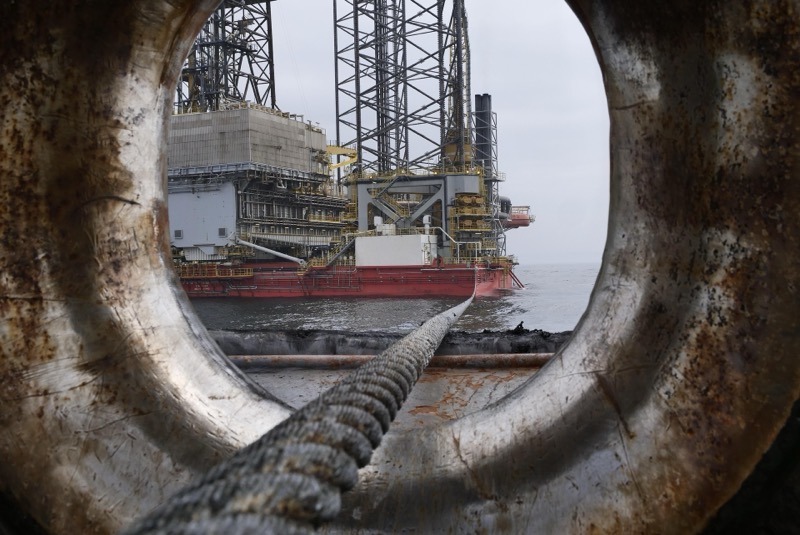
Representational image; public domain.
The Houthi threat to shut the Bab-el-Mandeb highlights how maritime insecurity can rapidly disrupt trade and energy markets.

Markets have become accustomed to geopolitical shocks. Yet some announcements resonate far beyond the battlefield. The latest came from Yemen’s Iran-backed Houthi movement, which declared that it would impose what it called a “maritime embargo” on Saudi Arabia by targeting Saudi vessels transiting the Bab el-Mandeb Strait. Whether the group possesses the capability to sustain such an operation remains uncertain. What is already clear, however, is that the threat has exposed the vulnerability of another critical artery of global commerce at a moment when the world’s energy and shipping networks are already under severe strain.

Saudi Arabia’s reaction was predictable. Its foreign ministry condemned the announcement in the strongest terms and pledged to take all necessary measures to protect the kingdom’s shipping. Such assurances are politically necessary but commercially insufficient. Shipping markets do not wait for missiles to strike before adjusting their calculations. Perceived risk is often enough to reshape trade flows, increase insurance premiums and persuade operators to reroute vessels.

In maritime commerce, expectations are as consequential as events. Perhaps that explains why the Bab el-Mandeb commands such strategic attention. The narrow waterway that separates Yemen from Djibouti and Eritrea links the Gulf of Aden to the Red Sea and connects to the Suez Canal. Together these waterways form one of the world’s indispensable trading corridors, carrying an estimated 10-12 per cent of global maritime trade each year. Few alternative routes offer comparable efficiency between Europe and Asia. Any disruption, therefore, reverberates well beyond the Middle East, affecting manufacturers, retailers and consumers across multiple continents.

The timing is particularly awkward. For much of this year, the Strait of Hormuz, through which around one-fifth of globally traded oil and gas normally passes, has become increasingly insecure. That has encouraged Saudi Arabia to rely heavily on infrastructure designed precisely for such contingencies. Its east-west pipeline, linking the Abqaiq processing complex to the Red Sea port of Yanbu, has once again become central to the kingdom’s export strategy. Restored to full operational capacity earlier this year, the pipeline enables crude to bypass Hormuz entirely. Yanbu is now reported to handle more than 70 per cent of Saudi crude exports, transforming the Red Sea from an alternative route into an essential one.

That matters because Saudi Arabia remains one of the world’s largest energy exporters. China is its biggest customer, while Japan, South Korea, India and Singapore also rely heavily on Saudi crude. Maintaining uninterrupted exports to these markets is vital not only for Saudi revenues but also for the stability of global oil supplies. The Red Sea had increasingly become Riyadh’s insurance policy against disruption in the Strait of Hormuz. The Houthis now appear intent on challenging that assumption.

For the moment, their threat remains limited. The group has declared its intention to target Saudi shipping rather than close the Bab el-Mandeb to all commercial traffic. A comprehensive blockade would pose a far more serious challenge to international trade and would almost certainly provoke a broader international response. Yet selective attacks can prove surprisingly disruptive. Commercial shipping depends on probabilities rather than certainties. Operators must decide whether the expected returns justify the risks, and even isolated incidents can alter those calculations.

The implications would become considerably more serious if the conflict were to expand. The Bab el-Mandeb is not merely an oil transit point. It is also a principal route for container shipping, linking Asian manufacturers with European markets. Electronics, machinery, industrial components and consumer goods all pass through the corridor in enormous volumes. Global supply chains, already tested by pandemic disruptions, wars and climatic shocks, have become more resilient than they once were. However, they remain vulnerable to prolonged interruptions at key maritime chokepoints.

There are alternatives, though none is especially attractive. Ships can avoid the Red Sea by sailing around the Cape of Good Hope. Doing so, however, adds thousands of nautical miles to journeys between Asia and Europe. Longer voyages consume more fuel, require more crew time, and tie up vessels that might otherwise complete additional voyages. Reduced shipping capacity inevitably puts upward pressure on freight rates, particularly if many carriers alter course simultaneously.

Insurance markets have already begun to reflect the deteriorating security environment. Premiums for ships transiting the Strait of Hormuz have reportedly risen to between 3 per cent and 10 per cent of a vessel’s hull value, adding millions of dollars to the cost of individual voyages. Reports suggest insurers are now increasing premiums for vessels entering the Red Sea as well. Such costs rarely remain confined to shipowners. They ripple through supply chains, appearing first in freight charges before gradually feeding into wholesale and retail prices.

That transmission mechanism matters because inflation has become unusually sensitive to supply-side shocks. Many advanced economies have only recently begun to regain confidence that price growth is moderating after several years of persistent inflation. A sustained increase in shipping costs would complicate that progress. Although energy markets would probably feel the effects first, higher transport costs eventually spread across a far broader range of goods, from consumer electronics to household appliances and manufactured products. Modern inflation is often as much about logistics as monetary policy.

The broader lesson is that geopolitical fragmentation is steadily reshaping global commerce. For decades, businesses assumed that maritime trade routes would remain broadly secure, allowing efficiency to trump resilience. That assumption has become increasingly difficult to sustain. Companies now devote growing resources to diversifying suppliers, increasing inventories and redesigning logistics networks in anticipation of disruption. These adaptations improve resilience but come at a cost, reducing some of the efficiency gains that underpinned globalisation over the past three decades.

Whether the Houthis can enforce their threatened embargo remains uncertain. Their military capabilities, Saudi defensive measures and the presence of international naval forces will shape events in the weeks ahead. Equally uncertain is whether the campaign remains confined to Saudi shipping or broadens into a wider challenge to international navigation. Markets are unlikely to wait for definitive answers. They have repeatedly shown that the mere possibility of disruption is often sufficient to change commercial behaviour.

The episode also illustrates a larger strategic reality. The world’s dependence on a handful of maritime chokepoints leaves international trade vulnerable to conflicts involving actors with relatively limited conventional military power.

The Bab el-Mandeb joins the Strait of Hormuz, the Suez Canal and the Panama Canal as waterways whose importance far exceeds their geography. Disruption at any one of them can rapidly reverberate through commodity markets, manufacturing supply chains and inflation expectations worldwide.

The latest Houthi threat may or may not evolve into a sustained blockade. Even if it does not, it serves as another reminder that in an increasingly fragmented world, the greatest economic risks often arise not from what has already happened, but from what markets fear could happen next.

-30-

Copyright©Madras Courier, All Rights Reserved. You may share using our article tools. Please don't cut articles from madrascourier.com and redistribute by email, post to the web, mobile phone or social media.
Please send in your feed back and comments to [email protected]

0 replies on “The Bab el-Mandeb & The Growing Cost Of Geopolitical Risk”