
Tariff Turmoil: How A Hike On Indian Imports Could Shift U.S. Consumer Habits

Trump-Tariff-Madras-Courier
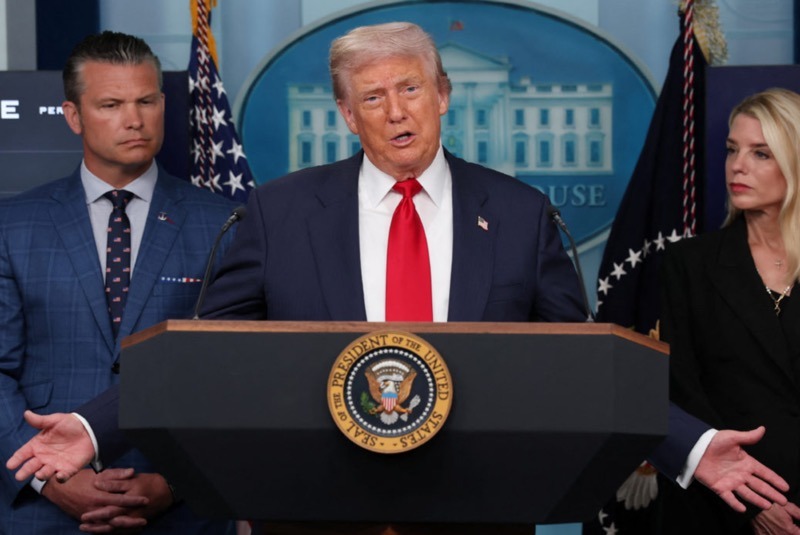
Representational Image: Public domain/Wikipedia.
The 50 per cent tariff risks creating a lose-lose situation.

On August 6, 2025, the U.S. government announced a sharp increase in tariffs on Indian goods and services, raising them from 25 per cent to 50 per cent, effective August 27. The tariff impacts $54 billion of India’s $86.5 billion in annual exports to the U.S., with the government citing concerns over India’s trade relations with Russia as the reason.

This new policy is particularly significant because many American consumers depend on Indian products, including textiles, gems, and IT services. The effects of this tariff will largely depend on how sensitive consumers are to price changes, a concept known as price elasticity of demand.

Price elasticity of demand refers to how much the demand for a product changes when its price changes. If demand is inelastic (elasticity less than 1), people are less likely to stop buying a product even when its price increases. On the other hand, if demand is elastic (elasticity greater than 1), even a small price increase can cause a significant drop in the quantity of the product purchased.

The 50 per cent tariff will significantly raise the price of imported goods. For instance, a $100 item that once cost $110 because of a 10 per cent tariff could now cost $125. Whether American consumers continue to purchase these products will depend on how necessary the goods are, if alternatives are available, and how much disposable income consumers have.

Certain products, such as generic medicines and IT services, are less sensitive to price changes. India supplies nearly half of America’s generic medicines, which are expected to be worth $12.7 billion in 2024. While most generic drugs are exempt from the new tariffs, related medical supplies and equipment will not be. Generics are inelastic, meaning that demand will likely remain steady even with a price increase of 10–15 per cent.

These essential products, especially for individuals managing chronic illnesses, will still be purchased despite the higher prices. This could result in higher healthcare costs for U.S. households, which may place the greatest burden on lower-income families who rely on these affordable medications.

India also provides a substantial portion of IT and business process outsourcing (BPO) services to U.S. businesses, valued at $30 billion. The demand for these services is also inelastic because very few countries can match India’s cost-efficiency and scale.

If the costs of these services rise due to the tariff, U.S. businesses may pass the increased costs onto consumers. For example, a 10 per cent rise in the cost of IT services might lead to a 1–2 per cent increase in prices for services in finance, retail, or e-commerce. Consumers would likely see the effects of this price increase in their everyday services, as U.S. businesses heavily rely on affordable Indian IT services for software development, customer support, and more.

In contrast, products like textiles and jewellery are more elastic, meaning that small price increases will likely lead to larger drops in demand. India exports approximately $10 billion in textiles and $11.9 billion in gems and jewellery to the U.S. These products fall into the elastic demand category because alternatives from other countries, such as Bangladesh or Vietnam, are available and subject to lower tariffs.

If prices increase due to the new 50 per cent tariff, American consumers may turn to these other countries for more affordable options. For example, a $50 cotton shirt from India might now cost $62.50, leading some shoppers to look for cheaper alternatives. While these alternatives exist, they might not match India’s production capacity or quality, particularly in textiles, where Vietnam’s production capacity is about 30 per cent smaller than India’s. This could lead to shortages or lower-quality products in the market.

The jewellery market could also face a drop in demand. Mid-range diamonds and gold jewellery, which are a significant part of India’s exports to the U.S., may see a 15–20 per cent decline in demand as buyers choose lab-grown diamonds or delay their purchases.

Major U.S. retailers, like Tiffany & Co., that source a large portion of their jewellery from India, may experience supply disruptions and reduced variety in their collections, affecting both prices and availability. Thus, while consumers might still purchase these goods, the higher costs and potential quality issues could reduce their willingness to buy as much.

India’s electronics exports to the U.S. are smaller, totalling around $1.4 billion, but are still an important part of the trade relationship, particularly for parts used in products like smartphones. These electronics have a moderately elastic demand, meaning that if prices rise due to the new tariff, some consumers may delay upgrading their devices or opt for cheaper alternatives.

While U.S. manufacturers are likely to face limited options for replacing Indian-made parts, such as those used in iPhones, consumers might turn to more affordable brands or hold off on purchases. This shift in consumer behaviour could affect both the availability and the cost of electronic products in the U.S.

The overall effect of the tariff will vary depending on income levels and the type of product. Lower-income households, which are more sensitive to price increases, will likely reduce their spending on non-essential goods like clothing and jewellery. Higher-income households may absorb the increased costs for essential items like medications and IT services, but may cut back on discretionary spending, such as jewellery or luxury items.

Based on estimates of elasticity, the demand for goods affected by the tariff could drop by 5–10 per cent, contributing an estimated 0.2–0.3 percentage points to U.S. inflation. For example, large retailers like Walmart, which source a significant portion of their textiles from India, will likely pass on 70–80 per cent of the increased costs to consumers.

The impact of the tariff could also affect U.S. domestic producers who are shielded from foreign competition. These producers may also take advantage of the reduced competition to raise their prices. History from the 2018–2019 tariff hikes shows that tariffs essentially led to higher costs for consumers, and the 2025 tariff increase could have a similar inflationary effect.

Some Indian exporters might absorb a small portion of the tariff to remain competitive, but most will pass the cost on to U.S. buyers. Additionally, India might redirect some of its exports to other markets, such as the European Union or ASEAN nations, where it has favourable trade agreements. This shift could reduce the supply of goods to the U.S., particularly for inelastic products like pharmaceuticals and IT services, exacerbating the price increases.

If India retaliates with its own tariffs on U.S. exports, such as on almonds (which are worth $1 billion annually), U.S. consumers could see higher prices for these products as well. Almonds, for example, have moderately elastic demand, meaning that price increases could cause a noticeable drop in consumption.

If the tariff war continues to escalate, it could create a situation where both countries suffer from higher prices and reduced access to goods. This would leave American consumers with fewer choices and higher costs, particularly for essential items that don’t have easy alternatives.

The 50 per cent tariff risks creating a lose-lose situation. Americans will face higher prices for many goods, particularly for inelastic items like generic medicines and IT services, where price increases are less likely to reduce demand. For more elastic goods, like textiles and jewellery, consumers will likely shift to alternatives, but this could lead to supply shortages, quality issues, and higher prices.

With less than a month before the tariff is set to go into effect, there is little time for diplomatic negotiations to resolve the issue. If a solution is not reached, U.S. consumers will likely face a period of higher prices and fewer choices, driven by the economic realities of demand elasticity.

-30-

Copyright©Madras Courier, All Rights Reserved. You may share using our article tools. Please don't cut articles from madrascourier.com and redistribute by email, post to the web, mobile phone or social media.
Please send in your feed back and comments to [email protected]

0 replies on “Tariff Turmoil: How A Hike On Indian Imports Could Shift U.S. Consumer Habits”