
Should India Privatise Public Sector Banks?

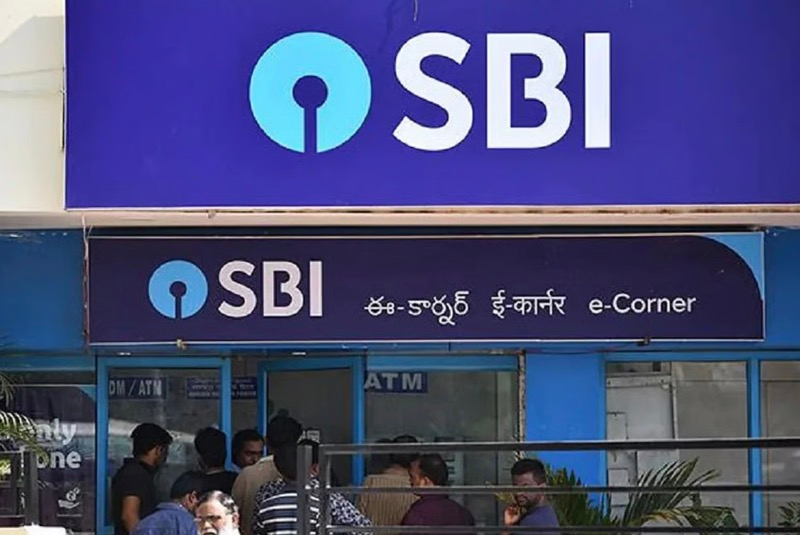
SBI-Madras_Courier
Representational Image: Public domain/Wikimedia
India’s Public Sector Banks (PSBs) have played a significant role in driving financial inclusion. It will be unwise to privatise them.

In June 2018, Investment Leasing & Financial Services Ltd (IL&FS), a prominent Indian conglomerate specialising in infrastructure financing, began defaulting on the repayment of short-term commercial paper and inter-corporate deposits amounting to Rs 450 crores ($54 million). This initial default set off a domino effect in the financial sector, exposing systemic vulnerabilities within the market.

In the following years, a web of interconnections led to a series of market collapses among private sector entities. One of the most notable instances was the crisis at YES Bank, which had rapidly emerged as one of India’s fastest-growing private banks.

YES Bank faced a significant financial burden stemming from poor asset quality and governance lapses. The bank had invested Rs 4733 crores ($566.8 million) in Dewan Housing Finance Ltd (DHFL), a leading non-banking financial company (NBFC) in the housing finance sector. Allegations arose that these investments were made in exchange for kickbacks.

YES Bank’s exposure was not limited to DHFL but also included IL&FS and similar NBFCs. The failure of these private sector companies was attributed to weak credit appraisal processes, the evergreening of loans that created unsustainable debt pyramids, money laundering, the illicit diversion of funds, and the exploitation of regulatory blind spots. Notably, despite having some of India’s most esteemed financial experts on its board, IL&FS suffered a systemic failure in governance and risk management, leading to a significant loss of investor confidence and a liquidity crisis in the financial sector.

The financial crisis prompted a major rescue led by the State Bank of India (SBI) and other public sector banks. Under the central bank’s reconstruction plan, SBI provided 49 per cent—the bulk of the support.

Public sector banks played a crucial role in stabilising India’s financial system and averting a crisis similar to the US ‘Lehman Moment’. Despite their importance in managing crises and implementing counter-cyclical measures, policy efforts continue to push for the privatisation of these institutions.

India faces major challenges, including poverty, hunger, inadequate healthcare, child malnutrition, poor sanitation, unsafe waste disposal, and persistent air pollution. According to World Bank data, 129 million Indians live on less than $2.15 a day. The country also struggles with learning poverty—despite high primary school enrollment, many students have low educational outcomes. High youth unemployment and limited skill development further impede progress.

The 2025 World Bank Findex Database reports that 89 per cent of Indians have a bank account, marking progress in financial inclusion. Yet, over 16 per cent of these accounts are inactive, highlighting gaps in access to essential financial services such as saving, borrowing and wealth management. It is also indicative of spiralling economic inequality.

In this context, the state’s role in ensuring broad-based and equitable socioeconomic development is crucial. India’s political economy is marked by debates between proponents of social democracy and free market liberalism.

Economic advancement is significantly impeded when large segments of the population are unhealthy or lack education. These challenges impose economic costs, including lower per capita income and reduced purchasing power, which, in turn, weaken aggregate demand for goods and services.

The Nobel laureate economist Amartya Sen’s “Capability Theory” offers a policy framework that could reimagine the Indian State’s role, focusing on expanding citizens’ capabilities rather than just market growth. It supports a rights-based approach, treating education, housing, healthcare, and food as basic entitlements for human dignity.

Historical examples highlight the key role public sector banks have played in socioeconomic development. During the Industrial Revolution in continental Europe —especially in Germany and France—public sector banks were instrumental not only in the transmission of monetary policy but also in extending financial credit to support the expansion of education and the establishment of robust healthcare systems.

Similarly, during Japan’s Meiji Restoration, state-owned banks provided financial stability to support national goals such as compulsory education, rural school construction, and public healthcare. State-directed credit also helped stabilise agriculture, reduce peasant debt, mitigate the impacts of famine, and eradicate child labour.

The success of the East Asian Development Model was largely contingent on public sector banks mobilising savings, partnering with the state in state-directed industrial finance, financing human capital, and stabilising the macroeconomy. In all the above cases, long-term investment horizons and socialising risks raised labour productivity and created a skilled workforce long before private players were introduced; in fact, they laid the groundwork for them.

The proponents of privatising public sector banks (PSBs) in India support their position by presenting a range of financial metrics that favourably compare private sector banks (PSBs) with their public counterparts. They point to the marked shift toward private sector banks since 2014, highlighting their success in attracting deposits and extending loans, as well as their investments in government securities. Additionally, private-sector banks have made significant contributions to branch expansion and job creation.

A key argument frequently raised by advocates of privatisation is the high concentration of non-performing assets (NPAs) within public sector banks. This concern is often cited as a critical indicator of inefficiency and risk in the public banking sector.

A working paper co-authored by Columbia University economist Arvind Panagariya and Poonam Gupta, former Director General of the National Council of Applied Economic Research (NCAER), highlights the contrasting performance of private and public sector banks (PSBs) over the past decade. In 2021 – 2022, private banks contributed 48.2 per cent of deposit growth and 69 per cent of loan advances, while SBI accounted for 27 per cent and 23 per cent, respectively, and other PSBs accounted for only 17 per cent and 3 per cent, respectively. The expansion of banking infrastructure further illustrates this trend. Between 2014 and 2021, private banks opened 18,115 branches and hired 235,900 employees, whereas PSBs closed 603 branches and cut 89,283 jobs.

The proponents of privatisation highlight key indicators such as fraud, losses, return on equity (ROE), return on assets (ROA) and Net Interest Margin (NIM). Excluding SBI, public sector banks needed $43.04 billion in recapitalisation but had a combined market value of only $30.78 billion—less than the capital injected. These figures underscore ongoing stress in public sector banks. Do these metrics alone make a strong case for privatisation?

Like all public banks worldwide, the mission statement of Indian PSBs is anchored in socioeconomic development and less in profit maximisation. This nation-building role is absolutely critical in a country where over 90 per centof the workforce is employed in the unorganised sector, of which the MSME sector contributes 62 per cent. MSME—Micro, Small and Medium Enterprises—sector is the largest employer at over 328 million and among this sector, the micro sector accounts for approximately 63 million units.

The indispensability of PSBs is evident in their dominant role in meeting the Priority Sector Lending (PSL) mandate set by the Reserve Bank of India (RBI). Under this mandate, commercial banks are required to allocate 40per cent of their Adjusted Net Bank Credit (ANBC) to priority sectors, with MSMEs being a primary beneficiary. The core objectives of PSL are to foster inclusive growth, stimulate job creation, correct market failures in a highly unequal society, and balance haphazard regional development.

While public sector banks (PSBs) lend directly to priority sectors, private sector banks (PVBs) often meet their Priority Sector Lending (PSL) quotas by purchasing PSL Certificates (PSLCs) from other banks. This practice turns PSL compliance into a regulatory formality for most PVBs. In fact, without PSLCs, PVBs would not have met their PSL targets in 2023-24–the first such instance since the banking policy inception in 1974.

Public Sector Banks (PSBs) have played a significant role in driving financial inclusion in India, primarily through the Jan Dhan Yojana scheme. Of the 560 million accounts opened, PSBs and their RRB affiliates created over 80 per cent of zero-balance accounts. Private banks were initially hesitant, citing high servicing costs and low profitability.

Zero-balance accounts have become foundational in delivering welfare schemes, enabling Direct Benefit Transfers, LPG subsidies, pension payments, and disbursing financial aid during the COVID-19 pandemic.

PSBs’ extensive branch network, especially in rural and semi-urban areas, further underscores their leadership in rural credit delivery. For instance, the State Bank of India (SBI) alone operates over 23,000 branches nationwide. This robust presence enables public sector banks to effectively champion rural credit as PSBs is the largest contributor to 80 per cent of all farm credit by commercial banks, highlighting their indispensable role in supporting agricultural finance and the rural economy.

India’s Self-Help Groups (SHGs) is one of the largest microfinance initiatives in the world. Over 142 millionhouseholds, predominantly women, are connected through more than 11 million SHGs across the country. From these small savings, funds are used to provide low-interest, collateral-free loans for starting a small business, education, or medical emergencies. Public sector banks facilitate SHGs by linking them to formal finance and hold the largest share of overall linkages; public sector banks with approximately 55 per cent (98 per cent of commercial banks) of all SHG accounts lead the fray. 

In this context, a revelatory juxtaposition is warranted between borrower groups: high-profile corporate defaulters like Vijay Mallya, Nirav Modi, Mehul Choksi, Jatin Mehta, and Lalit Modi have absconded overseas after perpetrating financial irregularities and large-scale bank fraud. While they have evaded prosecution, the Self-Help Groups—especially women in states such as Jharkhand and Orissa— maintain exceptionally low NPLs, a mere one or two per cent, despite their impoverished backgrounds. They have an impeccable repayment history with very minimal oversight and legislation.

Governance concerns in public sector banks are often overstated. Unlike firms under the Companies Act, these banks follow distinct legislative rules and face government influence as well as dual oversight from both the RBI and the Finance Ministry.

Between 2000 and 2013, PSBs were pressured by incumbent governments to capitalise on the Indian growth story to issue large infrastructure loans—mainly to private companies—to fuel economic growth. The conversion of infrastructure development institutions such as ICICI and IDBI into commercial banks increased risks for PSBs, as major infrastructure loans were backed by short-term deposits, resulting in unsustainable asset-liability mismatches.

While public sector banks financed mega infrastructure projects at the government’s behest, private sector banks focused on customer acquisition in urban and semi-urban markets, emphasising retail deposits and secured corporate loans. The PVBs largely avoided these high-risk ventures. Many of these infrastructure loans later defaulted due to external challenges such as land-acquisition bottlenecks, delayed environmental clearances, Chinese dumping, policy uncertainties, and flawed contracts. 

Nevertheless, public sector banks were scapegoated for poor due diligence and inept strategic risk management. Additionally, though hiring freezes and rationalisation since 2016 have led to a surge in per-employee output, they have also adversely impacted service delivery through turnaround delays, workload stress, and branch-level pressure, especially in rural areas. Due to poor digital literacy, these regions are unable to reap the fruits of technology integration. The “missing middle layer” management expertise is acute in PSBs.   

The commonly cited weak performance of public sector banks from 2014 to 2021- ‘22 is reflective of a period of recovery, marked by recapitalisation and consolidation of the number of banks from 27 to 12. By FY 2024, these banks have achieved record cumulative profits, with 26 per cent growth over the previous fiscal year, whereas 6 out of 7 private sector banks have reported a slump in operating profits and margins in 2024-’25. SBI, with a superior-quality workforce and technology stack, leads this revival. It is the jewel in the crown of the Indian banking sector; the country needs more SBIs.

Private banks are predicated on shareholder returns, stock market valuations and sound financial metrics. These are useful but incomplete. In the face of rampant privatisation and extreme competition, credit will likely flow away from small farmers, microenterprises, self-help groups, and the sections in most need.

India is still not optimising marginal efficiency. Modelled on the financial systems of the developed West, there is an obsession with growth at the expense of redistribution. India is at the intersection of extreme wealth and extreme poverty, a phenomenon long abhorred as detrimental to the individual and the state, as far as Plato’s Republic. If redistribution without growth is blind, then growth without redistribution is dead.

-30-

Copyright©Madras Courier, All Rights Reserved. You may share using our article tools. Please don't cut articles from madrascourier.com and redistribute by email, post to the web, mobile phone or social media.
Please send in your feed back and comments to [email protected]

0 replies on “Should India Privatise Public Sector Banks?”