As if human hostility weren’t enough, our cities are now arenas for a quieter but no less polarising conflict—this one involving animals. Not lions and tigers, not wolves howling at the edge of civilisation, but the creatures we live beside every day: stray dogs and city pigeons.
The debates surrounding their care—or lack thereof—have pitted compassion against public health, poetry against practicality. And, like so many modern disagreements, the contours of this one are shaped less by logic than by something older and deeper: our collective psychology.
To understand how a stray dog sleeping under a tea cart or a cluster of pigeons pecking at breadcrumbs in a railway station can cause so much dissension, we must go back to a distinction psychologists and economists have long observed: the individual versus the group. Alone, the animals inspire affection. A solitary stray with soulful eyes, limping but loyal, becomes an object of personal devotion.
There are many people who will speak of the dogs they’ve fed for years, dogs they’ve never owned, who waited for them at the same corner every morning, and who one day stopped showing up. The love is not theoretical. It is grief-prone, real, and often, for the feeder, profoundly healing.
Pigeons provoke something similar, though their charm is less direct. A pair of them cooing in the eaves of a building or perched on a high wire can seem like the physical manifestation of peace. They mate for life. They share food. Their murmurs have entered poetry. In such moments, humans are not feeding pigeons; they are feeding a fantasy about harmony and constancy.
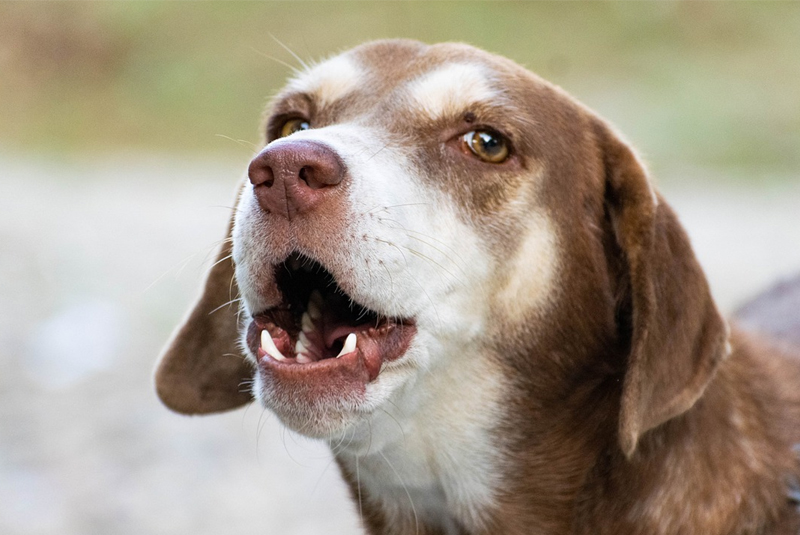
But that’s the individual lens. The collective story is another matter entirely. When the same dog joins a pack, something changes. The wag becomes a snarl. The animal begins to bare its teeth. The group dynamic overrides the individual bond.
Similarly, a few pigeons flitting across a city skyline is a pastoral scene. But hundreds of them roosting in crevices, dropping guano on parked cars and balconies, pose a real public health risk. Their waste carries fungal spores that can lead to respiratory illnesses. What was once a symbol of gentleness becomes, in accumulation, a vector of disease.
This shift—from empathy to antagonism, from beauty to threat—mirrors something fundamental in our behaviour. Herd mentality, after all, isn’t just for dogs and pigeons.
Consider the investor on Dalal Street, Mumbai’s Wall Street. Alone, he might opt for Portfolio X, a rational, balanced collection of assets. But place him amid a crowd swayed by market noise and rumours, and he might swing toward Portfolio Y. Not because it’s better. Because it’s popular. There’s no mathematical difference in expected return. Only the influence of the group, which is never neutral.
The stray and the flock reveal something about the double-edged sword of collective behaviour. The same instincts that built civilisations—group protection, social belonging, coordination—also contain within them the seeds of dysfunction.
Evolutionary biologists and anthropologists trace the origins of social behaviour to early human encounters with “the other.” Tribes formed not just to gather food or raise children, but to defend against outsiders.
Protection and aggression were the same impulse, flipped. From there came war, territory, and allegiance, as well as music, murals, shared language, and acts of inner harmony within the boundaries of “us.”
Game theory, a mathematical exploration of strategy, describes these choices as coordination problems. Two people—or two groups—must choose whether to cooperate or compete. Both outcomes are stable. Both are rational. But once one path is taken, it self-reinforces. Cities that feed their pigeons encourage them to stay. Cities that stop feeding them push them to rewild or migrate. The choices aren’t right or wrong. They’re systemic.
The conflict around strays and pigeons isn’t really about animals. It’s about how we navigate complexity. Take, for example, the seemingly simple event of a stray dog approaching a pedestrian on a quiet road.
Nine times out of ten, the dog is curious, even hopeful. Its tail may wag hesitantly. Its gait is tentative. It wants to sniff, not bite. But the human, driven by years of cultural cues and urban anxiety, reacts with the universal gesture of mock violence—pretending to pick up a stone. The dog, conditioned by previous encounters, barks. Perhaps it lunges. And the cycle is confirmed. Each side responds to a script written by the other.
Then, there is the tenth case. The person who doesn’t reach for a stone, doesn’t run, doesn’t shout. He locks eyes, speaks in low tones, and stands still. The dog pauses. Its hackles are lower. The tail begins to move side to side. Trust is extended. Sometimes, in that moment, a friendship starts—not between master and pet, but between two free agents, negotiating peace.
The trouble is, most urban dog lovers don’t stop at one friendship. Their empathy, noble as it may be, doesn’t scale. Feeding five dogs every evening without also vaccinating them, without checking for wounds, without sterilising, creates a system that nature can’t balance. Packs grow. Territory becomes contested. Incidents increase. And so do calls for culling.
The irony is that culling—the most brutal and, historically, the most common method of stray control—is neither effective nor humane. Studies show that the population stabilises and rebounds unless dogs are removed faster than they can reproduce. What works instead is sterilisation.
Neutering, if done systematically and accompanied by vaccinations and community monitoring, has been shown to reduce stray populations in the long term. It’s a solution that satisfies the evolutionary condition of stability: fewer dogs, fewer conflicts, and a healthier relationship between species.
But sterilisation isn’t a quick fix. It needs infrastructure, government commitment, and private support. Proper shelters—not just cages but humane, adequately staffed spaces—are essential. Volunteers must be trained not just to feed but to care and coordinate. The affection must mature into responsibility. Only then can the individual bonds people form with dogs avoid tipping into a collective problem.
As for pigeons, the calculus is different. They don’t form packs that chase or bite. But they multiply rapidly when overfed, especially on processed grains and leftover street food. Ironically, feeding them may not be kindness at all. Studies suggest that pigeons, like most urban birds, have the capacity to find their own food. Overfeeding dulls their survival instincts, traps them in dependency, and creates overpopulation in areas where their droppings damage buildings, corrode monuments, and spread disease.
In the New Testament, Jesus reminds his followers: “Look at the birds of the air; they do not sow or reap or store away in barns, and yet your heavenly Father feeds them.” It’s a beautiful sentiment that suggests faith in the natural order. But it can be read in two ways. One: that birds will always be cared for, so we must do our part. Or, two: they already know how to care for themselves, and we must let them. Perhaps that second reading is the one urban policy should heed.
What all of this reveals—pigeons, strays, people—is that good intentions aren’t enough. Love without foresight can be harmful. Empathy, unchecked by systems, becomes sentimentality. And sentimentality can obscure harm.
The poet Rilke once wrote that the truly great relationships in life are those in which “each protects the solitude of the other.” That may be true of people. It may be even truer of the bonds we form with animals—not in trying to turn every stray into a pet or every pigeon into a guest at our table, but in allowing them the dignity of their survival and the grace of their instincts.
-30-
Copyright©Madras Courier, All Rights Reserved. You may share using our article tools. Please don't cut articles from madrascourier.com and redistribute by email, post to the web, mobile phone or social media.Please send in your feed back and comments to [email protected]