Palestine’s Borders Are Decimated—Can Diplomacy Bring Them Back?

Palestine-madras-courier
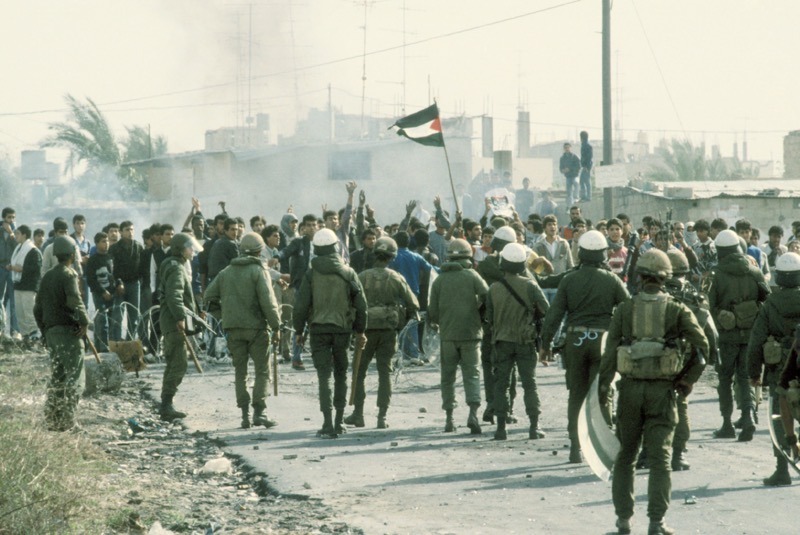
Representational image: Public domain.
Recognition of Palestine’s sovereignty must be more than a gesture. It must be the beginning of something real.

Recently, nations have been rushing to recognise the state of Palestine, marking a historic moment in global diplomacy. Yet, this gesture risks being rendered meaningless. Recognition without meaningful change on the ground risks becoming symbolic.

Under international law, a Palestinian state requires clear borders. However, these borders have been disturbed, disputed, and fragmented over decades of political conflict. Today, the challenge isn’t just recognition. It’s what that recognition will mean in the face of an increasingly disjointed and militarised reality.

To understand the present, we must first trace how Palestine’s borders were lost, shaped, and erased. The 1947 UN Partition Plan envisioned two states: Jewish and Arab. Jerusalem was to be an international city. This vision quickly collapsed, however, after Israel’s creation in 1948, plunging the region into war.

Palestinians were pushed out of their ancestral lands, confined to the West Bank and Gaza Strip—territories that were then placed under Jordanian and Egyptian control. These borders, known as the “pre-1967 borders,” have been the internationally recognised basis for Palestinian statehood ever since.

But in 1967, Israel expanded its borders in the wake of the Six-Day War, occupying the West Bank, Gaza, and annexing East Jerusalem. These territorial shifts marked the beginning of a prolonged period of fragmentation.

Israeli settlements, illegal under international law, began to slice the land into pieces. The settlements didn’t just push the boundaries of Israeli territory outward; they fundamentally changed the geography of Palestine. Over time, settlements expanded unchecked, supported by Israeli authorities.

The Oslo Accords of the 1990s created the illusion of governance, dividing the West Bank into Areas A, B, and C, each with different levels of Palestinian control. But the accords failed to halt settlement expansion, which continued under the radar of diplomatic attention.

By the time the second intifada began in 2000, the region was already a patchwork of disjointed territories, fragmented by a separation barrier Israel constructed deep inside the 1967 borders. The barrier, a concrete wall of separation, marked not only a physical but a psychological line between Israelis and Palestinians.

The West Bank became unrecognisable and fractured rather than a cohesive state during this time. The dream of an independent Palestinian state, one defined by borders and sovereignty, seemed farther out of reach than ever before.

The numbers tell part of the story. Recent research using satellite imagery paints a stark picture of the changes on the ground. Between 2014 and 2024, Israeli settlements in the West Bank grew by 72 per cent, occupying 151 square kilometres, up from 88 square kilometres a decade earlier.

These aren’t just passive expansions. Settlements come with a complex system of roads, military checkpoints, and security measures, all designed to exclude Palestinians from vital infrastructure. Movement is severely restricted. Economic activity is stifled. And in some places, the settlements are accompanied by violent extremism, with settlers carrying out harassment and attacks on Palestinian civilians. Building a state under such conditions is an almost impossible task.

A case in point is the E1 project, a new development near Jerusalem. Officially, it’s just another settlement. In practice, if completed, it would sever the West Bank in half, effectively choking off the vital north-south artery that connects the West Bank to the rest of Palestinian territory.

For Israel’s far-right finance minister, Bezalel Smotrich, the move was cause for celebration. He described it as a means of “erasing” the idea of a Palestinian state altogether, while bolstering Israeli national security. In reality, it does the opposite.

The expansion of settlements only deepens political violence. Palestinians who live near settlements are significantly more likely to engage in violent retaliation. A recent study of over 8,000 Palestinians revealed that proximity to settlements increased the likelihood of violent action by more than 80 per cent. Meanwhile, diplomatic efforts lost support. The peaceful protest dwindled. Anger boiled.

The presence of settlements provokes violent responses and amplifies moral outrage. This outrage, a state of collective indignation, drives conflict. It clouds judgment and fosters a mindset of “us versus them.” In this context, the cycle of violence becomes self-perpetuating. Settlers continue to expand their presence, while Palestinians continue to resist, often through violent means. The cycle feeds itself.

In this environment, the idea of Palestinian statehood becomes increasingly tenuous. The prospect of rebuilding Gaza after Israel’s brutal military campaigns seems a distant dream.

Gaza, once an open-air prison under blockade, has been decimated by repeated military strikes. Gaza’s largest political constituency now includes a growing number of people who feel politically homeless—32 per cent report being represented by no one.

Hamas, once a powerful force in Gaza, has been militarily crushed. Its grip on the population is all but gone. Yet in its place, no viable alternative has emerged to offer a path forward. And while the Palestinian Authority (PA) in the West Bank claims legitimacy, it is increasingly seen as corrupt, ineffective, and incapable of meaningful leadership.

The PA’s long-standing president, Mahmoud Abbas, has been in power for 20 years, yet polls consistently show a lack of public support. Should elections be held today, Abbas would almost certainly lose. In fact, the most likely successor is Marwan Barghouti, the imprisoned Fatah leader, a figure who, despite his popularity, remains trapped in the political and physical confines of a prison cell.

Whoever eventually leads a Palestinian state will inherit decades of failure. The PA, dominated by ageing figures, has failed to deliver its promises. While symbolic, the international community’s support is no substitute for effective governance. Building a Palestinian state is not impossible, but it requires leadership and cohesion that currently seem out of reach.

Recognition of Palestine’s sovereignty must be more than a gesture. It must be the beginning of something real. Yet, as nations line up to recognise Palestine, they risk endorsing an idea without the means to bring it to life.

Without addressing the underlying issues—settlement expansion, the lack of a unified Palestinian leadership, and the continuing cycles of violence—recognition becomes an empty act. The challenge is not just acknowledging a state but creating the conditions under which that state can thrive.

For Palestine, the choice is clear: the international community can either recognise borders that have been effectively erased or it can commit to building something truly viable. This is not simply a matter of diplomacy. It is a matter of survival—the future of both Palestinian statehood and Israeli security hinges on this decision. The question is no longer about two states or one. It’s about whether anyone will have the courage to make statehood a reality.

-30-

Copyright©Madras Courier, All Rights Reserved. You may share using our article tools. Please don't cut articles from madrascourier.com and redistribute by email, post to the web, mobile phone or social media.
Please send in your feed back and comments to [email protected]

0 replies on “Palestine’s Borders Are Decimated—Can Diplomacy Bring Them Back?”