
North Korea’s Nuclear Trajectory: Lessons From Previous Nuclear Powers   

North-Korea-Madfras-Courier
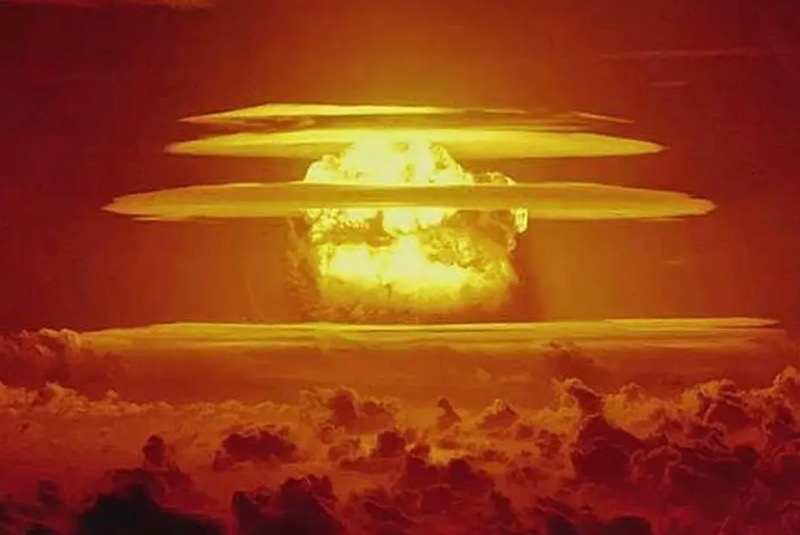
Representational Image: Public domain…
North Korea may serve as an example of how a weak state can secure great-power support to complete a nuclear programme.

North Korea acquired nuclear weapons capability on 09 October 2006 when it conducted its first nuclear test. However, the United States (US) regards North Korea as a threat to its homeland, its interests, and its allies in East Asia. This threat perception is driven by North Korea’s continued advancement of its nuclear weapons and ballistic missile programme. A US defence official testified in April 2026 that North Korea’s expanding nuclear capabilities increasingly enable it to threaten the US mainland, while its missile arsenal can deliver either conventional or nuclear strikes against South Korea and Japan.

Although the nuclear arsenals of Russia and China are primarily oriented toward the US, North Korea is viewed through a different lens. Thus, this article discusses the following question: Why is it considered acceptable for some states to possess nuclear weapons, while their acquisition by others, often labelled “irresponsible or rogue states,” is regarded as a threat to international peace and security? North Korea is a prominent case in this debate, having ultimately succeeded in acquiring a nuclear weapons capability; nevertheless, its denuclearisation remains a subject of ongoing debate.        

The US views Pyongyang’s nuclear arsenal as a major security challenge and, through its own policies and United Nations Security Council (UNSC) resolutions, has sought to eliminate North Korea’s nuclear weapons and ballistic missile programme by imposing sanctions. In contrast, Russia and China have increasingly normalised North Korea’s nuclear weapons and ballistic missile programme. Although both states supported stringent sanctions during the 2000s, by the late 2010s they had withdrawn support for additional sanctions and used their vetoes in the UNSC to block new sanctions resolutions.

Despite these sanctions and the failure of the 2019 Hanoi Summit, North Korea accelerated its missile programme and weapons production. The development of the Hwasong-17, Hwasong-18, and Hwasong-19 intercontinental ballistic missiles (ICBMs) has strengthened its nuclear deterrent capabilities. Pyongyang has alarmed and shocked the international community, particularly the US, Japan, Russia, South Korea, and China, by testing a thermonuclear device on 06 January 2016 and launching medium and long-range ballistic missiles into the air and sea. In response to this belligerent posture, the UNSC unanimously declared these tests unacceptable and imposed its toughest sanctions on North Korea. Subsequently, North Korea issued a hostile warning of a “pre-emptive strike of justice” and an “offensive strike” in reaction to the joint military exercises conducted by the US and South Korea following its ballistic missile tests.

North Korea again launched four ballistic missiles on 06 March 2017, three of which landed in Japanese waters. In response, Japanese officials described the tests as a major threat to Japan. Likewise, South Korean military officials expressed concern, although they did not specify the exact number of tests. North Korea’s ballistic missile launches were linked to the joint military exercises being conducted by the US and South Korea, which Pyongyang perceived as preparation for an invasion of North Korea. Furthermore, North Korea had earlier declared that, in response to the US–South Korea military drills, it could deploy nuclear weapons on its missiles.

Russia and China’s influence over North Korea is largely a consequence of their shared political ideology and longstanding strategic alignment. Consequently, North Korea’s state-building and power projection as a relatively weak state reflect a form of institutional mimicry or facade-building aimed at maintaining domestic control and safeguarding its borders. When states share both a common adversary and ideological orientation, weaker states face less pressure to acquire power independently, even though the presence of stronger adversaries complicates their strategic environment. Moreover, in the broader strategic competition with NATO, North Korea has served as an unofficial security partner for both Russia and China.

Pyongyang’s deployment of military personnel in support of Russia during the war in Ukraine was reciprocated by Moscow through the provision of technological assistance and material support, further strengthening their strategic relationship.  

In the 1950s, China stood with North Korea. Mao Zedong honoured his commitment to support North Korea after it invaded South Korea. Initially, Joseph Stalin was politically inclined to support North Korea and, during Mao’s meeting with him, agreed that China would intervene if Pyongyang required assistance. However, when the US entered the war in support of South Korea, the North Korean army suffered heavy losses and retreated across the 38th parallel, the boundary established between North and South Korea in 1945. The North Korean military proved incapable of resisting the superior US-led forces, prompting Mao to prevent North Korea’s imminent defeat.

When the US and South Korean forces crossed the 38th parallel, Stalin hesitated to provide air support, leaving Mao to consider how China could still assist North Korea. Although senior Chinese military officials expressed mixed, largely negative, views, the leadership ultimately concluded that it was strategically preferable to confront the enemy outside Chinese territory.

For Mao, the conflict was more than a military campaign. Before leading North Korea, Kim Il-sung had spent time in China and had been politically influenced by Mao. Preserving Kim’s regime was therefore both a strategic necessity and an opportunity to demonstrate China’s emerging power despite its relatively limited military capabilities.

Although intervention imposed high costs, Mao viewed North Korea as a long-term strategic asset. Consequently, China deployed approximately 260,000 troops to support North Korea in its war against US and South Korean forces. The conflict became increasingly deadly, claiming the lives of soldiers from China, the US, North Korea, and South Korea without producing a decisive outcome. Ultimately, an armistice ended the fighting, allowing Kim to retain control over North Korea.

North Korea closely observed the evolving strategic environment in Asia and beyond. Although confronting a common enemy under a shared ideological framework initially appeared sufficient, Pyongyang concluded that preserving its political system required stronger security capabilities. Without requiring a realist framework to justify this decision, Kim and his successors pursued the same security logic adopted by China and the Soviet Union in response to the US and its allies.

However, as a member of the Treaty on the Non-Proliferation of Nuclear Weapons (NPT), pursuing nuclear weapons entailed significant legal and political costs. Given its economic weakness, North Korea waited until it had accumulated the necessary financial, technical, and diplomatic resources to develop a nuclear programme. Its withdrawal from the NPT and subsequent nuclear tests were not solely the result of domestic efforts; they reflected the confidence generated by sustained support from China and Russia.

Such support has been absent in Iran’s case. As a Shia-majority state, Iran could not receive the same type of clandestine assistance from Pakistan because Tehran officially opposed the acquisition and use of nuclear weapons. Although Abdul Qadeer Khan’s proliferation network reached Libya, the strategic nexus among China, Pakistan, and North Korea remained distinct. Libya, Iraq, and Iran were comparatively easier to pressure because none enjoyed firm backing from a nuclear great power.

Pakistan, despite being a Muslim state, lacked the strategic, economic, and diplomatic capacity to protect these states, while its own nuclear programme remained uncertain during its formative years. This raises an important question: if Pakistan had been a stronger regional power, would it have acted to preserve the nuclear ambitions of Libya and Iraq?

Pakistan’s recent mediating role in reducing tensions between the US and Iran is noteworthy. It also suggests another hypothesis: as Pakistan’s hard and soft power expands, its ability to support the security interests of Muslim states may also increase. This supports the broader proposition that a weak state’s pursuit of nuclear capability is more likely to succeed when backed by a major power despite sustained opposition from its adversaries, and North Korea remains the clearest example.

North Korea is now a de facto nuclear state, with the capability to defend its sovereignty and signal credible deterrence against its adversaries. Pyongyang’s actions are not unprecedented for the international community. In 2014, it had already launched Rodong missiles and is believed to possess more than 1,000 missiles of varying capabilities.

Many scholars of nuclear proliferation believe that Khan’s nuclear proliferation network transferred nuclear technology to North Korea. However, it was initially the US that collaborated with the United Kingdom in nuclear proliferation. The spread of nuclear weapons is not an accidental process but a deliberate and systematic one. During the 1980s, states suspected of possessing nuclear weapons included Iran, Iraq, North Korea, South Korea, and Taiwan. In addition, Belarus, Kazakhstan, and Ukraine became matters of concern for the international community after inheriting nuclear weapons from the former Soviet Union.

To prevent nuclear proliferation, the declared nuclear powers attempted to curb the spread of nuclear weapons through the NPT in 1968 and the Comprehensive Nuclear-Test-Ban Treaty (CTBT) in 1996. The NPT emerged shortly after China’s nuclear test in 1964 but failed to secure the signatures and ratifications of all nuclear states, including China, as well as non-nuclear states such as India, Pakistan, Cuba, and Israel, largely because of the treaty’s discriminatory nature.

China eventually signed the NPT in the late 1990s after adopting a “minimum nuclear deterrent” posture, while Cuba signed in 2002. In January 2003, North Korea claimed that it had withdrawn from the NPT and resumed operating its nuclear facilities. Similarly, the CTBT and the Fissile Material Cut-off Treaty (FMCT) remained unsuccessful due to the non-ratification of the US, which argued that nuclear testing might still be necessary for safety and national security purposes.

North Korea shares a hostile relationship with South Korea and its ally, the US. In the present context, North Korea appears to be following the same path taken by the US and Russia during the Cold War, and by India and Pakistan after May 1998, where nuclear testing was conducted for reasons of power, status, and security. Therefore, North Korean missile tests cannot be entirely separated from the nuclear tests carried out by established nuclear powers, nor can they be labelled illegitimate or irresponsible. Furthermore, no state other than the US has used atomic bombs against civilians, as occurred in Japan, raising questions about the logic of categorising some states as responsible and others as irresponsible.

The major powers are unwilling to dismantle all of their nuclear arsenals, yet they claim the authority to prevent other states, such as North Korea, from becoming nuclear powers. North Korea, Syria, and Iran were identified by the US under George W. Bush’s administration as rogue states that required surveillance and needed to be prevented from acquiring or transferring nuclear weapons to terrorist groups, because, according to the US, “rogue states and terrorists have one thing in common: to hurt the people of the US.” Consequently, several states viewed this attitude, particularly that of the US, as discriminatory. This perception was one of the reasons why Iran and North Korea, despite signing the NPT, later withdrew from it after considering it unsuitable.

If North Korean missiles are considered a source of regional instability and a threat to the international community, then the declared nuclear powers must answer why they themselves are not dismantling all of their nuclear weapons. Likewise, questions arise as to why the three nuclear states — India, Pakistan, and Israel — have not signed the NPT.

If a limited number of nuclear weapons are accepted as a form of deterrence for some states, then North Korea’s nuclear tests can also be interpreted within the same framework. According to this perspective, opposition to North Korea’s missile tests stems largely from ideological differences. It is viewed as hypocritical to assume that only democratic states are capable of responsibly handling nuclear weapons and therefore possess the exclusive right to develop them, while denying North Korea the same right to defend itself. According to Kenneth Waltz, the father of structural realism and a leading proponent of defensive realism, nuclear deterrence is independent of ideology, rationality, and regime type; its effectiveness rests on the credibility of the threat of retaliation.

The international community regards North Korea’s tests as irresponsible behaviour, yet questions are also raised regarding the laboratory tests conducted by the US. On 03 July 1997, after the CTBT, the US carried out a nuclear weapon-related “sub-critical” laboratory test. Similarly, on 30 September 1999, it conducted the seventh test in this series. With the advancement of computer simulations, nuclear testing in the air, space, or underground is no longer always required. One of the major obstacles to complete nuclear disarmament is the US interpretation of Article 1 of the CTBT, which permits it to continue conducting certain forms of nuclear testing.

Extensive research has been undertaken on nuclear proliferation, the consequences of acquiring nuclear weapons, and their broader implications. A major weakness in existing arms control regimes lies in the policies of the five declared nuclear powers, particularly the US. These policies seek to prevent non-nuclear states from obtaining nuclear material while simultaneously allowing nuclear states, especially NPT signatories, to retain the capability to produce such materials without violating the treaty.

Critics view this as hypocrisy on the part of states that possess and control thousands of nuclear warheads while condemning the relatively limited nuclear arsenal of North Korea. It is further argued that this reflects the belief that there exists a “God-given” right to nuclear apartheid, where states that conducted nuclear tests before 1968 are treated as legitimate powers. In contrast, states that became nuclear after 1968 are labelled as rogue states or nuclear tyrants or irresponsible nuclear states.

North Korea, like any other state, is unlikely to be deterred by sanctions or threats from its adversaries if it enjoys the backing of a great power. Under such conditions, it can find alternative pathways to advance its nuclear programme despite international criticism. The existing treaties and regulations designed to control nuclear proliferation remain flawed, as states, irrespective of ideology, are likely to pursue nuclear weapons when confronted with threats from a great power and when nuclear capabilities are perceived to enhance their security. South Korea and Japan may also consider nuclearisation if the US fails to maintain credible extended nuclear deterrence. In such a scenario, those who criticised North Korea’s nuclear programme may find strategic justifications for supporting the nuclear trajectories of South Korea and Japan.

A relative decline in US power may weaken the normative appeal of democratic governance in international politics. Conversely, China’s rise may neutralise the existing order or reshape it to provide greater space for non-democratic states. Ultimately, economic development, rather than regime type, will determine a state’s capacity to lead a region, influence the international system, or revise it.

North Korea may serve as an example of how a weak state can secure great-power support to complete a nuclear programme. If Pyongyang has achieved a credible nuclear deterrent, consistent with Waltz’s theory, it would be more rational to prioritise economic and domestic development than to continue an unnecessary arms race, particularly when Russia and China already possess sufficient and sophisticated nuclear capabilities.

Western narratives are likely to continue portraying North Korea as an aggressive and authoritarian state so long as the US remains the dominant global power. This prescription will become obsolete if non-democratic states alter or challenge the existing system. However, the US maintains approximately 750 military bases in more than 80 countries worldwide and is therefore likely to remain a major military power. For a more peaceful world, it is preferable to promote the principle of “strategic stability” through reductions in offensive nuclear arsenals rather than to pursue “forward deterrence,” which encourages the active involvement of selected states alongside a nuclear-armed power.   

-30-

Copyright©Madras Courier, All Rights Reserved. You may share using our article tools. Please don't cut articles from madrascourier.com and redistribute by email, post to the web, mobile phone or social media.
Please send in your feed back and comments to [email protected]

0 replies on “North Korea’s Nuclear Trajectory: Lessons From Previous Nuclear Powers   ”