Modi’s Grand Diplomacy: How Image-Building Became India’s Greatest Strategic Risk

Modi-diplomacy-madras-courier
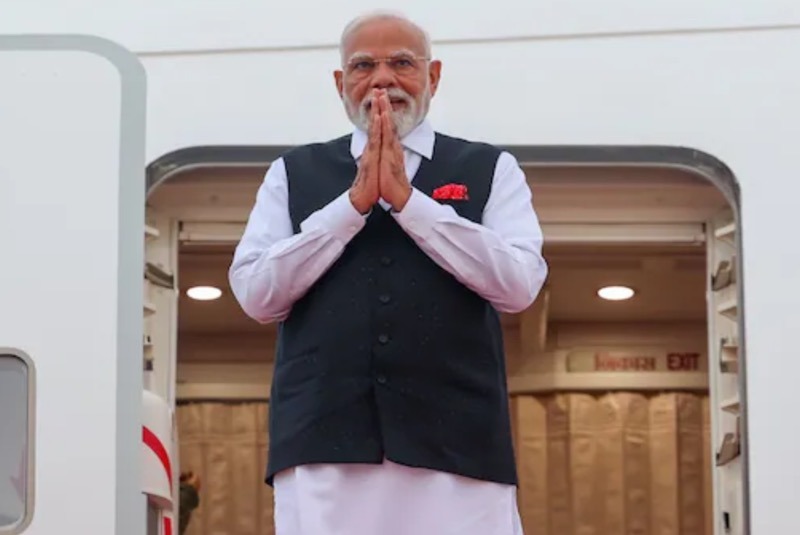
Representational image: Public domain.
Modi’s pursuit of the “Vishwaguru” ideal is a costly distraction from the difficult but necessary work of securing India’s position in an increasingly complex and unpredictable world.

At the 2025 Shanghai Cooperation Organisation (SCO) summit, India’s Prime Minister Narendra Modi and China’s President Xi Jinping sat down for a much-anticipated meeting. Against the backdrop of rising regional tensions, particularly along the contested India-China border, and Trump’s tariffs, the summit promised to offer an opportunity to mend frayed relations between the two Asian giants.

In theory, this was an occasion for dialogue and de-escalation. In practice, however, it reflects a broader diplomatic approach that characterises Modi’s tenure, which increasingly prioritises public relations over strategic substance.

Modi, who has long styled himself as the global face of India’s aspirations, has successfully capitalised on the idea of India as a rising power. His personal diplomacy, heavily reliant on theatrics, has blurred the line between India’s national interest and his own political branding.

Modi’s tendency to glorify himself reflects a troubling pattern: foreign policy decisions increasingly seem to be shaped by the need to maintain his image as a global statesman, rather than by a sober assessment of national priorities.

The meeting with Xi, hailed as a ‘diplomatic masterstroke’ by Modi’s supporters, must be critically examined. In truth, the summit’s optics—warm handshakes, shared statements of peace, and promises of stability—do little to conceal the underlying contradictions of Modi’s approach.

While he has positioned himself as an adept leader capable of striking deals with heavyweights like China, the stark reality is that his relationship with Beijing has undermined India’s strategic interests. This is particularly evident in the context of the ongoing military tensions along the Line of Actual Control (LAC), where Xi’s assertive stance, including China’s aggressive actions in the South China Sea and its geopolitical manoeuvres in Taiwan, directly challenge India’s security.

Modi’s emphasis on personal rapport with Xi and his avoidance of confronting China’s growing influence in the region speaks to a dangerous compromise of India’s sovereignty.

Modi’s meeting with Xi reveals, more than anything, the growing prioritisation of personality politics in India’s foreign policy. The rise of “Vishwaguru” rhetoric—an image of Modi as the world’s teacher—has come at the cost of a more grounded, pragmatic foreign policy.

The notion of promoting Modi as the ‘world’s teacher’ — a pompous, cringeworthy claim that is politically beneficial — is an exercise in self-promotion. It gives out a lot of hot air but falls short of actionable outcomes.

At the SCO summit, Modi’s desire to foster an image of a peacekeeper overshadowed India’s role as a counterweight to China’s ambitions. This is a strategic misstep, particularly when China’s ambitions in Asia and beyond are increasingly at odds with Indian interests.

Modi’s “Neighbourhood First” policy—another pillar of his foreign diplomacy—has also been marred by similar contradictions. The initiative, which sought to strengthen India’s ties with its immediate neighbours, has instead resulted in alienation.

Despite promises to strengthen ties with countries like Nepal, Bangladesh, and Sri Lanka, India’s position in South Asia has grown increasingly precarious. Modi’s early embrace of authoritarian leaders like Sri Lanka’s Gotabaya Rajapaksa has done little to stabilise the region. Nepal’s challenge to India’s territorial claims, the Maldives’ increasing closeness to China, and the political turmoil in Sri Lanka all serve as painful reminders that Modi’s “Neighbourhood First” policy has failed to deliver tangible results.

The starkest example of the failure of this policy has been Modi’s inability to address — in real terms — the growing Chinese influence in the region. At the SCO summit, while the spotlight was on India-China relations, Modi seemed more focused on building personal rapport with Xi Jinping than on confronting the core issue: China’s encroachment into India’s sphere of influence.

This is not to say that diplomacy with China is unimportant. Instead, it highlights that Modi’s approach is overly focused on personal interactions rather than a robust, coherent strategy that reflects India’s long-term interests.

Modi’s neglect of regional diplomacy in favour of symbolic gestures towards the United States highlights the hollow nature of his foreign policy. Perhaps the most emblematic example of Modi’s diplomatic failures can be found in his engagement with the United States.

Modi’s infamous slogan, “Ab Ki Baar Trump Sarkar” (“This time, Trump’s government”), has now come to bite him. At the time, it was seen as a triumph of Modi’s personal diplomacy, capitalising on the populist rhetoric shared between him and the then U.S. President Donald Trump. The two leaders seemed to share an affinity for nationalism and a disdain for multilateral institutions and seemed poised to forge a strong bond.

Yet, the turn of events after Trump took charge as the President of the United States for the second term has exposed the fragility of Modi’s strategy. In 2025, India finds itself on the receiving end of punitive tariffs, with the U.S. imposing up to 50 per cent tariffs on Indian exports in retaliation for India’s trade practices and its growing relations with countries like Russia and Iran.

Modi’s failure to build a sustained, pragmatic, drama-free diplomacy that protects India’s long-term interests has left India vulnerable to the shifting currents of international trade. The foundations of Modi’s foreign policy towards the U.S.—once seen as an unshakeable partnership—now seem to have been built on fragile ground.

Trump’s tariff hikes are not simply an economic inconvenience; they represent a broader diplomatic failure. They reflect Modi’s lack of foresight in foreign policy, which is increasingly driven by the optics of personal diplomacy rather than the substance of long-term strategy.

The rise of protectionist sentiment in the U.S. and its growing frustration with India’s foreign policy decisions—particularly concerning Russia and Iran—has exposed India to the vagaries of global trade. Modi’s populist diplomacy, emphasising high-profile gestures and quick fixes, has failed to deliver on the promises of a more robust, sustainable international standing for India.

As India’s future in a changing global landscape becomes more uncertain, it becomes clearer that Modi’s diplomatic approach fails to deliver the strategic outcomes necessary for the country’s rise. The meeting with Xi at the 2025 SCO summit, hailed as a diplomatic breakthrough by some, ultimately serves as a reminder of the dangers of prioritising personal diplomacy over the long-term interests of the nation. Modi’s legacy, shaped by his “Vishwaguru” narrative, now risks being tarnished by missteps that have undermined India’s credibility on the world stage.

The India-China relationship, fraught with tension, is a crucial test for India’s foreign policy in the twenty-first century. India’s foreign policy and strategic national interests cannot be reduced to diplomatic theatrics or personal relationships between leaders. A strategic assessment of India’s national interests and an accurate understanding of the changing global order must quietly drive diplomacy.

As India looks ahead, it must adopt a more pragmatic, less performative approach to foreign diplomacy that prioritises national security and the region’s long-term stability, rather than the fleeting allure of personal success.

Modi’s pursuit of the “Vishwaguru” ideal is a costly distraction from the difficult but necessary work of securing India’s position in an increasingly complex and unpredictable world.

-30-

Copyright©Madras Courier, All Rights Reserved. You may share using our article tools. Please don't cut articles from madrascourier.com and redistribute by email, post to the web, mobile phone or social media.
Please send in your feed back and comments to [email protected]

0 replies on “Modi’s Grand Diplomacy: How Image-Building Became India’s Greatest Strategic Risk”