
How Pharma Companies Are Turning Everyday Issues into ‘Diseases’ for Profit

Pharma-madras-courier
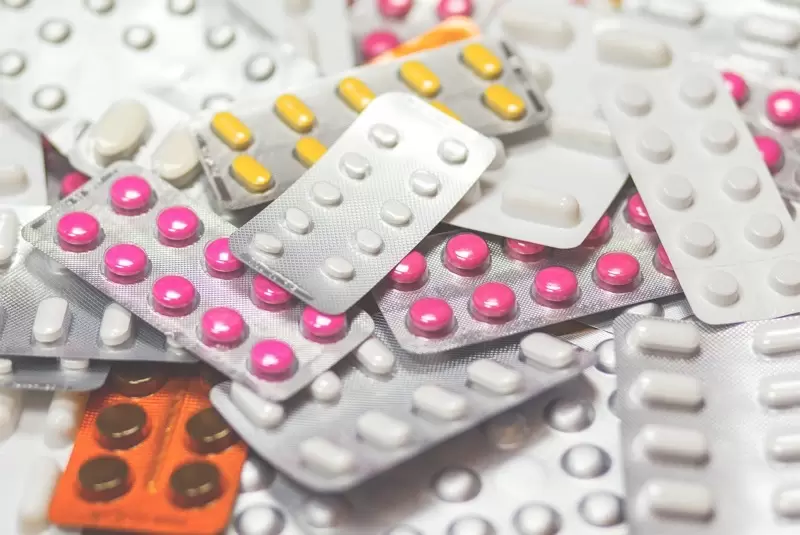
Representational image: Public domain.
Pharma companies are ruining your health for profit. Here’s how.

Ray Moynihan, a healthcare journalist and documentary film maker, disillusioned with the gnawing problem of “too much medicine,” devised a satirical project with colleagues at the British Medical Journal (BMJ). Together, they invented a fictional disease termed “Motivational Deficiency Disorder,” accompanied by a marketing campaign branding it as “The New Epidemic.” It was a flippant attempt to reframe the everyday experience of laziness as a medical disorder requiring clinical intervention and pharmacological treatment.

To enhance the plausibility, they invented a fake drug, Strival-PH, created supposed screening tools, identified imaginary genetic markers, and produced fabricated statistics about the disorder’s prevalence rates. The definition of the condition was deliberately broadened to encompass a wide segment of the affected population.

The culmination of the project was on April 1, 2006, when the British Medical Journal formally launched “Motivational Deficiency Disorder.” This satirical unveiling quickly elicited interests from international media outlets, with inquiries pouring in from organizations like the Wall Street Journal and a leading newspaper in New Zealand featuring the story on its front page.

Moynihan and his collaborators soon clarified that the launch was, in fact, an April Fool’s prank. Nevertheless, the project served as a compelling commentary on the modus vivendi of the global pharma industry to medicalise everyday struggles through deft marketing and expansive disease definitions.

No recent pharmaceutical product in recent history exemplifies the power of visionary marketing and strategic public relations as vividly as Ozempic, a diabetes medication developed by Novo Nordisk, the Danish multinational healthcare company. Ozempic’s raving success is particularly striking in the United States, where the prevalence of obesity is staggering — 75 per cent of adults and 50 per cent of teenagers are classified as obese. Novo Nordisk identified a windfall opportunity within this landscape, as half of all adults and one-third of young adults in the U.S. have been diagnosed as pre-diabetic.

The company targeted this vast and growing demographic through omnichannel marketing efforts by roping in Ivy League medics, media and public relations companies and human rights organisations. The drug is positioned as a prescription to be administered a weekly injection for life. The commercial proposition was compelling: for patients with health insurance, the projected lifetime cost per individual was set at $20,000, referencing Mayo Clinic. With a Total Addressable Market (TAM) comprising up to 75 per cent of the American population, the financial potential was immense. While most pharma companies make money when one falls sick, Ozempic would reap astronomical profits as a preventive care medication.

Diabetes is widely recognised as a condition influenced by environmental factors, particularly those related to diet. Rather than being the root cause, obesity represents just one branch of a broader metabolic dysfunction that often accompanies diabetes. This dysfunction manifests in alarming statistics: affects 40 per cent all children with obesity and 45 per cent adults and teenagers are now diagnosed with fatty liver disease—an indicator of deteriorating metabolic health.

Compounding this metabolic health crisis are the actions of federal agencies such as the USDA, which is responsible for setting national nutritional standards. Many members of the guideline committees—95 per cent—receive compensation from food companies, raising concerns about conflicts of interest. As a result, some of the dietary recommendations have been questionable; for example, guidelines suggest that up to 10 per cent of a two-year-old child’s diet may consist of added sugar. More money in agricultural subsidies is now apportioned for tobacco cultivation for cigarette companies than for vegetables. And an alarming proportion of the subsidies goes to processed food companies.

More than 12 per cent of Americans rely on food stamps or Supplemental Nutrition Assistance Program (SNAP) to meet their nutritional needs. US taxpayers spend a whopping $10 billion annually – subsidising soda companies through the program, contributing to the consumption of sugar-sweetened beverages. The interplay of lifestyle choices, metabolic health challenges, and institutional dynamics creates a multifaceted environment that sustains the prevalence of diabetes across the United States.

The soda manufacturers have colluded with human rights groups such as the NAACP to craft a narrative around sweetened beverages and racism. If these items are excluded from the food stamp program — owing to adverse impact on health — it is perceived as institutional racism. While the root cause of obesity and metabolic anomalies remain unaddressed, suggesting a weekly administering of Ozempic for life would resolve the crisis defies sound logic.

On an individual level, Ozempic’s side effects are disquieting and range from nausea, vomiting, and gastrointestinal issues to more severe risks such as thyroid tumors. Numerous lawsuits have been filed in the United States against Novo Nordisk, alleging that the company did not adequately warn users about these health dangers. It is worth noting the irony that, despite Novo Nordisk’s Danish roots, Ozempic has not been approved as a first-line treatment for diabetes in the European Union. Additionally, research indicates that patients who discontinue using Ozempic often regain a significant portion — up to 12 per cent — of their original body weight within a year.

A European Union probe is ongoing to assess the correlation between Ozempic usage and escalation in suicide ideation. This inquiry considers the correlation between hormone serotonin, and its linkages to well-being, happiness and mood regulation. It is produced primarily in the gut and influences gut immunity. When powerful drugs interfere with gut health, a range of psychosomatic issues ensues that could potentially disorient and disillusion the individual leading to definitive irreversible acts such as suicide.

To circumvent this business risk, Novo Nordisk has poured billions of dollars into the United States as part of a multipronged strategy. Over the past decade, the company has paid over $25 million to obesity specialists in the country to push the expensive Ozempic. In 2022, doctors reportedly received 457,000 complimentary meals totaling $11 million on food and travel.

The company’s influence extends notably to pediatric medicine as well, with clear evidence of collaboration between Novo Nordisk and pediatricians in the U.S. As a result, minors as young as twelve years are now being prescribed Ozempic and Wegovy—another weight loss drug in Novo Nordisk’s portfolio—raising significant concern among American doctors and health specialists. It is one of the biggest spenders on diabetes and foundational obesity research and development with an investment outlay exceeding $4 billion in 2023.

To address potential backlash from civil rights organisations and fortify its market position, Novo Nordisk has engaged influential lobbyists and advocacy groups—most notably, the NAACP. The NAACP, acting as a registered lobbyist for Novo Nordisk, has actively promoted the inclusion of government funding for obesity medications. Their campaigns argue that high rates of obesity disproportionately affect certain communities, and that the lack of government support for pharmaceutical interventions can be interpreted as racist and discriminatory. This alignment of commercial and social advocacy has become a key component of Novo Nordisk’s comprehensive strategy in the United States.

Pharmaceutical companies have developed a deliberate, long-term strategy to promote their medications by focusing on partnerships with top-tier academic institutions. At the core of this approach lies the sponsorship of scientific conferences, which attract doctors and scientists from across academia and the medical field. These events, rather than serving solely as platforms for the advancement and exchange of leading-edge scientific knowledge, increasingly function as avenues for pharmaceutical product promotion and placement. Major companies, including Pfizer, Merck, Eli Lilly, and Roche, ensure their presence is felt not only through direct sponsorships but also by securing keynote speaking roles for their lobbyists.

Keynote speakers, often luminaries in their fields, adorn the role of enthusiastic advocates for the sponsors’ products, using these high-profile events to endorse branded medications. As a result, these conferences drift away from their intended purpose of facilitating enlightening academic and scientific discourse. Instead, they are becoming stages for strategic product placements and brand visibility. Off late, pharma companies have increased their span of influence to include patient advocacy organizations (PAO), that are funded by them to influence PAO’s priorities and recommendations.

Global pharma companies have a relationship-oriented approach to medical students who attend these company sponsored conferences, symposiums and social events. The predominant mantra is ‘catch them young and nurture’ to become the brand advocates and partners in the future. Post graduation and much of the higher education of these professionals are funded by these pharma giants.

In 2011, amidst the growing opioid crisis, an independent panel was formed under the auspices of the National Institute of Medicine to provide inquiry and medical recommendations. This panel, chaired by Dr. Philip Pizzo, the former dean of the Stanford University School of Medicine and a respected pain specialist, was tasked with addressing the pressing issues surrounding opioid prescription and regulation. Shortly after Dr. Pizzo’s appointment, Stanford University received a significant $3 million grant from Pfizer, one of the leading opioid manufacturers, for pain research. Allegations soon emerged regarding conflicts of interest within the panel: more than half of its experts reportedly had financial ties to pharmaceutical companies, either through direct funding or support for their academic research.

As a consequence, the guidelines produced by the panel were criticised for being overly lenient toward the pharmaceutical industry. The recommendations favored relaxed standards for opioid prescriptions, raising serious concerns about the influence of industry funding on the integrity and objectivity of medical guidelines.

One of the most devastating public health crises in recent American history is the opioid epidemic. Since the mid-1990s, opioid addiction and overdoses have claimed the lives of over 800,000 people. At the center of this tragedy was Purdue Pharma’s flagship product, OxyContin, which played a leading role in triggering widespread fatalities. In 2019, Purdue Pharma filed for Chapter 11 bankruptcy, and a $7.4 billion settlement was reached to address numerous lawsuits brought by states across the country. The ensuing legal proceedings exposed the company’s profound breach of public trust, as Purdue was found to have concealed the addictive nature of OxyContin, thereby misleading the American public and exacerbating the crisis.

Corporate malpractice and the relentless pursuit of profit have exacerbated the opioid epidemic, revealing deep systemic failures and a multi-system failure of legislation. Legislative oversight faltered as pharmaceutical companies established influential ties within Congress, channeling millions of dollars in donations to sway decision-making. This reprehensible nexus contributed to lax US Food and Drug Administration (FDA) approvals, granted without adequate scrutiny or sufficient due diligence.

When Purdue Pharma faced penalties for its criminal misconduct, one might have expected a more cautious approach from other opioid manufacturers. Instead, these companies intensified their marketing communications, aggressively promoting their painkiller brands despite the ongoing public health catastrophe. The opioid crisis thus became a platform for opportunistic marketing, rather than a lesson in restraint or responsibility. The opioid epidemic serves as a grim reminder of corporate malfeasance, where unbridled quest for profits compromised ethical considerations and public safety.

Pharmaceutical companies frequently employ a strategy known as “concept creep” to broaden the scope of their products. This tactic involves expanding disease definitions, thereby increasing the target market for maximising profit. A notable example is Flibanserin, which was marketed as “female Viagra” for hypoactive sexual desire disorder (HSDD). Originally developed as an antidepressant, Flibanserin failed FDA approval three times and ultimately proved to be a commercial failure despite securing approval in 2015.

Initially created by Boehringer Ingelheim, the rights to Flibanserin were later sold to Sprout Pharmaceuticals. The drug was rebranded to address female sexual dysfunction—a move that sparked controversy due to its attempt to medicalise sexual dissatisfaction caused by a range of psychological factors, including stress, discontent, and abusive relationships. They even launched a feminist campaign “Even the Score” to clamor for parity in FDA approvals between male and female sexual dysfunction drugs and to position Flibanserin as the counterpart to male Viagra.

Vyvanse, developed by Shire Pharmaceuticals, exemplifies the pharmaceutical industry’s tactic of broadening drug indications through redefinition and marketing. Initially approved by the FDA to treat attention deficit hyperactivity disorder (ADHD), Vyvanse was later granted approval for binge eating disorder. The marketing campaign for Vyvanse strategically leveraged the personal experiences of former professional tennis player Monica Seles, who served as a paid spokesperson. Seles shared her story of living with binge eating, creating a compelling narrative that helped link the medication to a wider audience.

Over recent decades, many new medical disorders have been identified, such as General Anxiety Disorder (GAD), Social Anxiety Disorder (SAD), and Premenstrual Dysphoric Disorder (PMDD). Selective serotonin reuptake inhibitors (SSRIs), originally designed as antidepressants, now treat these obscure conditions following broader disease definitions. The expansion of drug indications is rarely accidental; pharmaceutical companies often prepare the market well in advance of a medication’s launch, ensuring receptive audiences and heightened demand for their products.

The rueful consequences of the global pharma industry’s relentless pursuit of demand-led, year-on-year profitable growth is the extreme segmentation of diseases and clustering of patient populations. It has engendered super specialisation within the medical industry. This approach often favors narrow, reductionist treatment protocols, focusing on isolated symptoms rather than addressing the root causes of illness. As a result, holistic care is sidelined, and the broader complexity of health and disease is overlooked. The global pharma industry perpetuates the illusion that if the fish tank is dirty, don’t clean the tank, instead drug the fish.

-30-

Copyright©Madras Courier, All Rights Reserved. You may share using our article tools. Please don't cut articles from madrascourier.com and redistribute by email, post to the web, mobile phone or social media.
Please send in your feed back and comments to [email protected]

0 replies on “How Pharma Companies Are Turning Everyday Issues into ‘Diseases’ for Profit”