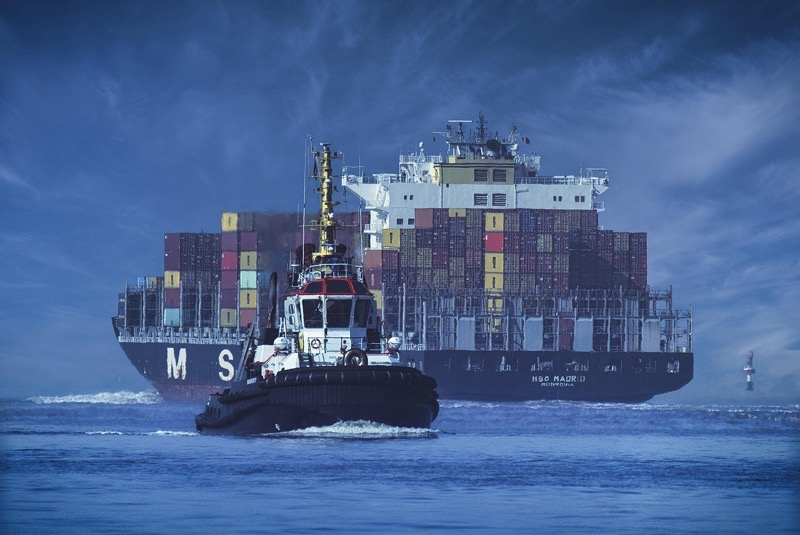
Escorted by the Indian Navy, the gas tanker Shivalik recently sailed east of the Strait of Hormuz, one of the world’s most vital energy corridors. That the voyage occurred in the middle of a United States–Israel war with Iran is revealing. The conflict is not simply disrupting the global energy system—it is quietly reshaping who benefits from it.
India’s experience offers a useful vantage point for understanding how this crisis is restructuring global energy flows. The country relies heavily on imported oil and gas that normally pass through the Strait of Hormuz, the narrow maritime chokepoint linking the Persian Gulf with the Indian Ocean.
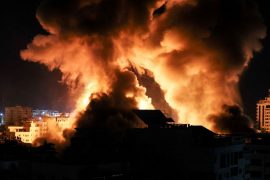
Roughly a fifth of the world’s oil and liquefied natural gas moves through this corridor. However, since the United States and Israel began striking Iran at the end of last month, Tehran has effectively shut the passage to most commercial shipping by firing on tankers in the Gulf.
In theory, such a disruption should have triggered an immediate collapse in global energy flows. But it has not. Iran has not entirely closed the strait. Instead, it has selectively restricted access, allowing certain vessels—particularly those linked to China and potentially India—to pass through under tightly controlled conditions.
India’s foreign minister, Subrahmanyam Jaishankar, has acknowledged that the arrangement is improvised rather than formal: each ship’s transit requires a separate understanding with Tehran. But the fact that these voyages are occurring at all illustrates how countries are navigating through the conflict.
The consequences for global oil markets have nevertheless been dramatic. With most commercial shipping deterred from entering the Gulf, several producers in the Middle East have sharply curtailed their output. Without reliable export routes or sufficient storage capacity, producers have little incentive to continue pumping oil that cannot easily be shipped.
The result is a sudden tightening of global supply. Benchmark prices have climbed above $100 a barrel in London trading, reflecting fears that the world’s most important energy corridor could remain partially blocked for some time.
Ironically, the country benefiting from this surge in prices is the one under bombardment: Iran. Despite years of American sanctions designed to choke its oil revenues, Tehran appears to be earning more than $140m a day from crude exports during the conflict.
Since the strikes began, at least thirteen supertankers have loaded oil at Kharg Island, Iran’s principal export terminal in the Gulf. Shipping data suggests that roughly 24m barrels of Iranian crude have passed through the Strait of Hormuz during the same period.
Those shipments are hardly concealed. Satellite imagery and tanker-tracking services allow movements in and out of the Gulf to be monitored with considerable precision. The scale of the trade suggests that Iran’s export infrastructure remains largely intact.
Although the United States has struck dozens of targets on Kharg Island, including facilities linked to naval mine storage, the oil infrastructure has been left untouched. The distinction appears deliberate. Damaging Iran’s export capacity would remove additional supply from an already strained global market.
That calculation reflects a basic reality of the oil economy. A complete halt to Iranian exports would sharply spike prices and intensify political pressure in countries that depend heavily on imported fuel. In the United States, where petrol prices remain a sensitive political issue, such a spike will be particularly risky ahead of midterm elections. Allowing Iranian oil to continue flowing—albeit under the shadow of sanctions—helps prevent a severe supply shock.
Even so, Iran’s exports remain constrained compared with their pre-conflict levels. Before the strikes began, Tehran accelerated shipments to move crude out of the Gulf before tensions worsened, exporting close to 4m barrels a day. Since the conflict began, exports have settled at roughly 1.5m to 1.6m barrels per day. Assuming these barrels are sold at a discount of around $10 to Brent crude—typical for sanctioned oil—the resulting revenue still amounts to roughly $140m each day.
The infrastructure supporting this trade has been refined over years of sanctions pressure. Several of the tankers loading crude at Kharg Island belong to the so-called “shadow fleet,” vessels that move sanctioned oil while concealing their routes and operating without Western insurance. Such ships have become an integral part of the global grey market in energy.
Recent shipments, however, suggest that Iran is increasingly relying on tankers owned by its national oil company. That may reflect the growing reluctance of private operators to load cargo in a conflict zone.
Most of this oil ultimately ends up in China. More than 90 per cent of Iran’s crude is purchased by small Chinese refineries that specialise in processing discounted crude. These refineries thrive in the margins of the global oil system. Sanctions that discourage larger companies from buying Iranian oil create opportunities for smaller operators willing to accept legal and reputational risks in exchange for cheaper feedstock.
The resulting trade highlights an uncomfortable truth: sanctions regimes rarely eliminate commerce. Instead, they reshape it, redirecting flows toward buyers and intermediaries prepared to operate in less regulated markets. As oil prices rise, the incentives to maintain these channels grow stronger, ensuring that Iranian crude continues to reach global markets despite geopolitical turmoil.
For the United States, this dynamic produces an awkward outcome. Higher oil prices benefit American energy producers, while American motorists face higher fuel costs.
The economic consequences are only part of the story. The diplomatic fallout reveals an uncomfortable blow for Washington. In recent weeks the United States has sought support from allies to help secure the Strait of Hormuz and ensure that commercial shipping can pass through safely.
The strait is a vital artery of the global economy. Protecting it would appear an obvious candidate for international cooperation. However, responses from several key partners have been cautious. The United Kingdom, Germany, Australia and Japan have all declined to send naval forces to clear the strait or escort tankers through it. Participation could expose their ships and personnel to direct confrontation with Iranian forces—a risk many governments appear reluctant to assume.
The hesitation has left the United States diplomatically isolated. For years American policymakers have emphasised the importance of allied burden-sharing in maintaining global security. The crisis in the Strait of Hormuz suggests that this principle has limits, particularly when participation carries the prospect of a war beyond the scope of international law.
Tehran, for its part, appears to understand these dynamics well. By restricting shipping without entirely shutting down its own exports, Iran has managed to drive up global prices while maintaining a crucial revenue stream. The strategy creates pressure on energy markets without triggering the full economic isolation Western sanctions were meant to impose.
The U.S war on Iran illustrates the strange arithmetic of modern geopolitics. A conflict launched to constrain Iran has led to a surge in its oil revenues. Disruption in one of the world’s most vital shipping lanes has pushed energy prices higher, benefiting producers far beyond the Middle East. And Washington’s efforts to rally allies around a maritime security mission have revealed a reluctance among its closest partners to join this illegal war.
The Shivalik, slipping through the Strait of Hormuz under naval escort, was not merely carrying fuel. It was carrying evidence that even in wartime the global energy system adapts—redistributing trade, shifting alliances, and rewarding the instability that threatens it.
-30-
Copyright©Madras Courier, All Rights Reserved. You may share using our article tools. Please don't cut articles from madrascourier.com and redistribute by email, post to the web, mobile phone or social media.Please send in your feed back and comments to [email protected]