
Burevestnik, Putin & the New Russian Gamble

Burevestnik-madras-courier
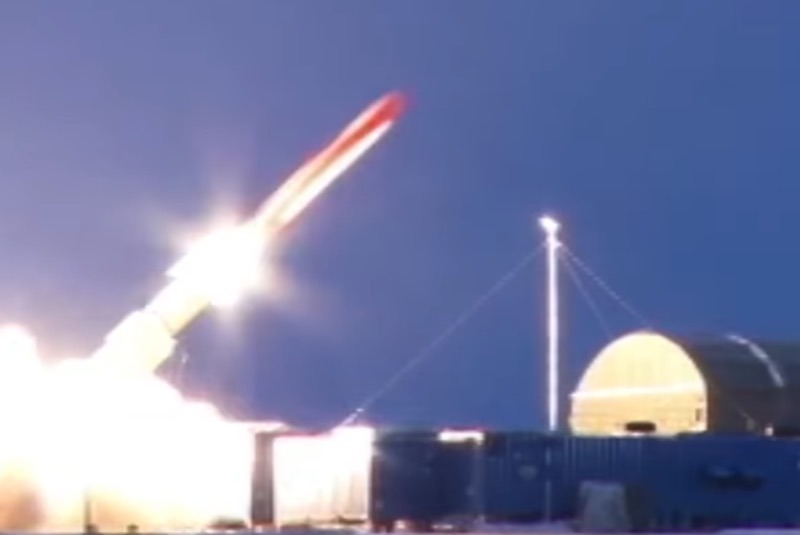
Representational image: Public domain/Wikipedia.
The danger posed by the Burevestnik missile is not just in its technical specifications, but in the broader strategic implications it carries.

Russia has successfully tested its Burevestnik nuclear-powered cruise missile, a weapon that Moscow claims is capable of overcoming any missile defence system. The test, which took place on October 21, is part of a broader strategic message from Russian President Vladimir Putin, signalling to the West and also to the domestic audiences that Russia is determined to maintain its military capabilities amid escalating geopolitical tensions.

The Burevestnik, dubbed “Storm Petrel” by NATO, is a nuclear-capable missile that, according to Russian officials, possesses an almost unlimited range and an unpredictable flight path, making it virtually “invincible” against existing and future defence systems. The missile’s successful 14,000-kilometre flight, lasting approximately 15 hours, underscores the advanced nature of this weapon and Russia’s growing confidence in its military technological superiority.

The timing of the Burevestnik test is significant. The announcement was made in the context of a broader military strategy aimed at signalling Russia’s resilience and readiness to resist pressure from the West, particularly the United States.

President Putin’s remarks, made in a military setting with top generals, reinforce the idea that Russia is prepared to push back against what it sees as “Western interference.” This comes at a time when the U.S. is increasing its involvement in the Ukraine conflict, providing Ukraine with intelligence and advanced missile systems. For Putin, the Burevestnik is not just a demonstration of Russia’s military prowess, but a clear message that Moscow remains a formidable nuclear power, capable of striking back at the West if provoked.

The development of such advanced weapons is also a direct response to the U.S. withdrawal from the 1972 Anti-Ballistic Missile Treaty and its efforts to establish a global missile defence shield. Putin has long framed the creation of these weapons, including the Burevestnik, as a necessary countermeasure to the expanding NATO alliance and U.S. missile defence systems.

The Burevestnik is particularly alarming because of its nuclear propulsion, which theoretically provides it with the ability to fly indefinitely, evading interception by current defence technologies. This capability makes it a significant addition to Russia’s nuclear deterrent, reinforcing the country’s position in the ongoing arms race.

While the Burevestnik test sends a clear message of military strength, it also highlights the broader context of Russia’s position in the world, especially in the face of international sanctions. Since the annexation of Crimea in 2014, and more recently with the full-scale invasion of Ukraine in 2022, Russia has faced severe economic sanctions from Western countries.

These sanctions have targeted key sectors of the Russian economy, particularly the energy industry, which is vital to Russia’s economic stability. Despite these measures, Russia has managed to sustain its military campaigns, largely by adjusting its economic strategy to prioritise defence and military production.

The economic sanctions imposed by the U.S., the European Union, and other Western nations have indeed placed significant strain on Russia’s economy, with sanctions targeting Rosneft and Lukoil, Russia’s largest oil companies. These sanctions are aimed at crippling Russia’s economy, thereby weakening its ability to fund the war in Ukraine.

Yet, despite the challenges posed by these economic restrictions, Russia has demonstrated a remarkable ability to adapt. While the sanctions have clearly affected Russia’s broader economy, they have not been able to halt the flow of resources into the military sector. Russia’s defence spending has remained robust, with the government redirecting funds from civilian sectors to sustain military operations. This has been facilitated by tax hikes, including increases in VAT and corporate tax rates, which place a heavier burden on the Russian population but ensure that military spending continues uninterrupted.

One of the key strategies that has allowed Russia to weather the economic storm is its ability to find loopholes in the sanctions regime. Despite bans on Russian energy exports, Europe continues to purchase significant amounts of oil and gas from Russia, though in lower volumes. Additionally, Russia has developed a “shadow fleet” of vessels that operate outside international sanctions, helping to smuggle banned goods like military equipment and stolen Ukrainian grain.

This network allows Russia to circumvent some of the economic penalties and maintain the flow of resources into its war effort. However, as Western sanctions continue to tighten, Russia will likely face increasing challenges in maintaining these supply chains, which could drive up the costs of the war but will not likely bring it to an end.

Moreover, the economic impact of the sanctions on ordinary Russians has been severe, with rising inflation and a devaluation of the ruble leading to significant hardship for many citizens. However, this has not translated into widespread opposition to the war, as the Russian government has used propaganda and state-controlled media to foster a sense of nationalism and patriotism.

For many Russians, the war in Ukraine is framed as a struggle for national survival, which, in turn, makes economic sacrifices more palatable. The promise of debt forgiveness and enlistment bonuses for soldiers has also contributed to the maintenance of Russia’s fighting force, despite the country’s economy facing significant challenges.

Despite these efforts, it is clear that the Russian economy is under immense pressure. The EU’s sanctions have cost Russia billions, and the country’s oil exports have taken a significant hit. However, the broader question remains whether these sanctions will ultimately succeed in forcing Russia to negotiate a peace settlement or whether they will merely drive the country toward further escalation.

The limitations of sanctions against an autocratic regime like Russia are well-documented. Unlike in democracies, where public discontent can lead to political change, autocratic regimes like Putin’s can often weather such pressures without significant shifts in governance.

In this context, the Burevestnik missile serves not just as a symbol of Russia’s military ambitions but also as a reminder of the limitations of economic sanctions in achieving their objectives. Sanctions have undoubtedly created economic challenges for Russia, but they have not led to the desired political outcomes, such as the collapse of Putin’s regime or a cessation of military aggression. Instead, they have pushed Russia, making it more reliant on its military capabilities and nuclear deterrence as a means of preserving its global standing and military leverage.

The Burevestnik missile, with its nuclear propulsion and virtually unstoppable flight path, is a direct manifestation of this reliance. It is a weapon designed not just for warfare but as a deterrent, signalling to the West that Russia remains a nuclear power capable of retaliating against threats from the West. Its development and successful test further solidify Russia’s position in the global arms race, making it clear that, despite sanctions and international isolation, Russia is not retreating from its military ambitions. Instead, it is doubling down, reinforcing its nuclear deterrence while continuing its military operations in Ukraine.

The danger posed by the Burevestnik missile is not just in its technical specifications, but in the broader strategic implications it carries. In a world where nuclear weapons remain a cornerstone of military power, a weapon like the Burevestnik undermines global stability by making it more difficult for any nation to secure its borders against a potential nuclear strike. As Russia continues to develop and deploy such advanced weapons, the risks of miscalculation and escalation grow, making the prospect of peace seem increasingly distant.

The successful test of the Burevestnik demonstrates Russia’s growing military capabilities. However, it highlights the broader dynamics of international relations, where economic sanctions, military posturing, and nuclear deterrence are all playing a crucial role in shaping the future of global security.

The missile itself may be a technological marvel, but its implications for global peace and security are profoundly unsettling. As Russia continues its military efforts in Ukraine, the world must grapple with the reality that the intersection of economic pressure and nuclear weapons may lead to a dangerous and unpredictable escalation.

-30-

Copyright©Madras Courier, All Rights Reserved. You may share using our article tools. Please don't cut articles from madrascourier.com and redistribute by email, post to the web, mobile phone or social media.
Please send in your feed back and comments to [email protected]
0 replies on “Burevestnik, Putin & the New Russian Gamble”