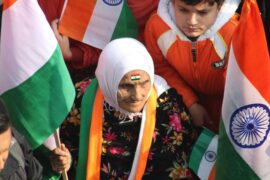
A democracy is tested not by how it treats those who agree with the government, but by how it responds to those who challenge it. The events of October 10 at Jantar Mantar, where citizens gathered to protest against the Chief Election Commissioner, exposed a disturbing contradiction in Indian democracy.
The Constitution of India guarantees the right to peaceful assembly, yet citizens trying to exercise that right faced barricades, mass detentions, and restrictions on their movements. Thousands were detained across Delhi and beyond, many before reaching the planned protest site.
The Delhi Police denied permission for the demonstration at Jantar Mantar, citing procedural and security concerns. However, the authorities offered no effective alternative venue for protesters to exercise their democratic rights, confronting citizens with a troubling choice: abandon their protest or risk detention while attempting to assemble.
What does the right to protest mean when the established venue is rendered inaccessible, and no workable alternative is provided? Jantar Mantar has long served as a recognised space for democratic dissent. Restricting access without providing an alternative does not merely regulate public space; it risks depriving citizens of the practical means to exercise a fundamental right. The government cannot claim to protect democratic freedoms while allowing administrative permission to become a mechanism for preventing political expression.
The description of the present situation as an undeclared emergency is not a claim that a constitutional Emergency has formally been proclaimed. It warns of the normalisation of practices that progressively narrow democratic freedoms. An emergency-like political climate can emerge when peaceful assembly becomes difficult, preventive detention becomes routine, and the state treats political mobilisation primarily as a threat to public order.
Fundamental rights may remain intact in theory, even as their exercise becomes increasingly precarious. Article 19(1)(a) guarantees freedom of speech and expression, while Article 19(1)(b) protects peaceful assembly without arms. These rights are subject to reasonable restrictions on constitutionally recognised grounds.
However, this qualification does not provide the state with unlimited discretion to suppress demonstrations. Restrictions must have a lawful basis and must be necessary and proportionate. Public order cannot become a blanket justification for preventing dissent.
If authorities believe a gathering poses a genuine risk, they must show why proportionate measures, negotiated arrangements, and appropriate security provisions are insufficient. Denying permission, blocking access and detaining people before they reach a protest site raises serious questions about whether the objective is to regulate a demonstration or prevent it altogether.
The Supreme Court has a particularly important constitutional responsibility. Article 32 guarantees the right to approach it to enforce fundamental rights. Judicial scrutiny becomes essential when the state invokes public order to restrict constitutional freedoms. However, the effectiveness of judicial protection depends on more than issuing directions. It also depends on timely intervention, compliance and meaningful remedies for those whose rights may have been violated.
When citizens perceive constitutional safeguards as inadequate, or remedies arrive only after detention and coercion, faith in the justice system erodes. Judicial decisions must remain open to rigorous criticism, particularly when their practical consequences affect fundamental freedoms. The question is whether they consistently demonstrate their commitment to constitutional principles.
The Office of the President of India carries constitutional and symbolic significance, but the Constitution defines is authority. Under Article 74, the President ordinarily acts on the aid and advice of the Council of Ministers. The office cannot simply replace the elected executive or directly reverse every police decision.
Nevertheless, the larger crisis raises an unavoidable question: when citizens lose confidence in the institutions meant to protect their rights, how can the constitutional order restore that trust?
The crackdown at Jantar Mantar raises a deeper question about the culture of Policing. The Police Act of 1861 emerged from a system designed to maintain British rule, and a persistent control-oriented approach deserves scrutiny in a constitutional democracy founded on liberty, equality, and fundamental rights.
The events of October 10 illustrate why this question matters. The refusal of permission, extensive barricading, multiple detention points and the detention of protesters before they could reach Jantar Mantar turned the exercise of a democratic right into a confrontation with the state.
When authorities make a recognised protest venue inaccessible without providing a workable alternative, they risk transforming administrative control into practical denial of a fundamental freedom. The police must facilitate gatherings without restrictions; if they do impose restrictions, they must show they are lawful, necessary, and proportionate.
The police force of a democratic country should not intimidate or create fear among citizens seeking to exercise their constitutional rights. Its responsibility is to protect people, reduce tensions, communicate clearly, facilitate peaceful assembly, and respond lawfully to genuine threats. Protesters should not have to fear arbitrary detention simply because they intend to criticise the government.
Policing must be grounded in empathy, restraint and accountability, not in the assumption that dissent is a threat to authority. New Zealand offers a useful point of comparison. In 2025, its Independent Police Conduct Authority called for stronger legal protections and clearer guidelines for policing public protests, following complaints about police conduct at demonstrations. The review identified instances of unlawful or unjustified police action and recommended reforms to balance public safety with freedom of assembly better.
The lesson: democratic policing requires independent scrutiny, clear legal standards and a commitment to facilitating peaceful protest. India needs a similar shift in institutional priorities. Authorities should explain decisions in writing and make them open to timely review. They should engage with organisers, seek workable alternatives when a venue is unavailable, and use negotiation and de-escalation before resorting to force wherever circumstances permit.
Detentions must comply with legal safeguards, while credible allegations of excessive force must be independently investigated. Police accountability should be measured not by how effectively officers prevent dissent, but by how well they protect public safety while respecting constitutional freedoms.
The fundamental purpose of policing in a democracy is not to make citizens afraid of the state, but to ensure that they can exercise their rights without fear. When the police become an instrument that obstructs peaceful dissent rather than protects it, reform is no longer merely an administrative necessity. It becomes a constitutional imperative.
The events of October 10 cannot be reduced to a dispute over permission, barricades or crowd management. They expose a deeper conflict over who controls democratic public space and whether citizens can meaningfully challenge those who exercise state power.
The more the state relies on coercion to manage dissent, the more likely citizens will experience constitutional institutions as instruments of control rather than safeguards of freedom. Democracy requires meaningful opposition, peaceful assembly, independent institutions and effective remedies when rights are violated.
When the state denies citizens a place to protest, detains them before they can assemble, and leaves accountability unresolved, the damage extends beyond a single demonstration. It becomes a crisis of constitutional trust. The measure of democracy is not how efficiently the state can silence dissent, but whether it can protect the right to challenge power without treating that challenge as a threat.
-30-
Copyright©Madras Courier, All Rights Reserved. You may share using our article tools. Please don't cut articles from madrascourier.com and redistribute by email, post to the web, mobile phone or social media.Please send in your feed back and comments to editor@madrascourier.com