On the morning of April 18, 1955, Albert Einstein, the man who had unravelled the fabric of the universe with his theory of relativity, passed away in Princeton, New Jersey. His death, caused by a ruptured aorta, marked the end of a life that had reshaped our understanding of space, time, and reality.
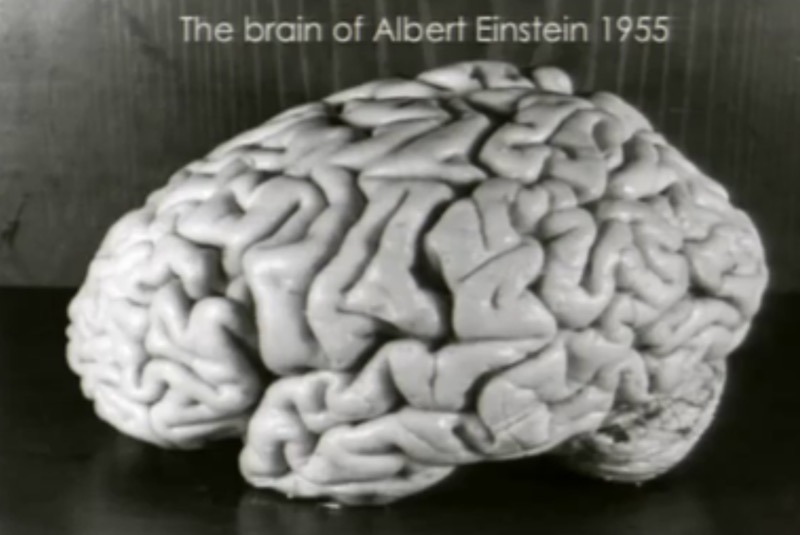
But what followed in the wake of his passing was far from ordinary. His brain, that most celebrated organ, would embark on a strange journey. This journey would outlast even his legendary genius and raise uncomfortable questions about ethics, autonomy, and the meaning of scientific curiosity.
In the halls of Princeton Hospital, a pathologist named Dr Thomas Harvey was summoned to perform the autopsy. Upon completing the procedure, Harvey, perhaps swept up in the weight of the moment or driven by an academic impulse, made a fateful decision. Rather than adhering to the norms of medical practice, he sawed open Einstein’s cranium, removed his brain, and took it with him.
What followed was a bizarre and unsettling chapter in the history of science and medicine. Einstein’s body was cremated, and his ashes were scattered in a secret location, as he had requested in his will. Yet, his brain—that had once produced the theories that redefined physics—vanished without a trace.
The discovery of the missing brain would not come immediately. It wasn’t until after the funeral that Einstein’s eldest son, Hans Albert Einstein, learned of the inexplicable theft. Horrified and bewildered, Hans confronted Dr Harvey, who, to his credit, was not entirely oblivious to the enormity of what he had done.
In his defence, Harvey explained that he intended to study the brain scientifically, to unlock the mysteries of Einstein’s genius by examining the organ that had given birth to such profound insights. Harvey, who was not a neurologist but a pathologist, had convinced himself that this research could lead to great discoveries, even though he lacked the expertise and credentials to lead such a groundbreaking study.
Harvey’s obsession with Einstein’s brain deepened in the years that followed. He was determined to prove that it held some unique, almost mystical quality. However, rather than publishing his findings or submitting them for peer review, Harvey began to store Einstein’s brain privately.
He embalmed it in a substance called celloidin and kept it in jars, hiding it from public view. For decades, the brain remained shrouded in secrecy. Harvey’s ambitions, it seemed, had been thwarted; no scientific papers emerged, no discoveries were made, and the legend of Einstein’s brain was largely forgotten.
It wasn’t until 1978, more than two decades later, that the story would resurface. Steven Levy, a young reporter for New Jersey Monthly, was on a mission to uncover what had become of the legendary organ. With nothing but rumours to go on, Levy traced Dr Harvey’s whereabouts to Wichita, Kansas.
Harvey, by then an older man, was living a quiet and inconspicuous life, far removed from the world of medical research. When Levy first contacted him, Harvey was reluctant to speak. Clearly, the former pathologist had little desire to revisit the events of 1955. But after much persuasion, Harvey agreed to meet.
In a small, cluttered medical lab, Harvey’s unease was palpable. When Levy pressed him for details, it quickly became clear that Harvey was still clinging to his belief that the brain held untapped potential for discovery.
As the conversation continued, Levy noticed Harvey’s subtle shift in demeanour. Without warning, the doctor stood up, walked over to a stack of cardboard boxes, and pulled out a beer cooler. The cooler was old, and the bottom box was labelled “Costa Cider.” With a sense of quiet anticipation, Harvey removed a series of mason jars from the cooler. It was then that Levy saw it: Einstein’s brain.
What lay inside the jars was a strange, peculiar, and unsettling sight. The brain had been dissected and preserved in pieces, the way one might maintain a specimen for study. In one jar, Levy described the contents as a “conch shell-shaped mass of wrinkly material, the colour of clay after firing,” and in another, a “fist-sized chunk of greyish, lined substance, the apparent consistency of sponge.”
There were also pinkish-white strings resembling a strange form of dental floss—gross, perhaps, but undeniably fascinating. And this was only the beginning. A second, larger jar contained dozens of translucent blocks, each containing thin slices of Einstein’s brain, preserved like artefacts for a future that, it seemed, would never come.
The strange journey of Einstein’s brain had begun in 1955, but what happened in the ensuing years? After gaining permission from Hans Einstein, Harvey had divided the brain into 240 blocks, which he distributed among some of the most respected neuropathologists in the country.
These experts were supposed to examine the brain, conduct tests, and uncover whatever unique traits might explain the genius of its owner. But the results were underwhelming. Though Einstein’s brain weighed only 1,230 grams, which was on the lighter side of the normal range for men his age, no apparent abnormalities or exceptional qualities were discovered. The great mystery of Einstein’s mind remained unsolved.
What remained was the shadow of an increasingly troubled man. Though motivated by professional ambition, Harvey’s actions had come at a significant personal cost. When the theft of Einstein’s brain became public knowledge, Harvey’s reputation was destroyed. His career at Princeton was ruined, and his marriage ended in divorce. The man who had once been a respected pathologist was now a figure of public ridicule, a cautionary tale of intellectual obsession gone awry.
But even as Harvey faced the consequences of his actions, a deeper moral question emerged: Was it right to take Einstein’s brain in the first place? The question of bodily autonomy and consent hangs heavily over this entire saga.
Einstein had made it clear in his will that he wanted to be cremated and that no part of his body should be tampered with. His wishes were disregarded, and his body became the subject of scientific inquiry without his consent.
Did the end justify the means? Could the pursuit of knowledge, however noble, override the fundamental right to privacy and bodily integrity?
The controversy surrounding Einstein’s brain has not diminished in the years since. The question of whether it was ethically correct to exploit his body, even after his death, remains unresolved.
Einstein may have been one of the greatest minds in history, but that does not make him any less human. Shouldn’t we, as a society, respect the wishes of those who can no longer speak for themselves? Does intellectual curiosity give us carte blanche to violate someone’s most personal rights, even if they are no longer alive to defend them?
Einstein’s brain, like his legacy, is a paradox. It symbolises the pursuit of knowledge, of humankind’s desire to understand the mysteries of the universe. And yet, it is also a reminder of the dangers of unchecked ambition, of how scientific curiosity can veer dangerously close to exploitation.
Ultimately, Einstein’s brain may not have offered the answers it promised. But the story of what happened to it, and to the man who stole it, remains a cautionary tale about the fine line between discovery and desecration.
-30-
Copyright©Madras Courier, All Rights Reserved. You may share using our article tools. Please don't cut articles from madrascourier.com and redistribute by email, post to the web, mobile phone or social media.Please send in your feed back and comments to [email protected]