
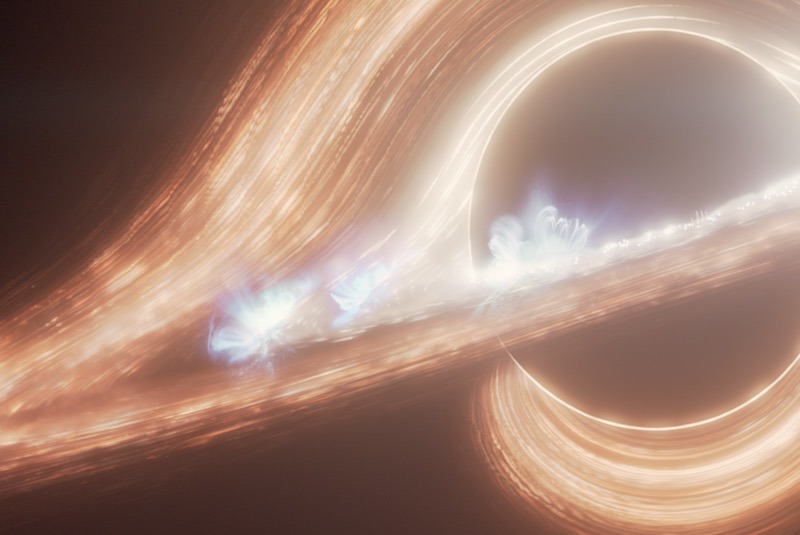
The universe, it seems, is far stranger than we could have ever imagined. For centuries, we gazed at the stars, certain of their stability and the steady rhythm of the celestial spheres, until, in 1915, Albert Einstein introduced the theory that would unravel those assumptions. His general theory of relativity reshaped our understanding of space and time, casting gravity not as a mere force but as the very fabric of the cosmos, warped by mass and energy.
The fabric itself, Einstein suggested, was so malleable that under certain conditions, the cosmos could fold in on itself, creating regions where even light, the fastest thing in the universe, could not escape. These ideas, though radical, seemed to defy imagination and, for many years, remained theoretical curiosities. But today, we live in a world where black holes—the very heart of those bending, folding universes—are a scientific reality.
Copyright©Madras Courier, All Rights Reserved. You may share using our article tools. Please don't cut articles from madrascourier.com and redistribute by email, post to the web, mobile phone or social media.Please send in your feed back and comments to [email protected]