
‘PAM’: The Brain-Eating Amoeba That Is Gripping Kerala

Pam-madras-courier
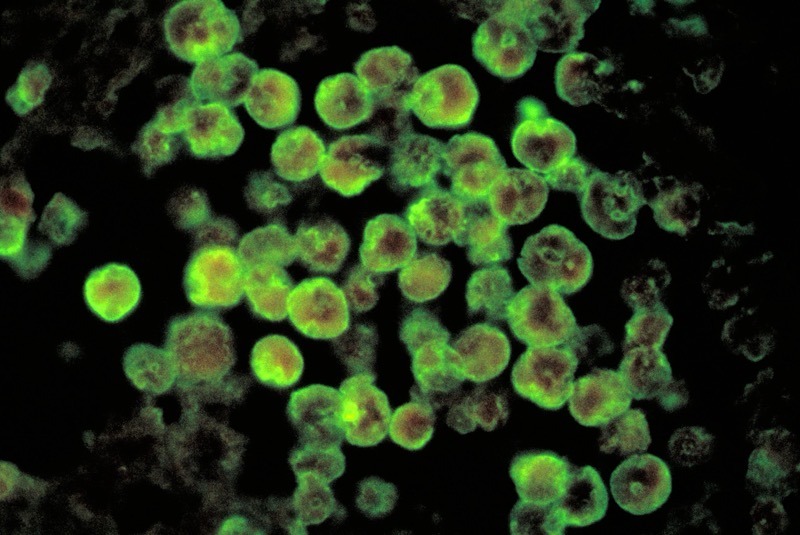
Representational image: Public domain/Wikipedia.
The Amoeba, Naegleria fowleri, is so rare that most doctors will never see a case in their careers. And yet, when it strikes, the odds of survival are vanishingly slim.

In early September, in the humid monsoon air of Kerala’s Malappuram district, a fifty-six-year-old woman named Sobhana was brought to the Government Medical College Hospital in Kozhikode. She had fallen ill days earlier, complaining first of headaches, then of confusion and fever. By the time her family rushed her to the hospital, she was already slipping toward unconsciousness. Doctors did what they could, but on Monday, September 8, she died. Hers was not an isolated case. Just two days earlier, a man named Ratheesh, from Wayanad district, succumbed to the same infection. Sobhana became the fifth victim in a month.

The culprit was not a virus or a bacterium, but something stranger, more unsettling—a single-celled organism called an amoeba, a free-living parasite that thrives in the warm freshwater of lakes, ponds, and rivers. This particular amoeba, Naegleria fowleri, is so rare that most doctors will never see a case in their careers. And yet, when it strikes, the odds of survival are vanishingly slim. The infection it causes—primary amoebic meningoencephalitis, or PAM—is colloquially referred to as “the brain-eating amoeba.” It is a name that sounds sensationalist, the stuff of horror movies, but it is no exaggeration.

The amoeba lives in warm water, usually in places where the temperature rises above thirty degrees Celsius. It is often found in stagnant ponds or rivers that slow to a trickle in summer heat, and in unchlorinated swimming pools or natural hot springs. For reasons scientists only partly understand, it does not usually harm people who swallow it. But if water enters through the nose—during swimming, diving, or even ritual ablution or nasal irrigation—the amoeba can travel up the olfactory nerve, crossing the thin cribriform plate into the brain. Once inside, it begins to consume tissue, provoking an overwhelming inflammatory reaction.

The onset of illness resembles something far more mundane. Fever, nausea, a stiff neck, headache—symptoms easily mistaken for bacterial meningitis. Patients sometimes notice a strange loss of smell or taste, or develop photophobia. As the days pass, usually fewer than nine from the moment of exposure, the disease accelerates. Seizures, hallucinations, and profound confusion give way to coma. Death follows swiftly, often within a week of symptoms appearing. “The case-fatality rate is as high as 99 percent,” one review in Clinical Infectious Diseasesnoted.

That staggering mortality is not merely the result of the amoeba’s ferocity but also its elusiveness. Doctors rarely diagnose PAM before autopsy. Routine cultures yield nothing. Only a careful examination of spinal fluid under a microscope may reveal the motile trophozoites, swimming, almost mockingly, across the field of view. By the time this discovery is made, it is usually too late.

The disease is so rare that its global incidence averages just 3.7 cases a year. Most occur in the United States, particularly in the South, where warm summers draw children to lakes and rivers. The majority of patients are young males; one study put the mean age at twelve. But rarity does not equal safety. The amoeba exists in soil and water across continents, including in South Asia, where warming temperatures and unregulated water sources make exposure more likely. Kerala, with its monsoon-fed rivers and densely populated villages, has become a new flashpoint.

There is a second kind of amoebic infection of the brain, known as granulomatous amoebic encephalitis, or GAE, caused by other species such as Acanthamoeba and Balamuthia mandrillaris. Unlike PAM, which kills within days, GAE unfolds slowly over weeks or months. It tends to afflict those with weakened immune systems, including patients with HIV. The symptoms mimic those of tumours or abscesses: headaches, vision changes, and behavioural disturbances. Brain scans show ring-enhancing lesions that can be mistaken for tuberculosis or fungal infections. Eventually, as with PAM, pressure builds inside the skull, seizures erupt, and death follows.

The story of how these organisms kill is also the story of their extraordinary resilience. Naegleria fowleri has a three-stage life cycle: trophozoite, flagellate, and cyst. The trophozoite is the feeding form, ravenous for nutrients. If conditions sour, it can transform into a flagellated form, sprouting whip-like appendages that allow it to move. Under extreme duress, it retreats into a cyst, a hardened shell in which it can survive harsh environments until the world becomes hospitable again.

Acanthamoeba, though lacking the flagellated stage, also alternates between cysts and trophozoites, forms that can resist disinfectants and persist in dust, soil, or even contact-lens solution.

Treatment, when attempted, is a desperate improvisation. The U.S. Centers for Disease Control and Prevention recommends a cocktail of antimicrobial drugs: amphotericin B, rifampin, fluconazole, miltefosine, and azithromycin for PAM; pentamidine, sulfadiazine, flucytosine, and azoles for GAE. A handful of survivors, often children, have lived through the infection after receiving such combinations alongside induced hypothermia to reduce brain swelling. But these cases are so few that they serve as exceptions that prove the rule. More often, the diagnosis comes late, the drugs arrive too slowly, and the patient is gone before anyone can marshal a defence.

The first documented human case of Naegleria fowleri infection was in Australia in the 1960s. Since then, the arc of cases has shadowed climate. Warmer waters provide the amoeba an ecological niche. “It is a thermophilic organism,” one researcher wrote, noting that it thrives above thirty degrees Celsius and can endure temperatures up to forty-five. In an era of global warming, such temperatures are becoming more common, extending the amoeba’s range northward and making once-safe waters perilous.

In Kerala, health officials have scrambled to contain public anxiety. Advisories warn residents to avoid swimming in stagnant water or to take precautions with nasal exposure. Eleven people are currently undergoing treatment at Kozhikode Medical College, their conditions uncertain. For families like Sobhana’s, the warnings have come too late. In the village of Thiruvali, where she lived, neighbors whispered about her sudden decline. She had been healthy, preparing for Onam festivities, until a fever and headache felled her. Within a week, she was gone.

There is a cruel irony in the way the infection spreads. It requires no mosquito, no definitive host. It does not depend on human-to-human transmission. It exists independently in the world, feeding on bacteria in the soil, until chance delivers it into a human nose. The randomness makes it feel all the more menacing. One child swims in a river and emerges unscathed; another, minutes later, inhales the wrong drop of water and contracts a nearly always fatal disease.

Doctors emphasise that panic is not warranted. The infection remains exceedingly rare, even in Kerala, even amid a cluster of cases. Millions swim safely each year in freshwater across the globe. Yet rarity is cold comfort for those who have seen what the amoeba can do. In Malappuram and Wayanad, families are left with grief and confusion, wondering how something invisible and unheard of could so suddenly erase a life.

As medicine advances, scientists hold out hope for better diagnostic tools—rapid tests that can detect Naegleria in spinal fluid within hours, perhaps, or targeted drugs that penetrate brain tissue more effectively. But for now, the amoeba retains its grim advantage. “The mean time from onset of symptoms to death was 5.3 days,” researchers have reported, a figure that captures both the speed and futility of the struggle.

The waters of Kerala continue to flow, rivers swollen with monsoon rains, ponds reflecting the dense canopy of coconut trees. They look as they always have, ordinary and inviting. Nothing in their stillness hints at the menace they might contain. For most who wade into them, they remain harmless. For a few, like Sobhana and Ratheesh, they conceal a predator so small it cannot be seen, a microbe that waits, indifferent, for the chance to cross the thin boundary between the world outside and the brain within.

-30-

Copyright©Madras Courier, All Rights Reserved. You may share using our article tools. Please don't cut articles from madrascourier.com and redistribute by email, post to the web, mobile phone or social media.
Please send in your feed back and comments to [email protected]

0 replies on “‘PAM’: The Brain-Eating Amoeba That Is Gripping Kerala”