
Plastic pollution is often portrayed as an environmental problem. Images of discarded bottles floating in oceans or turtles entangled in fishing nets have become symbols of humanity’s dependence on synthetic materials. Increasingly, however, scientists are asking another pertinent question: what happens when the plastic enters us?
The answer, at least in part, is that it already has. Tiny plastic particles, known as microplastics, are now found in the air people breathe, the food they eat and the water they drink. Studies have detected them in human lungs, blood, placentas and other tissues. Their ubiquity is no longer in doubt. What remains uncertain is whether their presence poses a threat to human health—and, if so, how.
Among the areas attracting growing scientific attention is the gut, one of the body’s most complex ecosystems. Researchers are beginning to investigate whether microplastics interfere with the trillions of microorganisms that inhabit the digestive tract, potentially influencing diseases linked to chronic inflammation. Although much of the evidence remains preliminary, the findings point towards an emerging frontier in environmental medicine.
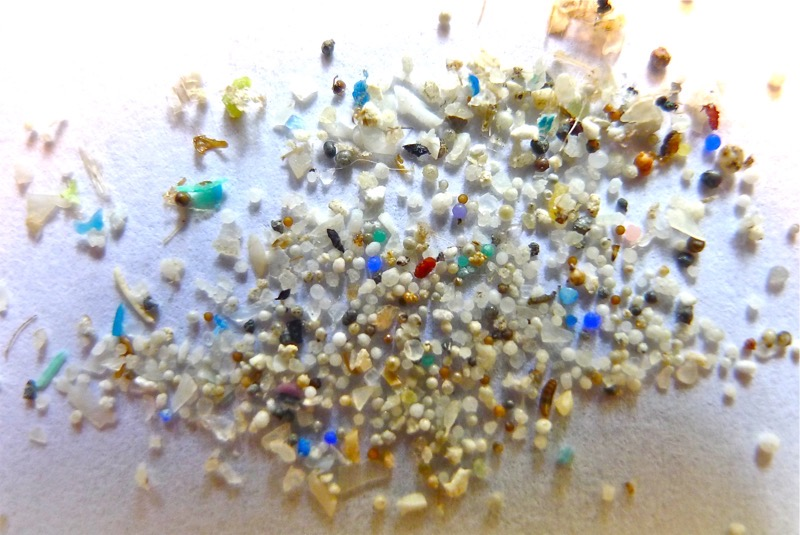
Microplastics are generally defined as plastic fragments measuring less than five millimetres in diameter. Many are invisible to the naked eye, while the smallest—often referred to as nanoplastics—are measured in thousandths of a millimetre. Some are manufactured intentionally for industrial or commercial purposes, though regulations in many countries have begun to restrict their use in products such as cosmetics. Most, however, are created unintentionally as larger plastic objects gradually break apart through sunlight, weathering, friction and mechanical wear.
This process is difficult to avoid in a world built around plastic. Synthetic clothing sheds microscopic fibres during washing. Vehicle tyres release particles as they wear against roads. Food packaging, disposable containers and household items slowly degrade over time. Even chopping food on plastic cutting boards can generate tiny fragments. The result is an environment in which microscopic plastic particles circulate continuously through air, soil and water.
Estimating human exposure remains challenging. A widely cited estimate suggests people may ingest the equivalent of several grams of microplastics each week. However, such figures depend heavily on modelling assumptions and remain the subject of debate. Scientists agree that people are routinely exposed to microplastics through multiple routes, but they do not yet know precisely how much accumulates in the body or how long it remains there.
Part of the difficulty lies in detection. Human tissues contain numerous microscopic substances—including fats, proteins and naturally occurring particles—that can resemble plastic under laboratory analysis. Advances in spectroscopy and imaging techniques have improved researchers’ ability to distinguish genuine plastic particles from biological material, but accurately and consistently measuring microplastics remains a technical challenge.
Even so, overwhelming evidence continues to show that microplastics enter the human digestive system. Whether substantial quantities subsequently cross the intestinal barrier into the bloodstream or build up within organs remains an area of active investigation. What is beyond dispute is that microplastics entering the digestive tract encounter one of the body’s most sophisticated biological communities: the gut microbiome.
Far from being a passive collection of bacteria, the microbiome functions as an additional metabolic organ. Trillions of microorganisms, representing hundreds of bacterial species, help digest food that human enzymes cannot process on their own. In doing so, they produce a wide range of chemical compounds that influence digestion, immunity, metabolism and even communication between the gut and the brain.
Among the microbiome’s most important products are short-chain fatty acids, molecules generated when beneficial bacteria ferment dietary fibre. These compounds, particularly butyrate, have become central to modern gastrointestinal research. Butyrate serves as the primary energy source for cells lining the colon, strengthens the intestinal barrier that separates gut microbes from the bloodstream and helps regulate immune responses. A healthy supply of butyrate is widely considered a hallmark of a balanced gut ecosystem.
When that balance is disturbed, problems can follow. Reduced populations of butyrate-producing bacteria have been associated with inflammatory bowel disease (IBD), a chronic condition that includes Crohn’s disease and ulcerative colitis. Affecting millions of people worldwide, IBD causes recurring inflammation of the digestive tract, leading to abdominal pain, diarrhoea, fatigue and weight loss. Although genetics contribute to susceptibility, environmental factors are increasingly thought to influence its development. Microplastics have now joined the growing list of suspected environmental contributors.
Animal studies, however, provide a more controlled environment in which researchers can investigate possible mechanisms. One recent study, published in the Journal of Hazardous Materials, exposed mice to polystyrene microplastics of varying sizes. The researchers found that the particles altered the animals’ gut microbiome by reducing populations of bacteria that produce butyrate. Lower butyrate levels were accompanied by greater intestinal inflammation and increased vulnerability to experimental models of inflammatory bowel disease.
The findings suggest a plausible biological pathway linking microplastics to impaired gut health. Rather than directly damaging tissue, the particles may disrupt the microbial communities that normally protect the intestine, weakening its defences against inflammation.
However, translating such findings into conclusions about human health requires caution. Laboratory studies often expose animals to carefully controlled doses of microplastics that may not perfectly reflect real-world human exposure. Different plastic types, particle sizes and chemical additives may also behave differently inside the body. Whether the same biological changes occur in people—and to what extent—remains unknown.
This uncertainty characterises much of the research into microplastics and health. Studies have reported associations between microplastics and cardiovascular disease, reproductive health and metabolic disorders. However, untangling cause from coincidence will require larger studies, improved detection methods and long-term monitoring.
Fortunately, science is advancing rapidly. Improvements in analytical chemistry are making it easier to identify ever-smaller particles while reducing the risk of laboratory contamination. At the same time, epidemiologists are integrating environmental exposure data with clinical research to provide a comprehensive picture of how microplastics may influence human biology over time.
Researchers are also exploring an unexpected ally in the fight against plastic pollution: the microbiome itself.
Certain bacterial species found in soil and marine environments have already been shown to degrade specific types of plastic under laboratory conditions. Intriguingly, some bacteria naturally present in the human gut appear capable of breaking down particular plastic compounds. Whether this process occurs meaningfully inside the digestive system—and whether the resulting breakdown products are harmless or potentially toxic—remains uncertain.
If future research confirms that beneficial microbes can safely metabolise certain plastics, entirely new therapeutic possibilities could emerge. Scientists might one day develop probiotic treatments to reduce plastic accumulation in the gut or engineer bacterial enzymes that degrade plastic waste more efficiently outside the body. Such ideas remain speculative, but they illustrate how understanding the microbiome could yield solutions that extend beyond human health to environmental management.
None of this should distract from the immediate challenge: reducing plastic pollution at its source. Many countries have introduced restrictions on intentionally manufactured microplastics, particularly those used in cosmetics and personal care products. However, the majority of environmental microplastics arise not from products designed to contain them but from the gradual degradation of everyday materials that underpin modern economies. Tyres, textiles, packaging and construction materials continue to generate microscopic debris with every passing day. That makes prevention substantially more difficult.
Addressing the problem will require improvements in materials science, waste management, recycling technologies and industrial design, alongside policies that reduce unnecessary plastic consumption.
Researchers have established that these particles are widespread in the environment and that humans are routinely exposed to them. They have uncovered plausible biological mechanisms through which microplastics could influence health, particularly by disrupting the gut microbiome.
Plastic pollution has extended beyond landscapes and oceans into the human body. Understanding what that means may prove to be one of the defining scientific questions of the coming decade—not because all the answers are already known, but because so many of them are only beginning to emerge.
-30-
Copyright©Madras Courier, All Rights Reserved. You may share using our article tools. Please don't cut articles from madrascourier.com and redistribute by email, post to the web, mobile phone or social media.Please send in your feed back and comments to editor@madrascourier.com