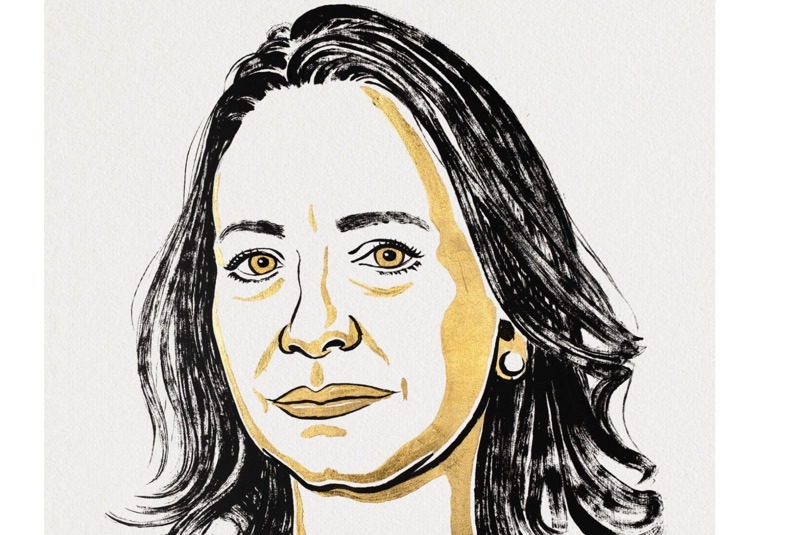
In the theatre of modern revolutions, there is always a moment when a dissident becomes a symbol. For Venezuela, that moment may have arrived with María Corina Machado.
Machado is fifty-eight. Her face has become ubiquitous, and her name is invoked with reverence or suspicion, depending on the room. Her voice, once just one among many in the chorus of opposition to Nicolás Maduro, now carries the strained, almost mythic weight of a prize. Machado has somehow managed to endure and ascend in a country under authoritarianism.
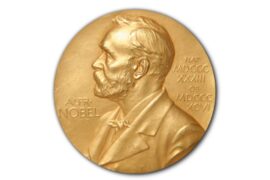
When the Nobel Peace Prize committee announced that Machado would receive the 2025 award for her “tireless work promoting democratic rights for the people of Venezuela,” there was a flicker of awe, and a gust of disbelief. She was not in Oslo. She was not even safe. She was, by all reliable accounts, hiding.
The committee, whose taste for provocation is matched only by its appetite for paradox, framed her struggle as courageous. It lauded her resistance and refusal to accept the surreal diktats of a regime that had lost its legitimacy long ago.
She defied a system designed to erase opposition, published alternative vote tallies after Maduro declared himself victor in the 2024 presidential election, which nearly all observers agree he lost, not to Machado herself, who had been disqualified, but to Edmundo González, a candidate running in her name.
By doing so, she transformed a foregone conclusion into a contested event. She insisted on the truth of the ballots, introduced evidence into a theatre of shadows, and was forced underground for that.
But Machado is not a figure of simple resistance. She is not a peace activist, and this is where the story becomes harder to tell neatly. To call her a “strategist” is correct, though insufficient. She is both symbol and tactician, a veteran of political brawls who understands that democracy in Venezuela is not an ideal so much as a weapon—one wielded cautiously and often from the losing side.
Her critics (they are not few) point to her long record of boycotts and rejections of dialogue. They recall her insistence that only international diplomatic or military intervention could unseat Maduro. They note that while she returned to electoral politics in 2023, mobilising a public exhausted by state-controlled electoral authority, she has also continued to flirt with the notion that Venezuela’s crisis requires external correction.
That her campaign has at times echoed, or exploited, the feverish rhetoric of conspiracies—that she has, for instance, amplified the claim that Maduro commands a transnational gang exporting chaos into the United States—is part of the complication the Nobel Committee must have understood, and perhaps even welcomed.
Because the Peace Prize, for all its lofty language, is never just about peace. It is about leverage. It is about narrative, and often, about the future.
The list of past laureates reads like a who’s who of hopeful contradictions. Kissinger, Begin, Arafat—each with hands unclean by most moral standards. Obama, who received the prize less for what he had done than for what the world hoped he might do. Santos, whose peace agreement was rejected in a referendum days before his award. These choices were not endorsements of purity. They were wagers on possibility.
What does it mean, then, to wager on Machado?
Indeed, her political pedigree is long. She entered the National Assembly in 2010 with a reformist zeal. She rejected the co-option that consumed many of her peers. She endured arrests, harassment, and surveillance. She bore the scars of fighting a system that mocks the idea of a loyal opposition.
However, Machado’s approach has sharpened since the contested election of 2024. Her refusal to participate in regional and municipal elections—on the grounds that until the presidential vote is recognised, all other contests are a farce—has alienated factions within the opposition. Her alliance with Trump-era figures in Washington, particularly Secretary of State Marco Rubio, has drawn further criticism. Some see her as inviting foreign intervention, others as resisting a false reconciliation.
It is also true that the narrative she has fed—of Maduro as a narco-tyrant puppeteering gangs to sow chaos across hemispheres—has been co-opted in Washington to justify the deportation of hundreds of Venezuelan migrants. Men, mostly. Taken without hearings, without recourse, and sent to a prison in El Salvador whose reputation suggests something closer to horror than justice.
And yet, the opposition in Venezuela is not a monastery. It is not a place for idealists. It is a coalition of exhausted, bruised realists trying to keep the idea of self-determination alive. That Machado has survived—politically and otherwise—is a minor miracle. That she still commands loyalty from large swathes of Venezuelans, who have endured every variety of betrayal, is a testament to something more than just media savvy. It suggests faith.
But faith, in politics, is volatile. The Nobel may bolster Machado’s standing at home and abroad, but it will cast her in a harsher light. It may intensify calls for unity. Or it may widen fissures already present. The opposition’s disagreement over strategy—boycott or ballot, pressure or patience—has deepened. Some argue that Machado is too radical, others that she is not radical enough.
In Washington, where Donald Trump looms again, the prize adds complexity. Trump has long sought the Peace Prize for himself. The committee’s decision to honour a figure closely associated with his sphere but not directly with him might inflame his grievance or strengthen his resolve to act in Venezuela.
It is unclear which direction he will take. Machado, perhaps recognising the delicacy, initially left Trump’s name out of her statements. Then, sensing the political winds, she dedicated the prize to him. He called to congratulate her.
These gestures are signs that Machado understands the game she is playing. The Nobel is not a shield. It is not a promise. It is, at best, an amplifier. What it amplifies depends on what she does next.
The road ahead is steep. Maduro holds all the institutions that matter: the armed forces, the electoral council, and the state oil company. His alliances with China, Russia, and Iran provide ballast. Sanctions have squeezed the regime but not shattered it. And many Venezuelans, trapped between hunger and hopelessness, have little left to give.
A true transition will require more than Machado. It will demand negotiation, amnesty, disarmament, and trust. It will require reintegrating not only exiled politicians but also Chavistas who fear retribution. More than any tactical victory, that is the hardest challenge of all: persuading a country hollowed out by fear to believe, once more, in living together.Co History is watching.
-30-
[/restrict]
Copyright©Madras Courier, All Rights Reserved. You may share using our article tools. Please don't cut articles from madrascourier.com and redistribute by email, post to the web, mobile phone or social media.Please send in your feed back and comments to [email protected]