On 20 October 1733, a joint military force of the British and French East India companies marched upon the quiet coastal town of Porto Novo (modern-day Parangipettai) in Tamil Nadu. Their target was a newly constructed warehouse flying a golden Nordic Cross on a blue field: the flag of the Kingdom of Sweden.
Within hours, the factory would be dismantled, its goods seized, and Sweden’s dreams of securing a slice of the lucrative Indian textile and spice trade violently crushed. Yet, this forgotten skirmish on the Coromandel Coast did not end Sweden’s global ambitions; instead, it ignited an audacious corporate retaliation.
Powered by Scottish financiers who had fled London after the catastrophic South Sea Bubble of 1720, and backed by a Swedish state bankrupted by ruinous Baltic wars with Russia, the Swedish East India Company (SEIC) pivoted its strategy. Barred from the Indian mainland, they turned to the high seas—orchestrating a massive, state-sanctioned tea-smuggling network that flooded the British black market, starved the British treasury of tax revenue, and nearly brought the mighty British East India Company close to bankruptcy.
The Beginnings
Sweden was the last of the European powers vying for a cut of the East India and Cathay trade pie. The royal privileges for the Svenska Ostindiska Kompaniet, or the Swedish East India Company, were granted almost a century after the other European trading companies were established.
But the beginnings of the Swedish enterprise to enter trade with India and China date back even further, to 1626, when a Flemish merchant, Wilem Usselincx, attempted to establish a Swedish trading company with a charter to trade in the East Indies. Political difficulties and Sweden’s participation in the Thirty Years’ War, particularly the Battle of Lützen in 1632, where King Gustav II was killed, put an end to the plans.
Charles XII had left Sweden an impoverished country following the two-decades-long Great Northern War with Russia. What finally made the Swedish venture possible was support from unlikely quarters: British and Dutch traders who had been shut out of their respective nations’ companies, yet still ambitious enough to earn silver, were among the first investors in this latest European venture in the India-China trade.
The SEIC Is Established
Diplomatic pressure on the Holy Roman Empire—from France, Great Britain and the Netherlands—forced Charles VI to suspend the charter of the Ostend Company in 1727 and abolish the company entirely by the Second Treaty of Vienna in 1731. The investors of the Ostend Company now started to look elsewhere in Europe to profit from the East India trade, and found a potential opportunity in Sweden.
The Scottish merchant Colin Campbell, who was with the Ostend Company, having lost his entire fortune in the South Sea Bubble, now looked to revive his fortunes through his brainchild, the SEIC. Campbell met another interested investor, Niklas Sahlgren, in Amsterdam and became the driving force behind the venture.
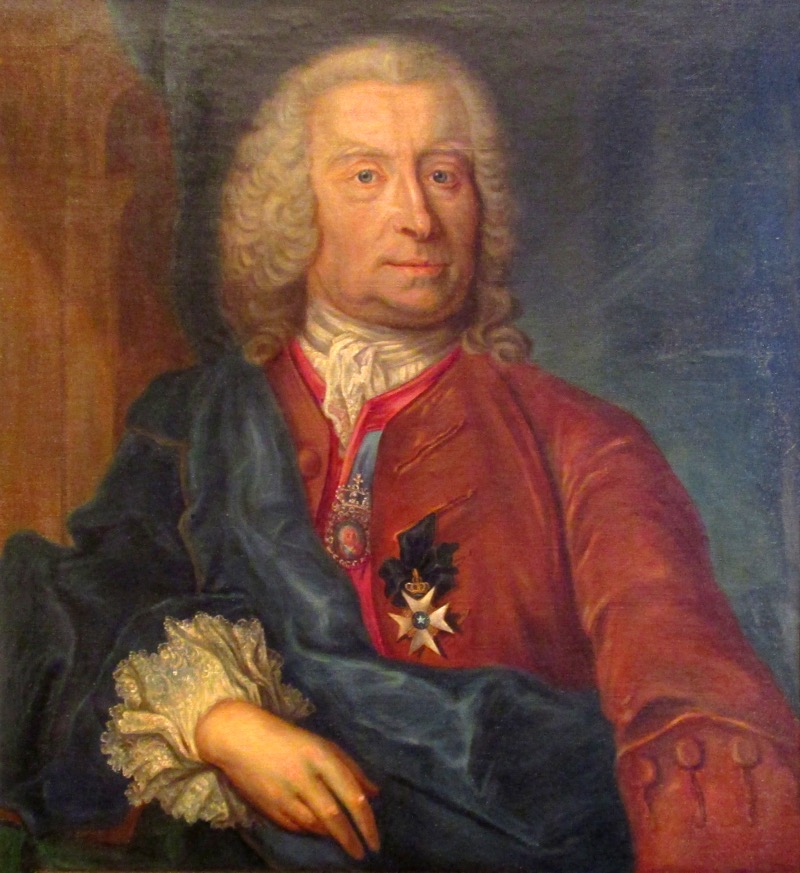
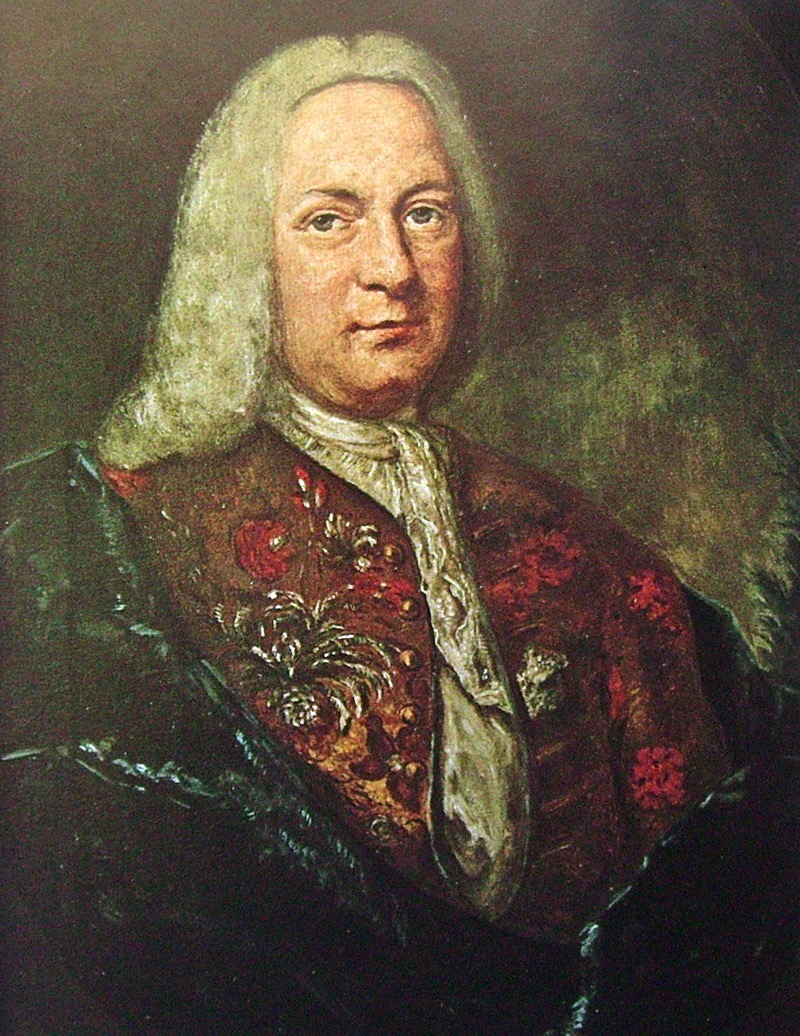
As foreign investors were viewed with suspicion in Sweden, they needed a respectable Swede to front the company: Henrik König, of German origin. König’s perseverance ultimately paid off, and on 14 June 1731 he was granted the Royal Charter, gaining privileges for the company for fifteen years. This was the First Octroi.
The First Octroi & SEIC’s India Connection
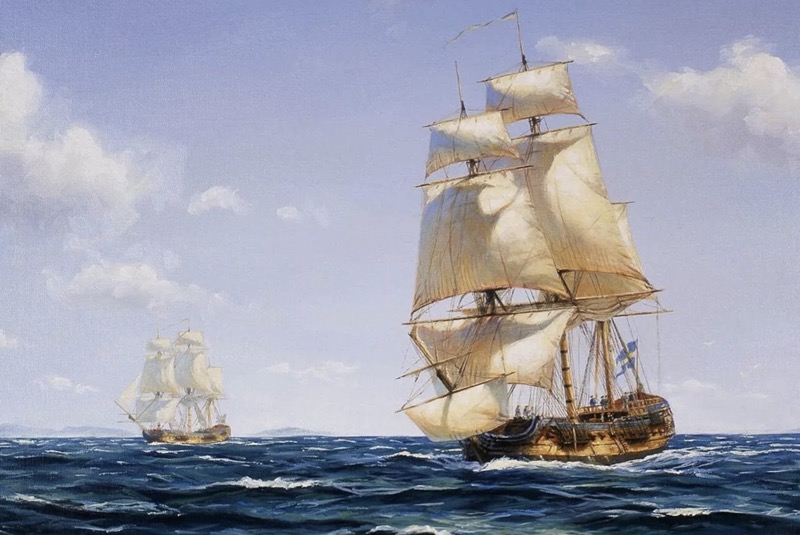
The First Charter had sanctioned fifteen expeditions; three were made to India, the rest to Canton, China. Around January 1733, an East Indiaman named Ulrica Eleonora, under the command of Petter von Utfall, left Gothenburg, bound for the Coromandel coast of India. In September of the same year, the Ulrica Eleonora berthed at Porto Novo, also called Parangipettai in Tamil.
On arrival at Porto Novo, von Utfall and his retinue made obeisance to the Nawab of the Carnatic, Ali Dost Khan. The Nawab, having been bestowed ‘presents’ by the Swedish King and seeing the possibility of additional revenue from taxing this new company, welcomed the Swedes and promised them the assistance needed to establish a factory in Porto Novo.
Within a month the Swedes had unloaded their cargo and secured it in a warehouse provided by the Nawab. Utfall decided that it would be unwise to set sail for Canton during the ongoing monsoon season and so set sail for Bengal. He left behind a group of forty men to guard the warehouse and conduct trade on Sweden’s behalf.
The Porto Novo Affair
The arrival of the Swedes in Porto Novo had attracted considerable attention from the English and the French companies in the region. The scheming governor of the English East India Company in Madras, George Morton Pitt, wrote a letter to the French governor, Pierre Christoph Le Noir, seeking to join hands to stop further expansion of the Swedish company on the Coromandel coast. Pitt found a willing ally in Le Noir, and both agreed to use force to dismantle the Swedish establishment as soon as possible.
By October of 1733, an Anglo-French force of approximately 600-700 men under the command of Captain de la Farelle sailed down the coast and landed at Porto Novo. Despite Porto Novo being under Mughal suzerainty, the Anglo-French force attacked the Swedish establishment, and after a 24-hour siege, the Swedish party surrendered. The remaining Swedish party was pressed into the service of the English and French companies, respectively.
By the Christmas of 1733, Utfall, still in Bengal, had received news of what had transpired, and nonetheless, in January 1734, made his way back to Porto Novo to collect the goods gathered to carry back to Sweden. As he approached the roads near Porto Novo, he was met by an English and a French frigate, which attacked the Ulrica Eleonora.
The ship barely escaped, and the attackers chased the East Indiaman for close to 15 hours before giving up the chase, leaving the Ulrica Eleonora bereft of its cargo, a significant portion of its crew, and nearly all of the supercargoes. In February of 1735, the Ulrica Eleonora returned to Gothenburg, with only thirty-five members of her original crew surviving the entire voyage.
War By Other Means
The debacle at Porto Novo prompted the SEIC to re-evaluate its intentions and goals with regard to trade in the East Indies and China. Having lost its only foothold on the eastern coast of India at its nascent stages, the SEIC now focused its energies on the tea trade with China. It had already established a factory in 1732 in the 13 factories area of Canton that was locally called ‘Sui Hong’ (瑞行—a clever phonetic play on “Swede” that translated to the “Lucky” or “Auspicious” Factory).
By the late eighteenth century, tea had transformed from an exotic luxury into a daily necessity across Great Britain. Recognising its immense popularity, the British Parliament treated tea as a primary fiscal cash cow, levying an extortionate 119 per cent import duty on legal shipments.
Because the EIC was legally obligated to bring all its Chinese tea back to London warehouses and pay the exorbitant duty, legal tea became prohibitively expensive. This created a massive, highly lucrative black market. Continental rivals—most notably the Swedish East India Company—exploited this loophole brilliantly.
Armed with royal monopolies but lacking a large domestic market for tea, the Swedes loaded their East Indiamen at Canton, sailed back to Gothenburg, and legally re-exported the tea. Private, smaller European traders and British black-market syndicates bought this Swedish tea tax-free and smuggled it onto British shores.
By the early 1780s, over three-quarters of the tea consumed in Britain was smuggled, leaving the EIC’s London warehouses overflowing with millions of pounds of rotting, unsold, yet highly taxed legal tea leaves.
At the same time, a series of famines in the province (Subah) of Bengal starting from 1770 till 1784, exacerbated by the pitiless apathy of the EIC officials who, instead of offering relief, kept imposing high taxation on the already hunger-stricken and dying population, wiped out one-third of its entire population of that time (traditional estimates suggest close to 10 million deaths; modern estimates, around 1.5-2 million).
This, coupled with the EIC’s lust for more territory and power to grab, which led to the first Anglo-Maratha and Anglo-Mysore Wars, hollowed out the EIC’s treasury. Compounded by the already very high tariff on tea imports in Great Britain, this brought the EIC to the brink of bankruptcy.
The unravelling of the SEIC
In December 1783, twenty-four-year-old William Pitt the Younger became Prime Minister of Great Britain, inheriting a bankrupt empire and a rogue, dying corporation.
Recognising that the EIC was too big to fail, Pitt orchestrated a sweeping legislative rescue package in 1784. The cornerstone was the Commutation Act of June 1784, which took a bold, counter-intuitive step: it slashed the import duty on tea from 119 per cent down to a mere 12.5 per cent.
The impact was almost instantaneous. The price of legal tea in London plummeted overnight, matching or undercutting black-market prices. Because legal tea became cheaper, the financial incentive for British smugglers to risk ship, cargo, and hanging disappeared overnight. The illicit tea trade almost vanished.
While the Commutation Act saved the EIC from bankruptcy, it was a death sentence for the Swedish East India Company. The Swedish corporate strategy did not depend on domestic Scandinavian consumption, but on the insatiable appetite of British smugglers, and Gothenburg had essentially functioned as a giant, state-sanctioned clearinghouse for contraband bound for the British Isles.
When Pitt slashed the British tariff to 12.5per cent, the demand for Swedish re-exported tea evaporated almost instantly, and Swedish ships returned from Canton laden with tea leaves that no one wanted to buy. Though the SEIC attempted to pivot to other goods and survived through the turbulent years of the Napoleonic Wars, it never recovered from the structural shock of 1784.
Forgotten, Then Remembered
The permanent dissolution of the Swedish East India Company in 1813 was marked not by a dramatic military defeat but by the cold, methodical accounting by the liquidators in Gothenburg. Because the bulk of the SEIC’s original records failed to survive the centuries, much of the intimate, day-to-day history of this remarkable mercantile establishment remains lost to us — and it has been largely overlooked ever since, a footnote in the wider histories of the chartered companies in the East India trade. There have been some attempts at reversing this perception in recent times; one such attempt is by Klas Rönnbäck and Leos Müller.
Yet, while the company’s fleets vanished from the high seas, its footprint remained permanently etched into the landscape of Sweden. The unprecedented wealth generated during the mid-eighteenth-century tea boom radically transformed Gothenburg from a provincial, fortified military outpost into a sophisticated, cosmopolitan European trade hub.
The grand neoclassical merchant palaces lining Gothenburg’s canals, the funding that built the city’s Sahlgrenska University Hospital (endowed by SEIC director Niklas Sahlgren), and the botanical and scientific knowledge brought back by Carl Linnaeus’s disciples were all built directly on the proceeds of the global tea trade.
The story of the Swedish East India Company ultimately stands as an extraordinary study in geopolitical irony. Born out of the violent destruction of its nascent Indian trade base by British and French guns at Porto Novo in 1733, the company adaptively weaponised Britain’s own domestic tax laws to stage a brilliant, forty-year corporate retaliation.
By brilliantly exploiting a protectionist loophole, a cash-strapped Scandinavian nation managed to hold the financial fate of the world’s most powerful corporation hostage from a single rented warehouse in Canton. In the end, the company was not outmanoeuvred on the battlefield or outsailed on the open ocean; it was simply erased by a stroke of a pen in London, proving that in the ruthless arena of mercantilist empires, the lowering of a tax rate could be just as lethal as a naval broadside.
-30-
Copyright©Madras Courier, All Rights Reserved. You may share using our article tools. Please don't cut articles from madrascourier.com and redistribute by email, post to the web, mobile phone or social media.Please send in your feed back and comments to [email protected]