For years, Gautam Adani, India’s infrastructure magnate and one of Asia’s richest men, has stood at the centre of a legal and political theatre that stretched from Ahmedabad to Washington. American prosecutors accused him and his associates of concealing alleged bribery schemes tied to renewable-energy projects in India while raising money from American investors.
Regulators pursued parallel civil and criminal investigations. Critics portrayed the billionaire’s empire as an emblem of the blurred boundaries between political influence and corporate power in “New India.” Yet the legal offensive that once threatened to engulf the Adani Group now appears to be losing momentum.
According to reports from American media outlets, three United States enforcement agencies are preparing either to abandon or settle major investigations into the conglomerate, potentially ending one of the most consequential cross-border corporate disputes of recent years.
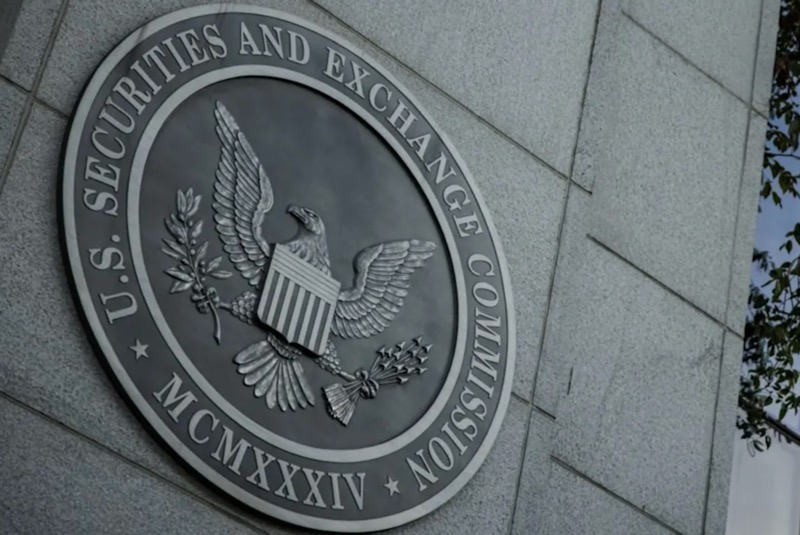
The cases involve the Department of Justice, the Securities and Exchange Commission and the Office of Foreign Assets Control (OFAC), the Treasury Department agency responsible for sanctions enforcement. Together, they had constructed a broad inquiry into alleged misconduct by companies linked to the Adani Group.
Prosecutors in Brooklyn accused Mr Adani and other defendants of orchestrating an elaborate bribery scheme involving roughly $250m in payments connected to solar-power contracts in India. The SEC pursued a parallel civil complaint alleging that investors in America were misled because the alleged payments to Indian officials were not properly disclosed. OFAC separately examined claims that an Adani-linked company had imported Iranian fuel into India, potentially in breach of American sanctions rules.
Now, however, American authorities appear willing to draw these matters to a close. People familiar with the discussions say the SEC is moving towards a settlement under which Mr Adani and his nephew, Sagar Adani, would pay less than $20m without admitting wrongdoing.
The Department of Justice is reportedly considering dismissing its criminal case altogether. OFAC is also said to be discussing a financial settlement linked to its sanctions investigation. None of these outcomes has been formally confirmed, and officials caution that negotiations remain fluid. Yet the broader direction is unmistakable. A legal campaign that once threatened to isolate one of India’s most powerful businessman is instead drifting towards compromise.
The timing is striking. The apparent softening of Washington’s stance has coincided with a broader shift in America’s political and regulatory climate under Donald Trump’s return to power. Mr Trump has long expressed scepticism towards aggressive corporate enforcement, particularly in cases involving overseas conduct.
Last year, his administration temporarily halted enforcement of the Foreign Corrupt Practices Act, the decades-old anti-bribery law used to pursue corruption cases involving foreign officials. Although Mr Adani himself was not charged directly under the statute, the pause was interpreted within the conglomerate as a signal that anti-corruption prosecutions no longer enjoyed the same political priority they once did.
Adani executives and their lawyers appear to have acted accordingly. Reports suggest that the billionaire’s legal team intensified lobbying efforts in Washington after Mr Trump’s election victory in 2024. Lawyers representing the group argued that the SEC’s case was “impermissibly extraterritorial,” contending that American regulators lacked jurisdiction over actions tied primarily to Indian business activities.
The defence also questioned whether prosecutors possessed sufficient evidence to sustain criminal charges. According to the New York Times, Robert Giuffra Jr., a prominent American lawyer who has also represented Mr Trump, recently gave a presentation to Justice Department officials in Washington that reportedly ran to around 100 slides.
The meeting reportedly included a discussion of a substantial American investment programme. According to people familiar with the presentation, Mr Adani’s representatives indicated that the conglomerate could invest as much as $10bn in the United States and create roughly 15,000 jobs. Those investments were not formally linked to any legal settlement, and prosecutors later stressed that such proposals would not determine the outcome of the investigations.
Nonetheless, the symbolism is hard to miss. At a moment when America is competing fiercely for industrial investment, especially in energy and infrastructure, the prospect of billions of dollars flowing into the country inevitably carries political weight.
The episode illustrates the increasingly transactional nature of international economic diplomacy. In earlier decades, anti-corruption enforcement often projected an image of moral clarity, with prosecutors presenting themselves as guardians of transparent global capitalism. Today, such boundaries are less distinct.
Governments routinely balance legal principles against strategic and commercial interests. India has become a critical American partner, ostensibly in efforts to counter China’s influence across Asia. Washington is also eager to attract foreign investment into manufacturing, ports, logistics and energy infrastructure. Against that backdrop, a prolonged confrontation with one of India’s most politically connected industrialists may have become less attractive than a negotiated settlement.
For Mr Adani, the potential resolution would mark a remarkable reversal of fortune. His empire faced severe pressure after Hindenburg Research, an activist short seller, published allegations in 2023 accusing the group of fraud, stock manipulation and accounting irregularities. The report triggered a collapse in Adani Group’s market value and prompted investigations by Indian regulators.
Although the conglomerate consistently denied wrongdoing, the controversy raised uncomfortable questions about corporate governance and leverage within one of India’s largest business groups. Over time, however, the immediate crisis faded. India’s capital markets regulator eventually concluded that it had found no evidence of the broad fraud alleged by Hindenburg. The short seller itself later ceased operations.
Meanwhile, the Adani Group continued expanding aggressively across sectors central to India’s economic ambitions. Its businesses span ports, airports, renewable energy, data centres, logistics and power transmission. The group occupies a pivotal role in India’s infrastructure strategy, which seeks to modernise transport and energy networks while sustaining rapid economic growth.
Critics argue that such concentration of influence creates systemic risks and encourages cronyism. Supporters counter that few companies possess the scale, political access and appetite for risk required to execute projects of national importance. Regardless of the arguments, the group’s rise, under Modi’s Prime Ministership, has been unmistakable.
The American investigations nevertheless posed a distinct threat by risking restrictions on access to global capital markets. International investors often tolerate political controversy more readily than regulatory uncertainty. A criminal bribery case pursued by the Department of Justice carries reputational consequences that can linger for years, even without a conviction.
Yet the practical obstacles facing prosecutors were considerable. Much of the alleged conduct occurred outside American territory. Key witnesses and evidence were located in India. Legal experts also noted that the criminal case could not realistically proceed to trial unless defendants travelled to the United States and submitted to American jurisdiction.
That reality may have encouraged a pragmatic approach inside Washington. Settlements allow regulators to take accountability while avoiding the uncertainty of courtroom battles. For the SEC, a financial penalty and compliance commitments may achieve more than years of litigation over contested jurisdictional questions. For the Justice Department, abandoning a difficult prosecution could free resources for cases with stronger prospects of conviction. And for the White House, easing tensions with a major Indian business group may complement broader geopolitical priorities.
However, abandoning or diluting the cases carries risks of its own. Anti-corruption advocates warn that selective enforcement undermines confidence in the rule of law and fosters the perception that powerful businessmen can negotiate favourable outcomes through political influence and economic leverage. Such concerns are particularly acute in emerging markets, where investors already worry about uneven regulatory standards. If multinational corporations conclude that strategic investments can soften prosecutorial resolve, deterrence inevitably weakens.
The controversy also reflects a deeper tension within global capitalism. Modern states demand clean governance and compete for capital. They seek to punish corruption while courting investors capable of building factories, energy systems and supply chains. In practice, those objectives collide.
Governments may proclaim strict ethical standards yet quietly prioritise economic and strategic considerations when dealing with politically connected billionaires. The reported unwinding of the Adani investigations demonstrates how easily prosecutorial zeal can become entangled with geopolitical calculation.
For now, Gautam Adani appears closer than ever to escaping the most serious international legal threat his conglomerate has faced. The allegations against him have not disappeared, nor have broader concerns about transparency and corporate governance within India’s business elite. Yet survival, rather than vindication, is often the defining test for modern tycoons.
Whether the closing chapters of the American investigations represent a triumph of pragmatism or a retreat from accountability will depend largely on one’s view of how law, politics and money should intersect in an increasingly transactional world.
-30-
Copyright©Madras Courier, All Rights Reserved. You may share using our article tools. Please don't cut articles from madrascourier.com and redistribute by email, post to the web, mobile phone or social media.Please send in your feed back and comments to [email protected]