For decades, power flowed disproportionately through Western capitals. But now, there is a tacit understanding among diplomatic circles that the next frontier of decisive contests will be settled in the “global south.”
Indeed, economic weight and demographic momentum are clearly shifting. But the idea that the ‘global south’ will collectively determine the future of international order risks overstating its coherence and its intentions.
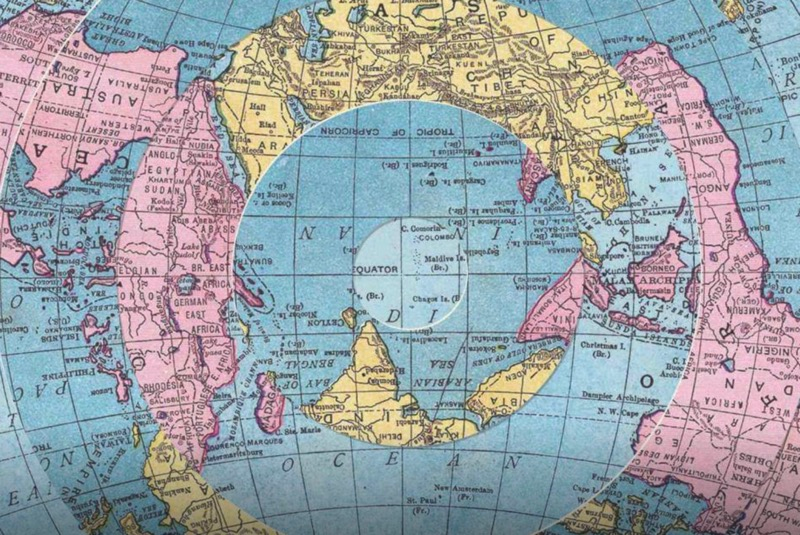
To understand why, one must first confront the slipperiness of the term itself. The “global south” is less a geographical designation than a political abstraction, encompassing countries that do not share a unified strategic outlook. Many lie north of the equator; some of the most prosperous states in the southern hemisphere are excluded from it.
Efforts to compress Africa, Latin America and large parts of Asia into a single analytical category obscure the differences that shape their external behaviour. Even the inclusion of major powers such as China is contested, highlighting the extent to which the label functions as a rhetorical device.
This lack of definition is not trivial. It points to the absence of the qualities required for the global south to act as a decisive geopolitical force. Unlike the Western alliance system, underpinned by shared institutions and, crucially, American security guarantees, or even the more limited alignment between China and Russia, there is no central organising principle binding these states together. Nor is there a broadly accepted leader capable of articulating a common agenda.
China’s expanding economic and diplomatic reach has given it influence across parts of the developing world, but not legitimacy as a unifying authority. India, among others, has little appetite for such a hierarchy, preferring instead to preserve its freedom of manoeuvre.
That instinct for autonomy is the defining feature of many countries grouped under this label. Rather than coalescing into a bloc, they are pursuing strategies that maximise flexibility in an increasingly fragmented international system. This means engaging simultaneously with competing powers and institutions, extracting benefits where possible while avoiding firm alignment.
Such behaviour is sometimes misread in Western capitals as indecision or opportunism. In reality, it reflects a clear-eyed assessment of a world in which the costs of overcommitment to any single partner have become more apparent.
Recent conflicts illustrate the consequences of this approach. The U.S-Israel war on Iran has underscored the difficulty of translating shared dissatisfaction with aspects of the current order into coordinated action. Groupings frequently cited as evidence of rising southern influence have struggled to produce unified responses. Their members diverge not only in their interpretations of the conflict but also in the interests at stake. Some view the war primarily through the lens of sovereignty and opposition to Western intervention; others are more concerned with regional stability, energy security or their bilateral relationships.
These divergences are not incidental; they are structural. China’s position, for example, is shaped by its reliance on stable energy flows and its broader ambition to build parallel institutions that reduce dependence on Western-dominated systems. Iran occupies a strategic place within these plans.
Pakistan, by contrast, has sought to elevate its diplomatic profile by positioning itself as an intermediary, while remaining mindful of its security ties to Saudi Arabia and the risks of a wider regional escalation.
India continues to chart a distinct course, maintaining partnerships with Western countries even as it preserves links with actors that those partners regard with suspicion.
Such patterns reveal a landscape defined less by solidarity than by overlapping, and sometimes competing, national agendas. The absence of a single forum for reconciling these differences limits the resolve of collective bodies to act decisively.
Even as their membership expands and visibility grows, they remain constrained by internal divisions unlikely to disappear. The global south, in other words, is not on the verge of becoming a cohesive counterweight to established powers.
This does not mean that it lacks influence. On the contrary, its importance lies precisely in its diversity and the opportunities it creates. In a world where no single power can easily impose its will, the ability of individual states to shift their alignments—sometimes subtly, sometimes more dramatically—can have significant cumulative effects.
Countries that were once peripheral to great-power rivalry now find themselves courted by multiple suitors, each offering economic incentives, security and diplomatic support.
Many of these states share a preference for a multipolar world order in which power is distributed broadly and the dominance of any single actor is constrained. This preference is shaped in part by historical experience.
For countries that emerged from colonial rule within the past century, the existing international system can appear to reflect enduring imbalances. Calls for reform of global institutions and for greater representation within them are not merely symbolic; they are rooted in a desire to reshape the way international politics is conducted.
At times, this manifests in efforts to use established legal and diplomatic mechanisms to challenge prevailing norms. For example, South Africa’s recourse to international legal institutions over Israel’s war in Gaza illustrates a willingness to engage the system on its own terms. Whether such initiatives will produce meaningful change is uncertain, but they signal an assertiveness that complicates any simple narrative of passive alignment.
Equally important is the growing role of informal and flexible diplomatic arrangements. As traditional alliances strain under the weight of geopolitical rivalry, looser networks and partnerships based on specific interests have become more attractive. They allow states to cooperate where interests converge without binding themselves to comprehensive commitments.
Indonesia’s recent efforts to deepen defence ties with the United States while maintaining engagement with Russia exemplify this прагmatic approach. It is not an outlier but part of a broader pattern.
For Western governments, these dynamics demand a recalibration of strategy. Framing global politics as a contest between rival camps, in which others must choose sides, risks misjudging the priorities of many countries outside the transatlantic sphere.
Appeals to shared values, while not irrelevant, are unlikely to outweigh considerations of economic development, security and sovereignty. A more effective approach would recognise the plurality of interests at play and seek cooperation on specific issues rather than overarching alignment.
The same logic applies to China and other aspiring centres of power. Efforts to position themselves as champions of the developing world will encounter limits if they are perceived as advancing narrowly defined national interests. The countries that make up the global south are not simply waiting to be led; they are actively shaping their own trajectories within the constraints and opportunities of a changing system.
The emerging order, then, is unlikely to be decided by a single definitive constituency. It will be the product of countless individual calculations, made in capitals that do not fit neatly into any one category.
The global south will matter, but not as a monolith. Its influence will be exerted in fragments, through the complex interplay of cooperation and competition that characterises a world no longer dominated by a single set of rules or a single group of rule-makers.
If there is a lesson in this, it is that the search for a new organising principle may itself be misplaced. The future of international politics may be defined less by the emergence of a new order than by persistent disorder.
In such a setting, adaptability will count for more than allegiance, and the countries most often grouped under the banner of the Global South are already demonstrating how that adaptability can be turned into an advantage.
-30-
Copyright©Madras Courier, All Rights Reserved. You may share using our article tools. Please don't cut articles from madrascourier.com and redistribute by email, post to the web, mobile phone or social media.Please send in your feed back and comments to editor@madrascourier.com