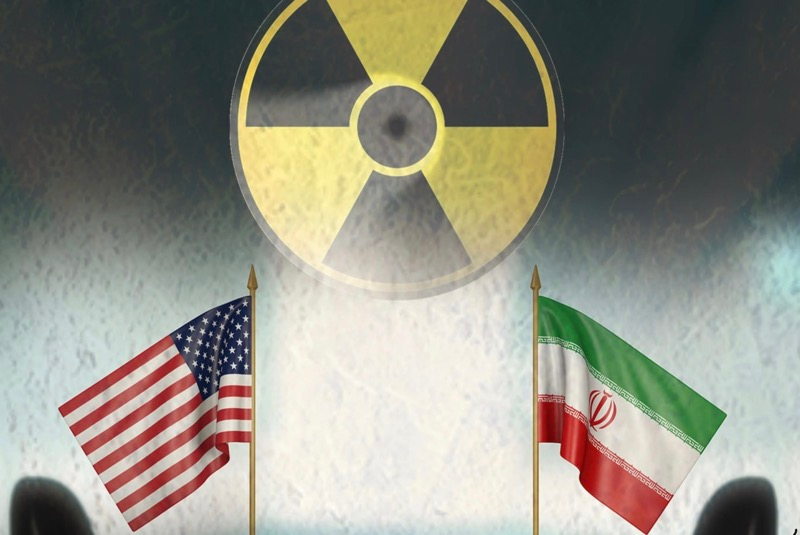
The latest nuclear talks between the United States and Iran, at first glance, signal optimism. The U.S. government, which has made several public statements in recent days about the progress of the discussions, seems hopeful. President Donald Trump expressed confidence.
“They want to make a deal,” he said, ahead of the latest round of negotiations in Geneva on February 17, 2026. Similarly, Iran’s foreign minister, Abbas Araghchi, indicated progress, noting that there had been developments regarding the “guiding principles” of the talks.
On the surface, such comments suggest that this round of talks might succeed where others have failed. However, beneath this veneer of optimism lies a far more complicated reality, shaped by years of military confrontation, unresolved grievances, and diverging national interests.
For all the rhetoric of optimism, the truth is that these negotiations are taking place amid heightened military tensions and historical mistrust. The most recent talks follow a pattern set earlier in the year, during a series of indirect discussions held in Oman.
These preliminary talks, though filled with hope, were overshadowed by events that crushed expectations. In spring 2025, the U.S. launched an attack on Iranian nuclear infrastructure as part of a broader Israeli military operation targeting Tehran’s regional influence.
This strike has contributed to the strained environment in which the current talks are unfolding. Iran has acknowledged that the fallout from the attack continues to impact the negotiations, with the mistrust created by military escalation still looming large.
The military dimensions of this crisis are impossible to ignore. On the one hand, there’s the U.S. military buildup in the Persian Gulf, which is designed to signal American resolve. On the other hand, Iran has flexed its muscles, conducting live-fire drills in the strategically important Strait of Hormuz, a critical maritime route for global oil trade.
This ongoing game of brinkmanship is not simply symbolic; it has the potential to ignite full-scale regional conflict, and both parties seem acutely aware of this risk. At the heart of the negotiations lies the U.S. demand for Iran to not only halt its nuclear activities but also to curb its missile program and end its support for militias throughout the Middle East.
These issues represent red lines for both sides. Iran remains adamant that its missile program is non-negotiable, while the U.S. insists that any agreement must address Iran’s broader regional ambitions. This fundamental clash of interests—nuclear development versus ballistic missile and proxy activities—remains the central impasse that has thwarted previous negotiations.
What complicates this further is the shifting international landscape. The era of arms control that once defined U.S.-Iran diplomacy seems increasingly distant. This is underscored by the expiration of the New START treaty in February 2026, which had imposed limits on U.S. and Russian nuclear arsenals.
The erosion of arms control norms globally has created an environment in which military solutions to political problems are seen as viable, raising the stakes for diplomacy. Iran’s nuclear program, meanwhile, has continued to advance, further cementing the divergence between the two countries’ negotiating positions.
Washington has made clear that it will not return to the 2015 Joint Comprehensive Plan of Action (JCPOA) that President Obama brokered with Iran, as the terms of that deal no longer address the current reality of Iranian nuclear capabilities. These new technical advancements by Iran have made a potential return to the deal unappealing to the U.S., as Iran now possesses enough enriched uranium for several nuclear weapons, should it choose to pursue that path. The timeframe in which Iran could theoretically develop a nuclear weapon has shrunk significantly, reducing the strategic value of merely reinstating the previous agreement.
This evolving nuclear capability, coupled with Iran’s strengthening of its missile program, has left Washington with little room for compromise. Despite the success of the 2015 deal in halting Iran’s nuclear progress at the time, the agreement did not address other areas of concern, such as ballistic missile development or Iran’s role in regional conflicts.
The U.S. government has long insisted that a deal must encompass these issues, even as Iran has maintained that its missile program and support for proxy groups are matters of national sovereignty. This stark difference in priorities has led to a standstill in talks and, ultimately, the failure of efforts to revive the JCPOA during the Biden administration.
While there was a window of opportunity for negotiation during the transition between Trump’s first and second terms, this window closed as Iran made significant strides in advancing its nuclear and missile technologies. For the Biden administration, the reality was that any attempt to return to the original JCPOA would have required Iran to forgo the new capabilities it had developed in the interim—a significant concession with no clear benefit for Tehran.
Even if an agreement were reached, there is little hope of returning to the status quo. Iran’s nuclear program is no longer frozen in time as it was under the terms of the original JCPOA. The increase in technical capabilities, including advances in uranium enrichment and stockpiling, has made a simple return to the deal untenable.
Even after the U.S. bombing campaign in 2025, which was intended to set back Iran’s nuclear ambitions, Tehran has shown no indication of abandoning its nuclear program. Satellite imagery and intelligence reports confirm that Iran has been working to restore its nuclear infrastructure in the aftermath of the attack.
This technical reality has left the U.S. in a difficult position. Although the U.S. claims that its strikes “obliterated” Iran’s nuclear sites, the fact is that Iran has not only recovered but is also continuing to advance its capabilities, making a return to the previous agreement increasingly less valuable.
What is emerging now is a broader understanding that the talks themselves, even in the absence of a formal deal, may still serve a useful purpose. While the chances of an agreement resembling the 2015 deal may be slim, the negotiation process is an important tool for preventing further escalation.
Even if a new deal is not reached, the act of negotiation provides an opportunity for the U.S. and Iran to communicate directly, a space in which miscalculations might be avoided, and tensions defused. For Iran, a deal would offer an economic lifeline, reintegrating it into the global system and offering some relief from the crippling sanctions that have devastated its economy. For the U.S., it would provide a strategic advantage by at least temporarily slowing Iran’s nuclear advancements, allowing more time to prevent a full-blown arms race in the Middle East.
The value of these talks, then, may lie not in the substance of any potential agreement but in their ability to buy time and reduce the risk of regional conflict. As both sides harden their positions, the likelihood of a compromise decreases. Military tensions continue to rise, and the possibility of escalation looms larger with each passing day.
Yet, in the face of this uncertainty, the negotiation table remains one of the few mechanisms through which both countries might avoid a catastrophic breakdown in relations. Even if these talks ultimately fail, they have still succeeded in providing a reprieve from the escalating military threats, offering the hope—however slim—that diplomacy might prevent the worst outcomes.
The stakes are high. If the talks fail, the consequences could be severe, not only for U.S.-Iran relations but for the broader stability of the Middle East. In the end, the process of engagement—however fraught with difficulty—remains a crucial safeguard against an even more dangerous conflict. If nothing else, it provides both sides with a chance to step back from the brink and reconsider the potential cost of failure.
-30-
Copyright©Madras Courier, All Rights Reserved. You may share using our article tools. Please don't cut articles from madrascourier.com and redistribute by email, post to the web, mobile phone or social media.Please send in your feed back and comments to editor@madrascourier.com