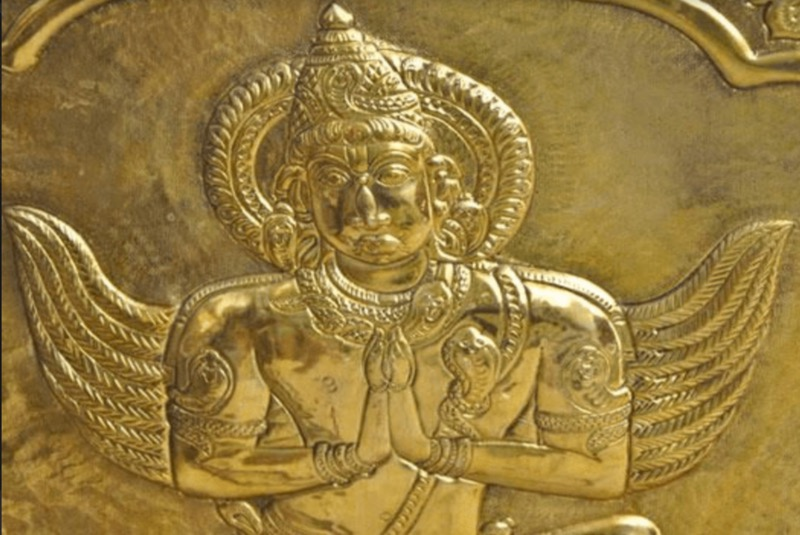
In the village of Pembarthi, metal does not simply bend—it remembers. Each hammered sheet of brass carries the echo of centuries: of temples rising, empires falling, and hands returning, again and again, to the same inherited motions. In southern Telangana, this village has long been defined by what it makes.
Pembarthi metalwork, shaped slowly and deliberately, is not a craft divorced from history but one forged within it, bearing the imprint of faith, power, and survival. Here, art is not ornamental; it is archival. Every groove and relief tells a story of a region where culture was built not only in stone and scripture, but in copper and fire.
The origins of this tradition reach back to the Kakatiya Kingdom, whose rule once spanned much of the Deccan plateau. Under their patronage, metalworking was elevated beyond labour into devotion. What emerged was not merely a skill, but a signature aesthetic—one that would come to define Pembarthi itself.
At the heart of this legacy were the Vishwakarmas, artisan communities revered for their mastery of metal. Their hands shaped idols and sculptures destined for South India’s grand temples, works that fused technical precision with spiritual intent.
In its earliest form, Pembarthi metalwork was deeply sacred, devoted to gods and temple iconography. But like all living traditions, it evolved. Time, politics, and power altered its course, reshaping both what was made and why.
As Muslim rule spread across the subcontinent, new artistic influences took root. Pembarthi artisans adapted, expanding their repertoire beyond religious icons to include secular objects such as paan cases, perfume containers, chandeliers, vases, and ornamental household items. These works bore the imprint of cultural exchange, blending Hindu and Islamic aesthetics into forms that reflected a shared, layered history.
Carved metal became a constant presence in South Indian temples, where brass and copper lent permanence to the divine. Pembarthi, in particular, earned renown for its intricate sheet metal work—delicate, labour-intensive, and unmistakably regional.
Over generations, these creations—ranging from modest utilitarian pieces to elaborate sculptures—became synonymous with the village itself. Pembarthi metalwork, especially its brassware, came to stand as a marker of Telangana’s cultural identity, a testament to endurance shaped by hand.
Yet history is rarely kind to tradition. Like many artisanal practices across India, Pembarthi metalwork suffered under the weight of industrialisation. As mass-produced goods flooded markets, demand for handcrafted idols and temple sculptures declined, leaving artisans uncertain of their future.
Imported products further destabilised the craft’s fragile economy. For years, Pembarthi’s metalworkers struggled to assert relevance in a world that increasingly valued speed and uniformity over skill and time.
In recent years, however, a quiet shift has begun—led not by institutions or markets, but by women. Long marginalised within patriarchal systems, the women of Pembarthi are now reshaping their lives through this inherited craft.
Metalwork has become both livelihood and legacy, offering income while anchoring cultural memory. Through their labour, women are gaining financial stability, autonomy, and a renewed sense of self-worth.
This transformation is neither simple nor complete. In rural contexts where women’s employment remains constrained, such progress challenges entrenched ideas about gender and work. And despite the opportunities metalwork provides, significant barriers persist.
Illiteracy remains one of the most formidable. Many artisans—especially women—lack formal education, limiting their ability to innovate, adapt designs, or engage with contemporary markets. Without access to business knowledge, they are often confined to methods that no longer meet modern demand.
Literacy gaps also complicate access to finance. Loans are difficult to secure, banking systems remain opaque, and institutional support is sparse. Even as millions of Indian women hold bank accounts, the infrastructure needed to nurture artisanal enterprises remains inadequate.
There is also a widening gap between makers and markets. Many Pembarthi artisans are unaware of pricing, branding, or the actual value of their labour. In negotiations with bulk buyers, this imbalance often results in exploitation, with intricate work sold for far less than it deserves.
Without the tools to advocate for themselves, profit remains elusive. Yet, hope persists.
As long as the craft continues—especially in the hands of Pembarthi’s women—there is something to build upon. Even modest awareness of value, paired with sustained support, can lead to lasting change.
In global conversations about women and work, Pembarthi offers a quieter truth. Here are women who want to work do so under conditions that demand resilience, patience, and creativity.
At the crossroads of history, culture, and economy, the women of Pembarthi are shaping more than metal. With every sheet they cut and carve, they assert presence in a world that has long overlooked both their labour and their skill.
Their revolution is not loud, nor sudden. It unfolds in workshops and courtyards, in the steady rhythm of work passed from one generation to the next. In sustaining this ancient craft, they are not preserving the past—they are actively negotiating the future. And in doing so, they leave behind objects that endure, bearing quiet witness to women who refused to disappear.
-30-
Copyright©Madras Courier, All Rights Reserved. You may share using our article tools. Please don't cut articles from madrascourier.com and redistribute by email, post to the web, mobile phone or social media.Please send in your feed back and comments to [email protected]