
What The Cassowary Reveals About Risk, History & Biodiversity

Cassowary-Madras-Courier
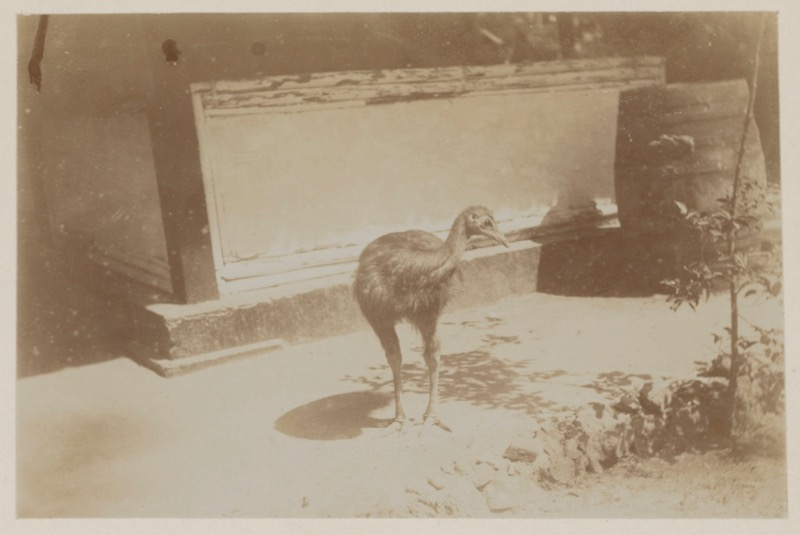
Representational image: Public domain/Wikimedia
The cassowary is not a relic of savagery. It is evidence that complexity—biological, cultural and moral—has always been with us.

In the public imagination, Birds are usually considered harmless. They flap, scatter, and populate parks and telephone wires. Even when they irritate, they rarely inspire genuine fear. This intuition is broadly correct. Most birds cannot kill a human being, and those that can seldom do.

Yet the exception matters because it reveals how humans misunderstand risk, nature, and their own history. Few animals illustrate this better than the cassowary, a bird that looks prehistoric, behaves unpredictably and turns out to be far more entangled with human civilisation than its reputation suggests.

Cassowaries live in the rainforests of New Guinea and north-eastern Australia, environments dense enough to hide large bodies and loud enough to mask danger. There are three species—the southern, northern and dwarf cassowary; all rank among the largest birds on Earth, alongside ostriches and emus.

With jet-black plumage, electric-blue necks and a horn-like casque rising from their heads, they resemble a surviving sketch from the Cretaceous period. Evolutionary biologists routinely describe them as “living dinosaurs,” a phrase that is imprecise but emotionally accurate. Their most formidable feature, however, is less visible: a dagger-like claw on each foot, capable of disembowelling an attacker with a single kick.

That capacity has earned cassowaries a fearsome reputation, though it collapses under statistical scrutiny. Only a handful of human deaths have ever been credibly attributed to cassowaries. The most recent occurred in 2019, when a 75-year-old man in Florida, who kept exotic animals on his property, was killed after falling near one of his birds (local law enforcement reports and coverage by The New York Times confirm the circumstances).

Before that, the last widely accepted fatality dates to 1926 in Australia, when a teenage boy, Philip McClean, provoked a cassowary with a stick and was chased and killed. For nearly a century in between, there have been no verified cases of cassowaries killing humans.

Ostriches have also caused deaths on rare occasions; chickens, somewhat absurdly, have been implicated indirectly in fatal accidents. The cassowary’s danger, like that of sharks, is real but vanishingly uncommon.

What is more striking is how rarely cassowaries attack. Field studies and wildlife-management reports consistently show that they are shy, solitary animals that prefer to retreat into dense vegetation when confronted (Queensland Government, Cassowary Recovery Plan; Kofron, Journal of Zoology).

Aggression tends to occur in specific contexts: when birds are habituated to humans through feeding, when dogs are present, or when a cassowary perceives a threat to its chicks. In parts of Queensland where tourists feed cassowaries, wildlife officers report that birds chase people, sometimes jumping and kicking to secure food. The behaviour looks predatory but is better understood as learned opportunism, a classic outcome when wild animals associate humans with calories.

Ironically, the greatest threat to cassowaries today is not their aggression but human expansion. The southern cassowary, found in Australia, is listed as vulnerable by the International Union for Conservation of Nature. Habitat fragmentation, vehicle strikes and dog attacks account for most recorded cassowary deaths. Conservation programmes now focus on preserving rainforest corridors and discouraging feeding, a tacit admission that fearsome reputations do little to protect species from extinction.

Yet the cassowary’s story becomes more intriguing when one looks further back, beyond modern conservation and into deep prehistory. For decades, the standard narrative of domestication placed chickens, pigs and dogs at the centre of early human–animal relationships.

Birds, in this view, were late additions to the human household. That assumption was unsettled in 2016 by a study published in Proceedings of the National Academy of Sciences, which analysed cassowary eggshell fragments from archaeological sites in New Guinea dating back 18,000 years (Storey et al., 2016).

Using microscopic analysis, researchers identified burn marks and structural patterns consistent with the cooking of late-stage fertilised eggs. In other words, humans were harvesting cassowary eggs close to hatching.

The finding was careful in its claims. The researchers did not argue that cassowaries were fully domesticated in the modern sense. Instead, they suggested an early form of management or semi-domestication, predating the widely accepted domestication of chickens by several millennia.

The distinction matters. Domestication is a spectrum, not a switch. What the evidence points to is an intimate, sustained interaction between humans and a large, dangerous bird at a time when humans are often caricatured as purely opportunistic hunter-gatherers.

Why would anyone choose to manage cassowaries? The answer lies partly in cassowary biology. The birds are frugivores that feed primarily on rainforest fruit, and they play a crucial ecological role as seed dispersers. More relevant for humans, cassowary chicks imprint strongly on the first moving creature they see after hatching, usually their father. In captivity, that imprint can be transferred to humans.

Ethnographic accounts from New Guinea suggest that people have long exploited this trait, raising chicks that follow humans docilely through villages (Bulmer, Man and Culture in Oceania). Cassowary meat is considered a delicacy, their bones and feathers are used as ornaments, and their skins hold ritual significance.

The eggs themselves may have been valuable beyond simple nutrition. Some scholars have speculated that cassowary eggs could have been consumed like balut, the Southeast Asian dish made from late-stage fertilised duck eggs (Storey et al.).

Whether or not this specific practice existed in prehistoric New Guinea, the archaeological evidence indicates a sophisticated understanding of avian reproduction. Collecting eggs at the right developmental stage requires timing, restraint and knowledge of nesting behaviour. It also requires courage. Cassowaries guard their nests aggressively. Removing eggs without being injured would have demanded technique rather than brute force.

This matters because it challenges a persistent assumption about early human societies. Hunter-gatherers are often portrayed as technologically simple and behaviourally crude. Yet the management of cassowary eggs implies planning, risk assessment and intergenerational knowledge transfer.

In economic terms, it resembles a long-term investment strategy rather than immediate consumption. The people of New Guinea were not merely exploiting nature; they were shaping it.

Modern interactions with cassowaries echo this ancient relationship in distorted form. In parts of New Guinea today, cassowaries are still raised in villages, sometimes treated less as livestock than as quasi-kin. Anthropologists have documented beliefs that cast cassowaries as ancestral relatives or spiritual beings, blurring the boundary between human and animal (Bulmer).

In Australia, by contrast, the relationship is mediated by roads, fences and warning signs. Cassowaries are framed primarily as hazards—dangerous birds that might attack joggers or damage cars—rather than as participants in a shared ecological system.

The contrast reveals a broader pattern in how societies perceive risk. Rare but dramatic dangers loom larger in the public imagination than common, mundane ones. Cassowaries inspire headlines; habitat loss does not.

Yet from a policy perspective, the latter is far more consequential. The same cognitive bias applies to human history. Violence captures attention; cooperation fades into the background. The idea that prehistoric humans managed cassowaries peacefully for thousands of years sits uneasily with popular images of the past.

There is also a moral irony at work. Cassowaries are feared because they can kill, yet they seldom do. Humans, by contrast, kill cassowaries routinely, whether through direct hunting, dog attacks or cars. The imbalance is stark. In Queensland alone, dozens of cassowaries are killed each year, a rate that threatens the species’ long-term survival. From the bird’s perspective, humans are the dangerous ones.

Seen this way, the cassowary becomes less a monster than a mirror. Its reputation reflects human anxieties about losing control, about confronting something that cannot be easily domesticated or explained away.

That is why the discovery of early cassowary management is so unsettling. It suggests that our ancestors were capable of negotiating coexistence with a creature we now regard as irredeemably wild. They did so not by eliminating risk but by understanding it.

The lesson extends beyond ornithology. Economists and historians alike are increasingly interested in how early societies balanced exploitation with sustainability.

The cassowary eggshells of New Guinea offer a small but telling data point. They imply restraint, timing and an appreciation of future returns, traits often assumed to be modern.

In an era grappling with biodiversity loss and environmental collapse, the image of prehistoric humans carefully harvesting eggs from a dangerous bird carries an uncomfortable implication: sophistication is not new, and neither is failure.

Birds may be mostly harmless. Cassowaries are not. Yet the real danger lies less in their claws than in the stories humans tell about them. When fear eclipses understanding, conservation falters, and history is flattened into caricature.

The cassowary, stalking the rainforest with its improbable casque and lethal elegance, is not a relic of savagery. It is evidence that complexity—biological, cultural and moral—has always been with us, whether we choose to recognise it or not.

-30-

Copyright©Madras Courier, All Rights Reserved. You may share using our article tools. Please don't cut articles from madrascourier.com and redistribute by email, post to the web, mobile phone or social media.
Please send in your feed back and comments to [email protected]

0 replies on “What The Cassowary Reveals About Risk, History & Biodiversity”