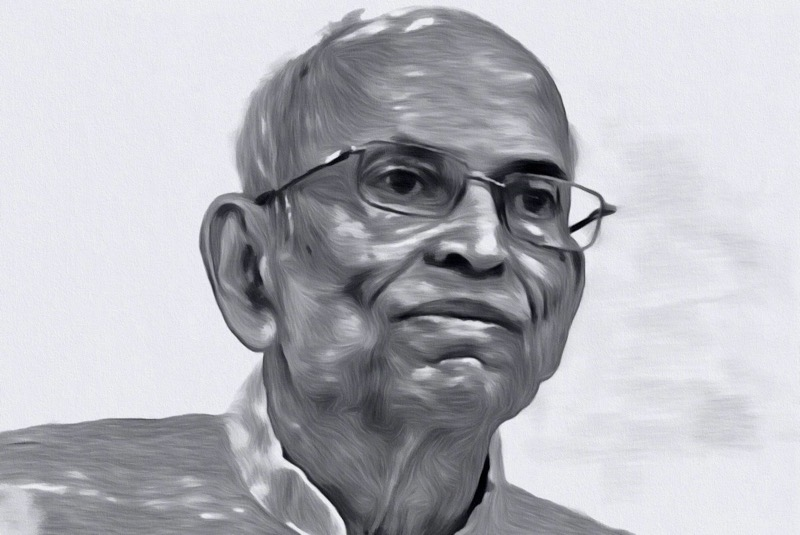
I met Madhav Gadgil about a decade ago in Delhi, on the margins of a conference that had little to do with forests or rivers. The conversation deviated, as it always did with him, towards Kerala. He spoke of the Western Ghats, emotionally, as a living presence, recalling the sharpness of early environmental debates in the state, the courage of activists, the memory of Silent Valley, and the stubborn hope that people would one day listen before the hills spoke back. There was hardly any bitterness in his voice. There was only a silent insistence that knowledge, when ignored, does not disappear. It waits.
That trait explained his life’s mission. Gadgil never believed ecology belonged only to laboratories or expert committees. For him, it lived in villages, forests, coasts, and everyday choices. He trusted people more than institutions, and evidence more than authority. That trust made him admired, contested, and, in Kerala, unforgettable.
Gadgil’s ecological journey began long before the Western Ghats report made him a household name. At the Indian Institute of Science, Bengaluru, he helped build the Centre for Ecological Sciences into a space where fieldwork mattered as much as theory. He studied animal behaviour, ecosystems, and human–nature relations with patience and discipline. But he grew uneasy with an ecology that erased people. Forests, he argued, were not empty spaces waiting for protection. They were lived geographies continuously moulded by memory, labour, and control.
This belief led to his early public interventions. In the 1980s, he played a major role in identifying the Nilgiri Biosphere Reserve, India’s first, linking the Western and Eastern Ghats through a shared ecological vision. The idea was simple, but very thoughtful. Protect the whole system, not fragments. Respect continuity, not boundaries. That logic would later return with greater urgency.
Perhaps his most significant institutional contribution was the idea of People’s Biodiversity Registers. These were not academic catalogues. They were living documents created by local communities to record species, uses, and knowledge. They challenged bio-piracy and expert monopoly at the same time. This approach found legal form in the Biological Diversity Act of 2002, which Gadgil helped develop, though its spirit remains only partially realised.
The Western Ghats Ecology Expert Panel report of 2011 emerged from this long intellectual and ethical journey. The Ghats, Gadgil reminded the country, were the water tower of the peninsula, the source of major rivers, and one of the richest biodiversity regions on earth. Damage, here, would not stay local. It would travel downstream.
The report proposed something radical. Treat the Western Ghats as one ecological unit. Classify areas by sensitivity using transparent criteria. Allow development where it made sense. Stop it where it would cause irreversible harm. Place local communities and gram sabhas at the centre of decision-making. Replace secrecy with public data. Replace exclusion with participation.
Kerala heard this message differently. In the high ranges, fear spread faster than facts. Settlers worried about land loss. Farmers feared eviction. Political parties sensed danger. Gadgil’s name became shorthand for regulation and restriction. Protests erupted. Posters appeared. The report was discussed more as a threat than as a warning. In many households, his name was spoken with anxiety, sometimes anger.
However, this reaction did not arise solely from the report. Communication failed. Governments hesitated. Misinformation filled the gap. Later, the Centre diluted the recommendations through the Kasturirangan Committee, shrinking protected areas and shifting towards a top-down model. What began as a democratic ecological framework slowly slipped into administrative limbo.
The report itself was never implemented in its original form. Draft notifications came and went. States objected. Boundaries shifted. Committees replaced committees. By 2024, the proposed ecologically sensitive area had reduced to roughly a third of what Gadgil had recommended. The original vision survived in courtrooms, classrooms, and civil society, rather than in law.
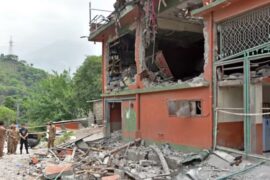
Nature, however, kept its own record. Kerala’s floods and landslides after 2018 returned Gadgil to public debate with disturbing force. Heavy rainfall played its part. But dam management, quarrying, road cutting, and blocked streams worsened the damage. Gadgil described these events as man-made tragedies, caused by decisions taken over decades. He spoke of disturbed land, proliferating construction, and illegal mining.
These disasters shifted perception. What was once dismissed as an alarm began to sound like foresight. Questions resurfaced: Why were quarries allowed on fragile slopes? Why were warnings ignored? Why were rivers narrowed and hills carved? Gadgil did not claim vindication. He asked for a reflection.
His engagement with man–animal conflict followed the same ethical thread. He criticised the Wildlife Protection Act of 1972 for treating people as intruders in their own territories. He questioned a law that punished self-defence while remaining silent on human death. He argued for community-based wildlife management, better data, and fair compensation. His call to repeal or radically amend the Act disturbed many, but it showed his consistent belief that conservation without justice would fail.
In A Walk Up the Hill, his autobiography, Gadgil traced these ideas to lived experience. Encounters with caste discrimination, his father’s anguish over the social cost of dams, and his time among forest communities shaped his thinking. Ecology, for him, was never neutral. It essentially carried ethical precepts.
Kerala remembers Gadgil because it argued with him. It resisted him. It invoked him after every landslide. Few scientists enter public life so genuinely and passionately. Fewer remain relevant after official rejection. Gadgil’s legacy in Kerala lies in unresolved questions: How much development is too much? Who decides? Who bears the cost?
In 2024, the United Nations named him a Champion of the Earth for lifetime achievement. The honour mattered. However, his real recognition came earlier, in the persistence of debate his work created.
When I recall that meeting in Delhi, I remember his certainty. He knew reports could be shelved and laws could be diluted. He also knew rivers remember their courses. Hills remember their cuts. People, eventually, remember warnings. Gadgil’s life was an invitation to listen before memory turns into mourning.
-30-
Copyright©Madras Courier, All Rights Reserved. You may share using our article tools. Please don't cut articles from madrascourier.com and redistribute by email, post to the web, mobile phone or social media.Please send in your feed back and comments to [email protected]