The Complicated Legacy Of Dick Cheney

Cheney-Madras-Courier
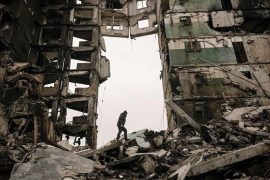
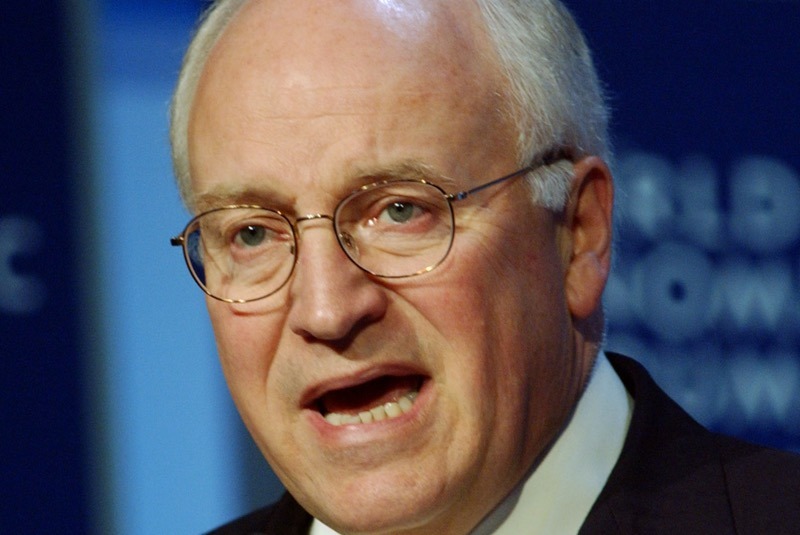
Representational image: Public domain.
The evolution of Cheney’s views, from staunch conservative to outspoken critic of his own party, reflect the tectonic shifts in American politics.

Dick Cheney’s life and career became synonymous with the imperatives of power, the erosion of civil liberties, and the exercise of executive authority in the post-9/11 world. His death at the age of 84, marked by complications from pneumonia and heart disease, was a final chapter in the life of a man who had been at the epicentre of American politics for nearly half a century.

To his family, he was a beloved patriarch, whose legacy was defined by his deep sense of duty and devotion to the country. But to many others, Cheney was the embodiment of American foreign policy overreach, the man who helped architect the Iraq War—a conflict whose flawed rationale and catastrophic consequences would ultimately come to define his public life.

Cheney’s political career was built on an ironclad mastery of Washington’s levers of power. Born in 1941 in Lincoln, Nebraska, he grew up in Wyoming, a state that would shape his character, even as his rise in politics led him far from its wide-open spaces.

As a young man, Cheney was not without his struggles; he dropped out of Yale, worked as a lineman, and had multiple brushes with the law before embarking on his determined ascent into politics. He went on to earn a degree from the University of Wyoming and, in 1978, entered the political fray by winning Wyoming’s lone congressional seat.

His path seemed destined to intersect with the highest levels of government, first as a deputy to Donald Rumsfeld in the Ford administration, then as the U.S. Secretary of Defence under George H.W. Bush, and ultimately as Vice President to George W. Bush. But his life would come to be defined not just by his rise to power, but by the choices he made when that power was at its apex.

When Cheney became vice president in 2001, he found himself in a position of enormous influence. George W. Bush, a man with far less foreign policy experience, leaned heavily on Cheney, who brought a wealth of experience and an unyielding vision of American power.

In the aftermath of the September 11th attacks, Cheney became the de facto architect of the U.S. response to terrorism, a response that would redefine the nation’s place in the world. From a secure, undisclosed location beneath the White House, Cheney directed a crisis response that included unprecedented decisions—orders to shoot down hijacked planes, the creation of secret prisons, and the use of enhanced interrogation techniques that many would later condemn as torture. For Cheney, these were not simply political manoeuvres but moral imperatives.

Yet, as time went on, Cheney’s unwavering belief in the necessity of these actions would become a liability. The Iraq War, a conflict he championed, would become a lightning rod for debate about the limits of American power and the dangers of unilateral military action.

The case for invading Iraq—predicated on the belief that Saddam Hussein possessed weapons of mass destruction and had ties to al-Qaeda—was ultimately revealed to be built on faulty intelligence. But Cheney, ever the loyal defender of the administration’s decisions, insisted that the invasion was the right course of action, both then and now.

Even as the war descended into chaos, he stood firm, declaring that he had no regrets about the decision to topple Saddam Hussein. To Cheney, the broader context—the need to confront threats to U.S. security—was sufficient justification for the war’s costs, both human and political.

This steadfastness, however, made Cheney an increasingly polarising figure. As the war in Iraq dragged on, his approval ratings plummeted, and he became a symbol of the excesses and miscalculations of the Bush administration. By the time he left office in 2009, Cheney was widely reviled, with an abysmal public approval rating.

His legacy seemed sealed, a cautionary tale of hubris and the dangers of unchecked executive power. But in a final twist, Cheney’s story did not end with the Bush administration. Instead, it would be in his later years, when the Republican Party was undergoing a dramatic transformation, that Cheney would find his voice once more, but this time as an outspoken critic of the forces with which he had once aligned himself.

Donald Trump’s rise to power in 2016 marked a seismic shift in American politics, one that deeply unsettled Cheney. A man who had spent decades in Washington, navigating the corridors of power with a fierce belief in the importance of American leadership on the world stage, Cheney found himself at odds with the populist tide that swept Trump into office.

Initially, Cheney had supported Trump, even as the reality TV star turned politician championed positions that were anathema to Cheney’s long-held convictions. But as Trump’s first term wore on, Cheney’s opposition to the president’s conduct grew more vocal. When Trump refused to accept the results of the 2020 election and sought to overturn the will of the voters, Cheney’s criticisms became unmistakable.

In a public rebuke, Cheney’s daughter, Liz, a Republican congresswoman from Wyoming, became one of the foremost opponents of Trump’s attempts to subvert the election. Her stance cost her politically, but her father, in a rare moment of public political engagement, made his own position clear.

In a campaign ad supporting Liz’s efforts to fend off a Trump-backed primary challenger, Cheney looked directly into the camera and declared, “In our nation’s 246-year history, there has never been an individual who is a greater threat to our republic than Donald Trump.”

This was not a man who spoke lightly; for Cheney, the threat posed by Trump was existential. Trump, he said, was a coward, a liar who had “lost big” in the election, yet refused to face the truth.

Cheney’s disdain for Trump went beyond policy disagreements; it was a moral judgment. Trump’s refusal to accept his defeat and his incitement of the January 6th insurrection were, in Cheney’s eyes, not just political failures but betrayals of the principles that had long underpinned American democracy.

By the time of the Capitol riot, Cheney had become one of the most prominent Republican voices to denounce Trump’s actions. But the rupture between Cheney and the GOP was already deep, and in the years that followed, he found himself increasingly isolated within his own party.

The principles he had once championed—the defence of American institutions, the importance of the rule of law, and the value of international alliances—seemed to have been abandoned by a Republican Party that had embraced Trump’s brand of populism.

In 2024, in an act that would have once seemed unthinkable, Cheney, who had been a stalwart of conservative politics for decades, cast his final vote in a presidential election for Kamala Harris, the Democratic vice president. To Cheney, this was a necessary step to protect the nation from the gravest threat he believed it faced: the continued rise of Trumpism.

He had come to see Trump not only as a threat to American democracy but as someone who could never be trusted with power again. Cheney’s endorsement of Harris was both a personal and political statement, a final repudiation of the direction in which the GOP had veered.

The evolution of Cheney’s views, from staunch conservative to outspoken critic of his own party, reflected the tectonic shifts in American politics over the past two decades. A man who had been one of the most powerful and controversial figures in Washington now found himself alienated by the very forces he had once helped shape.

His legacy will be forever intertwined with the wars he helped wage, the intelligence failures he defended, and the extraordinary concentration of executive power he championed. Yet, in his final years, Cheney’s fiercest battle was not on foreign soil but in the fight for the soul of his own party—and his country.

-30-

Copyright©Madras Courier, All Rights Reserved. You may share using our article tools. Please don't cut articles from madrascourier.com and redistribute by email, post to the web, mobile phone or social media.
Please send in your feed back and comments to [email protected]

0 replies on “The Complicated Legacy Of Dick Cheney”