When Democracies Choose Their Dictators

fascism_madras_courier
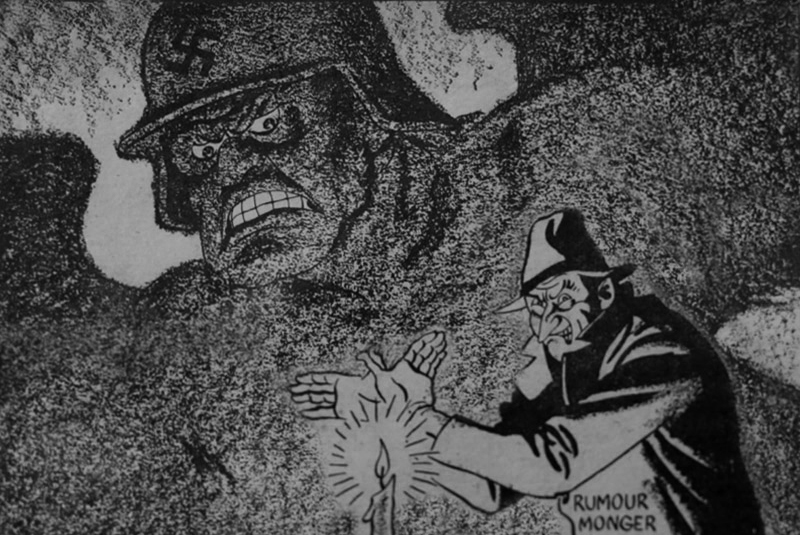
Representational image:, taken from 7MB Archives
The citadels of ultranationalism are built on propaganda, lies & attempts at historical revisionism.

Heinrich Heine, the German-Jewish poet and playwright, in his 1821 play, Almansor, offered a chilling forewarning, “It was just a prelude…Where they burn books, they will ultimately burn people too.” Hundred years later, on 10 May 1933, Joseph Goebbels, the Nazi Germany’s Minister of Propaganda, orchestrated the notorious first book burning event near the German Opera House. The conflagration that punctuated the Berlin skyline devoured more than 25,000 books that night.

At the peak of the Nazi regime, European skies were emblazoned not by the burning of books and ideas alone, but also by the stench of human flesh burning in incinerators. The macabre events that unfolded in Hitler’s Germany and Mussolini’s Italy, reminiscent of horrors from the pit fires of hell, serve as grim reminders of the extraordinary evil that ordinary humans are capable of inflicting on fellow humans under the guise of “nationalism,” “ultranationalism”, and “fascism.”

Since World War II, mainland Europe was insulated by social citadels — such as “Brandmauer” and “Cordon Sanitaire” — that dissociated mainstream political parties from any unholy nexus with far-right, ultranationalist political movements. These social fortifications were intended to prevent the resurgence of extremist ideologies and to maintain a stable, liberal democratic world order.

The twenty-first century has witnessed quantum socioeconomic and sociocultural changes driven by rapid advancements in science and technology. These developments have contributed to the rise of knowledge societies worldwide and altered the way individuals interact and connect. Innovations in artificial intelligence, robotics, and the proliferation of social media platforms have dramatically bridged gaps between people, shrinking perceived distances to a mere six degrees of separation.

Despite these technological strides, the explosion of knowledge and information, revolutionary global connectivity and unprecedented cultural exchanges, there has been a deeply unsettling erosion of the foundational principles of democracy and liberalism. The very values that once underpinned open societies are now being undermined.

In their place, nationalism and ethnonationalism are making a pronounced comeback, once again unleashing their dogs of war on the global political landscape. Right-wing radical parties are on the rise in mainland Europe, the UK, and Latin America.

India, once hailed as the largest democracy in the world, has declined into an “electoral autocracy.” And the United States, long regarded as the bastion of democratic freedom and free speech, is perilously declining into inchoate fascism at precipitating speeds.

Nationalism and patriotism, though often conflated, are fundamentally distinct concepts that must be clearly differentiated. Patriotism is frequently misused and co-opted by proponents of ultranationalist ideologies to manipulate and mislead the public. This misuse obscures the authentic meaning and intent behind patriotism, which has deep roots in the Greco-Roman traditions of antiquity.

In its proper form, the Greco-Roman ideal of patriotism was expressed as a genuine love for one’s country and culture, grounded in the laws and institutions established for the collective benefit of society. Rather than blind allegiance, patriotism was about cherishing the principles and structures designed to serve the common good.

Leading political science scholars, such as Maurizio Viroli of Princeton University, have reinforced this perspective by defining patriotism as adherence to universal values—democracy, justice, liberty, and the rule of law—that are endorsed and upheld by the state. In this sense, patriotism represents a nation’s soft power, a source of inspiration, rooted in respect for shared values and the pursuit of common welfare. 

Voltaire, one of the luminaries of the Enlightenment, dissociated place or nation from the locus of patriotism, which emphasises loyalty to the values of liberty, justice and fairness in polity and society. Jürgen Habermas, the German philosopher, coined the term “Constitutional Patriotism,” which is allegiance to sound constitutional principles that foster a fair and just society, rather than fidelity to a pre-political ethnic, religious, or national identity. 

These philosophical frameworks make little allowance for emotional identification with the country, ethnicity or religion. Instead, the allegiance is contingent on the values of patriotism a country upholds. A patriot, in this view, imbibes the virtues of detached reason to critically assess whether the state is faithfully promoting the ideals of liberty, freedom, and justice. When the state fails to meet these standards, the patriot regards it as a moral duty to objectively and fairly critique and challenge the state’s actions.

By its very nature, patriotism – when understood through these philosophical lenses – is secular, inclusive, and heterogeneous. It celebrates diversity and plurality, embraces difference as a strength and upholds the principle that loyalty is owed to shared values rather than to exclusive identities.

By contrast, nationalism and ultranationalism are fissiparous ideologies that serve to fragment the nation and disrupt its multicultural and multiethnic ethos of unity, tolerance and peaceful coexistence. Tribalism is the defining paradigm of nationalism, especially of ultranationalism, which seeks to prioritise “my tribe first” at the exclusion of others.

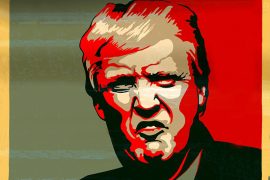
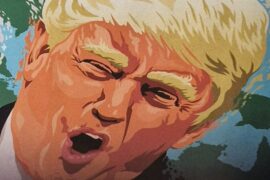
Hindu supremacists and the MAGA population are quintessential case studies. These fanatical outfits advocate the resurgence of Hindus and White nativist Christians — as true sons of the soil and legitimate inheritors of their respective countries — by invoking a glorious mythical past. It’s a national restoration project of racial and ethnic revanchism promised by a charismatic strongman. The leader is elevated to the status of a saviour, and this dynamic quickly regresses into a “personality cult.”

The leader becomes the nation and is heralded as the liberator from the humiliation the tribe has endured from immigrants, leftists, liberals, minorities and LGBTQ individuals. It is crucial to recognise that the dangers of ultranationalism are not confined to the right wing alone.

The ultranationalism of the left has also left an indelible mark on history, exemplified by the catastrophic consequences of Stalinist purges, gulags, Pol Pot’s Agrarian Utopia and Mao’s Long March. These epochs were as violent and destructive as the fascism found on the far right, which exterminated millions of people. 

Nationalism and ultranationalism are characterised by appeals to the base emotions of the faithful electorate. It is a deleterious form of group identity politics at play, and its dissociation from historical facts and rational discourse warrants propaganda, anti-intellectualism, anti-liberalism, unreality and victimhood for its survival.

The primary step in this resurgence is the reclamation of the nation’s secular institutions, media, cultural landscape, judiciary, federal state apparatus, military and civil bureaucracy through a process called “Gleichschaltung,” which is “coordination” for bringing these socio-legal institutions in line with ultra-nationalist ideology. To achieve this stated objective, these institutions are filled with sympathisers, friends, and allies of the leader who demands sycophantic loyalty from them. 

The resurgence of ultranationalism in the present era bears striking similarities to the rise of fascism in the twentieth century. Quasi-authoritarian leaders such as Donald Trump, Narendra Modi, Viktor Orban, and Jair Bolsonaro exhibit an incorrigible disdain for mainstream media.

This antagonism is not new; Adolf Hitler famously denounced the press as the “Lügenpresse,” or “lying press.” In the contemporary context, Donald Trump has consistently labelled the media as “fake news,” targeting MAGA conservatism. Fox News has become the mouthpiece of the MAGA Republicans, similar to Pravda in the Soviet Union and Volkischer Beobachter, the newspaper of the Nazi Party.   

The use of executive orders is another notable parallel. During both his first and second terms, Donald Trump issued a flurry of executive orders, many of which were subsequently deemed unconstitutional by the courts. This strategy closely mirrors Hitler’s exploitation of executive orders to exploit weaknesses in the Weimar Republic’s democratic framework, ultimately transforming Germany into a dictatorship in just fifty-three days. 

Steve Bannon, a Republican political strategist, stated in a recent interview with The Economist that the Republican Party is exploring ways to circumvent the 22nd Amendment of the US Constitution, which limits the US presidency to two terms, to facilitate Trump’s third term or rule indefinitely. The far-right fundamentalists are entitled to believe that they have a constitutional right to change the constitution and the composition of courts to suit their slanted political vision.   

Furthermore, the purging of federal workers under the auspices of the unelected Department of Government Efficiency (DOGE), led by Elon Musk, represents a concerted effort to align the bureaucracy and civil service with the regime’s objectives. This campaign is presented as a necessary step toward eliminating waste and introducing lean management, but its underlying goal is to ensure bureaucratic loyalty and congruence with the leadership’s ideology. On 7 April 1933, Hitler passed a law for the restoration of professional civil services, where he eviscerated intellectuals, Jews, communists, socialists, nurses, teachers, and judges who had expressed the slightest dissidence to his ethno-nationalist policies.

Nationalists define the abstraction of “nation” in terms of what it does not represent. In the United States, National Conservatives (NatCon) consider all non-white immigrants as aliens to the land. They castigate immigrants for all the economic ills plaguing the country, for ostensibly usurping jobs from white Americans, depressing wages, and colluding with Democrats, Jews, liberals and leftists to segregate white American workers commensurate with the Great Replacement Theory.

Immigrants are vilified, and legislations such as a massive hike in H-1B visa application fees are introduced to curb it, even at the expense of sourcing superior global talent. Anti-immigrant sentiment is a central, if not universal, theme among ultranationalist parties throughout Europe. They all commonly exploit immigration as a political wedge. For ultranationalists, economics and business are subordinated to cultural nationalism that they believe has been defiled by the erstwhile administrations, and its revival is a sine qua non political agenda. 

A striking contradiction emerges within the MAGA ultranationalist discourse, particularly regarding anti-immigrant propaganda. For example, the Trump administration persistently vilifies immigrants, yet both Donald Trump and his Vice President, J.D. Vance, are married to women who are themselves immigrants. This hypocrisy underscores the selective nature of their rhetoric, revealing a disconnect between public statements and private lives.

Similar inconsistencies are also evident in other ultranationalist movements across Europe. For instance, Alice Wiedel, the leader of Germany’s Alternative for Deutschland (AfD) party, frequently denounces immigration and targets LGBTQ individuals while simultaneously engaging in a lesbian relationship with a Sri Lankan immigrant and living, not in Germany, but in Switzerland. 

MAGA politics belies both the letter and the spirit of the Declaration of Independence, which never equates the United States with any specific racial, ethnic, or religious group. Historically, the nation’s founding documents and leaders envisioned America as a place of welcome and opportunity for all. In his notable General Orders to the Continental Army at the conclusion of the Revolutionary War in 1783, George Washington articulated that one of the core reasons for the establishment of the United States was to create “an Asylum for the poor and oppressed of all nations and religions.” 

Washington reiterated this inclusive vision on multiple occasions, including in his correspondence with a group of newly arrived Irish immigrants. He assured them that “the bosom of America is open to receive not only the opulent & respectable stranger, but the oppressed & persecuted of all nations & religions.”

In contrast, the MAGA movement receives unwavering support from Christian nationalists, who roam the streets with a mouthful of scripture and a heartful of hate. Perhaps Friedrich Nietzsche envisioned this retrogression in the nineteenth century when he prophetically stated, “The Last Christian died on the cross.”

In India, the Sultans and Mughal dynasties are denounced as deviations from the glorious Hindu culture. In contemporary India, Muslims are belittled as their descendants, harassed, lynched and called anathema to India. Though the Mughal rule represented the zenith of India’s economic achievements, constituting almost 25 per centof global GDP at the arrival of the English East India Company, Muslims are the “imaginary enemy” conjured up for realpolitik ends and an ethno-nationalist vote bank. 

The myriad forms of ultranationalism, whether Islamic, Zionist, Sikh or Buddhist, follow the same playbook: selective reading of the scriptures to weave a comprehensive manifesto and exclusionary roadmap to torture, kill, maim and ethnically cleanse the fictitious enemy. Therefore, “who” reads the scripture has become an indispensable aspect of social cohesion, peace and universal brotherhood.

The citadels of ultranationalism are built, brick by brick, on propaganda and lies with ignominious attempts at historical revisionism. The ultranationalist demagogues are invariably pathological liars; Germany and the world had to contend with the daily lies of Hitler. The contemporary political discourse is no different.

Nationalism and ultranationalism engender nationalist economics, highlighted by a skewed industrial policy, trade protectionism through prohibitive tariffs and non-tariff barriers and immigration restriction. Trump’s view of trade deficits as economic exploitation of the United States is a case in point. In reality, the theory of comparative advantage and the internationalisation of production help US corporations reap location and cost advantages. It has resulted in lower-cost imports of foreign goods for US consumers, rather than relying on domestic production or onshoring, which an overvalued dollar would hinder. 

Historically, nationalist economic policies have led to poverty and stagnation, as seen in Spain, Portugal, Latin America, the pre-reform USSR, Eastern Europe, China before 1978, and former Southeast Asian dictatorships. 

The failure of centre-right political parties to meet the aspirations of the masses is a singular cause of paradigm shifts in global politics, facilitating the rise of nationalist parties. Globalisation, privatisation, free markets and deregulation haven’t achieved the intended economic outcomes. Instead, they exacerbated global inequality.

The shenanigans in Washington no longer believe in the “Washington Consensus”. The US’s obsession with retaining its hegemony in a rising multipolar world order is causing seismic shifts in global geopolitics. Hyper-globalisation is faltering amid escalating issues, including climate change, food insecurity, poverty, inflation, and energy and debt crises, while liberal democracies struggle to address these challenges.

In 2025, fringe nationalist movements will have become mainstream worldwide. Far-right groups have exploited a position in the global political ‘marketplace.’ They have normalised hate speech, xenophobia, racism, exclusion, homogeneity and violence, crossing the threshold of the Overton Window.

The global community is reduced to the proverbial metaphor of the “boiling frog,” where most are indifferent to the lesser evils being supplanted by far worse and sinister forces of ultranationalism. Kahlil Gibran best encapsulates the connection between this global tepidity and the choice of will: “We choose our joys and sorrows long before we experience them.”

-30-

Copyright©Madras Courier, All Rights Reserved. You may share using our article tools. Please don't cut articles from madrascourier.com and redistribute by email, post to the web, mobile phone or social media.
Please send in your feed back and comments to [email protected]

0 replies on “When Democracies Choose Their Dictators”