The Quiet Rhythms of Tellicherry: A Journey Through Time & Memory

Tellicherry-Madras-Courier
Representational image: Public domain.
Nostalgia for a simpler era unfolds through childhood memories, family bonds, and the quiet rhythms of life in Tellicherry.

In the rented house we lived in at Saidar Pally, the locality before you enter the town of Tellicherry if travelling from the south, the highway ran so close that we children learned, much to the astonishment of guests, to tell the names of the buses that passed by with our eyes closed. One summer afternoon, while we were at this game, a bus from Kozhikode screeched to a halt outside our home. Peering through the window, we saw our frail grandmother alight with a sack full of mangoes and walk briskly toward our mango-tree-less house.

She had a soft corner for us, perhaps because she too was from Tellicherry. Though she married a man from Kozhikode and lived there for years, she never lost her northern accent, much as we would never lose ours. More than that, she found joy in giving. When we moved to Kozhikode, my mother would visit her mother’s house every Sunday evening for what Bengalis call adda, those unhurried gatherings where time seemed to rest. She never returned without some edible gift, lovingly packed by her mother.

Years later, when dementia dulled her memory, grandmother would still sit through those addas, eyes closed and in a world of her own. Yet, as the evening drew to an end, she would slowly rise on her arthritic legs and shuffle to the shelf where the eatables were kept to check if there was still something left to give away. There was not plenty to go around in those days, but there were plenty of people who made sure that whatever was there went around.

***

When India, under Bishan Singh Bedi, toured Australia in 1977, the hosts had to do without their best players, who had been lured away by World Series Cricket. Yet that depleted Australian side, led by Bobby Simpson, brought back from retirement, triumphed in a closely fought series. That was the first cricket series I remember following. On those mornings, while the neighbour’s newly acquired tape recorder blared Yesudas’s songs from Chitchor, we huddled around our old transistor listening to the commentary before heading to school.

By the time we returned, play for the day would long be over, and we would wait for the six o’clock news when, at the end of the bulletin, either Lotika Ratnam, Barun Haldar, or Vijay Daniels would read out the day’s scores. The ritual carried a quiet thrill that no screen could match. The voices and names became part of our early years, as inseparable as the smell of rain on red earth or the sound of a train at night.

Decades later, when a depleted Indian team triumphed at the Gabba, I watched the drama unfold live on my mobile phone. It was a different world then, and that moment of victory carried me back to those transistor mornings. After the match, I found myself searching online for the people and voices that had once coloured my imagination.

Yesudas had just turned eighty-one. He still sang the occasional song, though one suspected there would never again be another Aaj Se Pehle. Lotika Ratnam was in her nineties and arthritic. Barun Haldar was long gone. Vijay Daniels, that familiar voice from Calcutta, had migrated; he was producing radio programmes for the Australian Broadcasting Corporation in distant Darwin. He may still have many listeners, but I doubt whether among them there is a ten-year-old waiting with bated breath for the latest cricket scores.

***

Long before the multiplexes and BookMyShows came into existence, and Chithravani was still only a small talkies in Thalaserry, we once stood for hours in a long queue for a Bachchan blockbuster, only for the tickets to be sold out just before our turn came. I do not think the disappointment we felt that day has ever been surpassed. The film Muqqadar ka Sikandar, which I watched soon after, told the story of a Hindu boy brought up as a Muslim when such things were still possible in Nehruvian India.

Those were the years when Amitabh Bachchan ruled our imagination. Every boy in town dreamed of looking like him. Even if the Bachchan-cut hairstyle did not suit our faces, we insisted on it. We competed to own the widest bell-bottoms, like he did in his movies, our mothers despairing at the extra cloth it took to stitch them.

As India burns today, literally, the once angry young man of the screen remains silent, as does the superstar who succeeded him, though he once studied at Jamia. But one man would have spoken if he had been alive and well, Shriram Lagoo, who played a minor role in Muqqadar ka Sikandar as the father of the woman Bachchan loved and lost.

In real life, he had a far greater role, being deeply involved with progressive Marathi theatre and the rationalist movement led by his friend Dabholkar, who paid with his life while fighting superstition. To counter growing Islamophobia, Lagoo had even given his son a Muslim name. He passed away after a long illness, his last years clouded by dementia. Perhaps it was merciful, for he would not have borne to see the India we once knew slowly fading before our eyes.

***

Gundert Road once offered the finest spectacle in Tellicherry. There stood the picturesque stadium where, under shady trees, idle men watched inconsequential cricket matches. Opposite it, on the portico of the Cosmopolitan Club, the town’s eminent men read The Hindu before disappearing inside to play billiards or a round of rummy over glasses of whisky.

Further down the road, behind high compound walls, stood the Sacred Heart Convent. In one corner beside a pigsty was the Holy Angels School, where one studied till the fourth standard, after which boys were shown the door. That was the age when Malayali society believed the sexes must be kept apart.

If you take the steep road opposite the convent and walk past the mossy ramparts of the old British fort, you will find on the cliff overlooking the Arabian Sea what used to be St Joseph’s Boys High School.

Tellicherry_madras-Courier
Representational image: Public domain.

If you go there on a Sunday or any holiday, you will likely be alone. The silence will be broken only by the rhythmic lap of waves until you hear a scooter stop behind you. An old man gets off and, despite the wrinkles and grey hair, you recognise him as Johnson Maash, our old sports teacher.

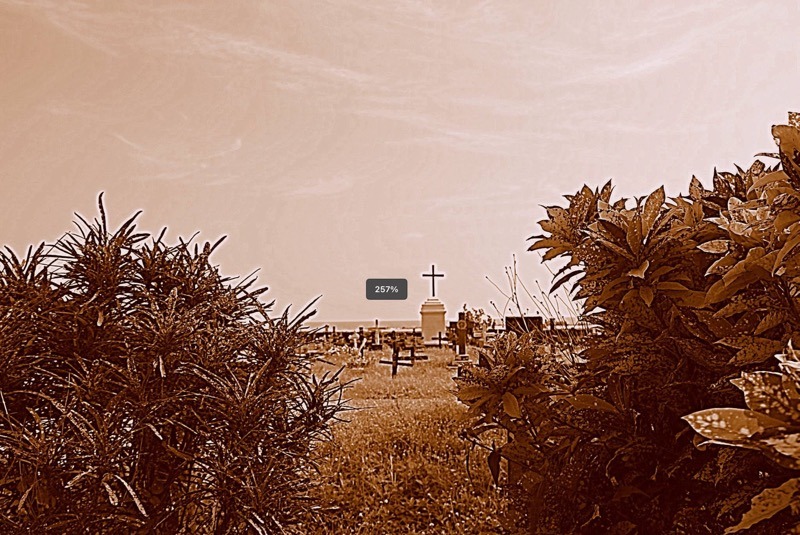
You watch him enter the school, find a broom, and begin to clean the grounds. Then he steps through a rickety gate into the old cemetery, kneels by the grave of his wife, “Alice teacher,” closes his eyes for a moment, clears the weeds, and leaves.

He had retired long ago, yet this had become his daily ritual. Johnson Maash was a good man, though nothing about him seemed remarkable. But sometimes, ordinary people create the most extraordinary stories of love. Some locals found him eccentric, yet one suspects Johnson Maash would not have cared one bit.

***

During the morning rush hour at Saidar Pally, buses often stopped well past the official halt, and despite my frantic runs, I would sometimes miss them by a whisker. Returning to the scornful faces at the stop was out of the question, so the only option was to walk to school.

As I walked, embarrassment slowly gave way to delight in the sights, sounds, and smells of Tellicherry’s Main Road. Near the school stood Kerala’s first bakery, Mambally’s. Sometimes inside, at the counter, one could find M. M. Pradeep, the tall and handsome scion of the family who could, on the cricket field, hit sixes at will and bowl genuinely quick.

By then, Mambally’s had seen better days, but legend has it that in the late nineteenth century, Englishmen and women once queued outside it for its cakes and biscuits after Mambally Bapu baked India’s first native cake. In the years that followed, the bakery tradition spread through Kerala, so that today, in every nook and corner of the state, bakeries stand like the mishti shops of Bengal.

Bakeries do not dot Bengal’s landscape like Kerala’s, yet every second Bengali I meet is an amateur baker. So it did not surprise me when one day, inside Gariahat Market, where one can find almost anything under the sun, I stumbled upon the exact replica of the simple oven my mother had used to bake four decades ago.

***

In that favourite decade of the seventies, in what has become a favourite city, Kolkata, lived a favourite aunt, who, during a Christmas vacation, came to our home in Tellicherry and introduced us to canned rasagolla, and cooked, from the improvised devices available, a meat pie which we had, until then, only read of in Enid Blyton books. I have had better rasagollas since, but the taste of that meat pie lingers on in memory like that of the sweet aunt who passed away in a distant land, all alone.

***

The boys’ school I went to is now a co-ed institution. Annexures have come up, classes continue up to the twelfth standard. The old L-shaped building still stands, its tiled roof trembling in heavy rain as before. The church looks as majestic as ever, though in a different coat of paint. The cemetery beside it remains unchanged, and I suspect children still take their tiffin there, unmindful of the ghosts, before heading to the fort to explore its caves with burning tyres.

Inside the classroom, there were moments of terror too, especially when our Maths teacher — who resembled Hercule Poirot and viewed those poor in Maths as the detective did murderers — would announce a surprise demonstration on the blackboard. The front benches buzzed with excitement at the prospect of showing off their considerable skills, while we at the back went deathly silent, avoiding his eyes in vain. When he called your name, there was no escape. You trudged to the board like a helmetless tailender facing the West Indian quicks of the 1980s, with the crowd baying for your blood. The ordeal still sends a chill down my spine. 

***

In that house where we spent our childhood at Saidar Pally, a long corridor divided the rooms on either side. When we quarrelled, our exasperated mother would emerge from the soot-filled kitchen of those pre-LPG days, push us into separate rooms, and we would make faces at each other from near the doors until everything was forgotten when lunch was served in a corner of the corridor that doubled as our dining hall.

Once, a more serious quarantine came when chicken pox visited the household. I was the last to catch it, and while the others recovered, I wandered aimlessly around the house until I found a book that my father must have borrowed from his college library, a Malayalam translation of Bimal Mitra’s Vilaykku Vangam.

I do not know how Bengalis regard that novel, but I remember being spellbound by the saga of Dipankuran and Sati, and feeling a vague yearning for the distant city they inhabited. I did not know then that decades later, when another virus would make the whole world stay indoors, I would be in that very city, Kolkata, reading a book about it, gifted by a Bengali friend.

-30- 

Copyright©Madras Courier, All Rights Reserved. You may share using our article tools. Please don't cut articles from madrascourier.com and redistribute by email, post to the web, mobile phone or social media.
Please send in your feed back and comments to [email protected]

0 replies on “The Quiet Rhythms of Tellicherry: A Journey Through Time & Memory”