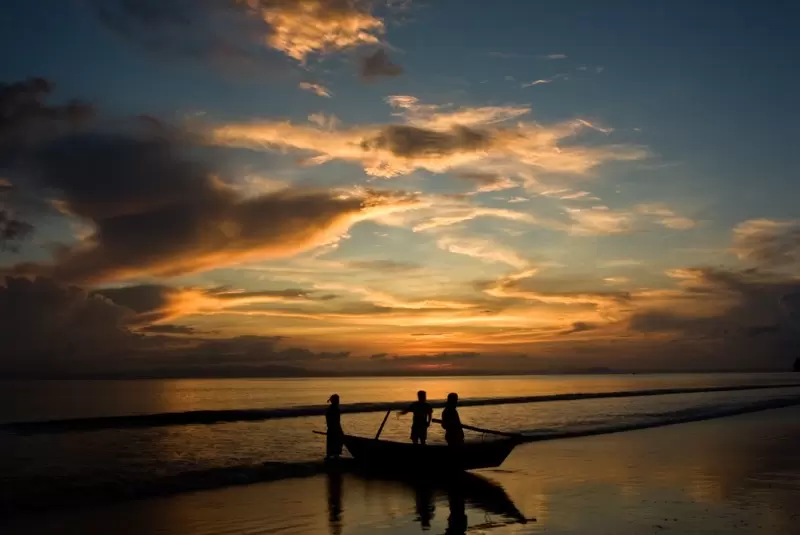
Perched atop the third-highest peak in the Andaman and Nicobar Islands, we gazed out over an endless sweep of blue water, flecked with densely forested islets. They teemed with life; their tropical forests sheltered rare species and buffered the frequent tremors that rippled through the region.
What was once a land of bamboo huts evolved into wooden stilt houses, brick homes, and modern steel constructions. Each wave of change pushed the islands further away from the forests that were once revered. And deep within those forests, quiet and unseen, live those to whom the land truly belongs: the indigenous communities of the islands.
When my father, a government officer, was posted to Port Blair in the 1980s, all officials posted there were shown documentary films on the tribes. These screenings ended with a firm reminder: respect tribal territory; no exceptions, even when touring the islands. That became the backdrop to the best years of my childhood.
Our home stood on a hill in Port Blair, overlooking the vast Bay of Bengal. From our wooden quarters, I watched large ships sail silently into the harbour. It rained nine months of the year. At five, my brother and I searched for snails after every downpour, watching their antennae curl at our touch. We collected shells with zeal, and I loved wearing shell necklaces, complete with earrings.
Each month, on the second Saturday, the only monthly day off back then, we would sail to a nearby island in a group and picnic by the shore, always steering clear of tribal lands. The Nicobar Islands, far to the south, were off-limits entirely. Some tribes were known to be friendly, but even then, the government barred contact. Others were unequivocally hostile, and the policy there was simple: leave them alone. They had made their position clear. And they were right.
At the time, few people in mainland India had heard of the Andaman and Nicobar Islands, let alone visited them. To many, it was a place of exile, its reputation shaped by colonial-era penal colonies. Before we moved there, some mainlanders recoiled at the thought—imagining wild lands, untamed and dangerous. Whenever we visited relatives in Chennai or Bangalore during summer holidays, they mimicked jungle sounds to tease us. But to us and the small circle of families who had lived there, the islands were paradise—raw, remote, and magnificent. Their jibes never touched me.
By the turn of the century, those cousins who once joked about our island life began gushing about it. Tourism had arrived. I returned, this time as a visitor, walking the same hills my family once called home. My husband, at first reluctant to join, had been warned: “The islands are always shaking, sir.”
True, the region lies in the highest seismic hazard zone. But as children, we had never experienced a single quake. Not once were we forced to flee our house. When the trip ended, he didn’t want to leave. We stayed in a sleek, modern resort made from the latest materials. We took private ferries, swam, snorkelled, surfed—activities that never existed during our time there. It was thrilling, yes, but something felt off.
Despite the comfort and convenience, it felt like the islands were wearing someone else’s clothes. I dismissed the feeling, thinking perhaps I was simply being nostalgic—remembering scraped knees, muddy play, and running barefoot through grass. But my husband, born and raised in bustling mainland cities, felt the same dissonance.
What disturbed me most was hearing stories from resort guests about secret visits to tribal areas. Some had exchanged gifts with members of so-called “friendly tribes,” facilitated by locals who should have known better. Such things were unheard of during my childhood. There was an invisible but deeply respected boundary—and now, it was being breached. I felt a strange kind of shame, knowing that some of those enabling this trespass were islanders themselves.
Change is sweeping across the Andamans—and the distant Nicobar Islands are not far behind. The British established a penal colony in the Andamans in 1858. After independence, the Government of India took over the administration, with Port Blair as the capital. The first settlers were refugees from the mainland, most hailing from Bengal, Bihar, Tamil Nadu, and Kerala. They were small-scale farmers and traders who built new lives on these islands. Today, the archipelago includes 836 islands and islets, home to over 430,000 people.
Now, the administration is opening up once-protected areas. Uninhabited islands are accessible. Beaches remain open late into the night. New airline partnerships are bringing in more visitors. According to Keshav Chandra, former Chief Secretary of the Andaman Islands, the changes include leasing land at Radha Nagar Beach—once pristine, now one of the world’s most photographed destinations—for a five-star resort, as reported in an article in Business Standard in 2024.
Plans are underway for seaplane services, luxury tents, caravans, and night cruises with dining options. Port Blair now offers houseboats and kayaking under the stars, designed to enhance the “nightlife experience.” The forests, meanwhile, are shrinking and have been replaced by concrete. Digital blueprints mark what will be built next—maps that exclude the people who have lived there for millennia.
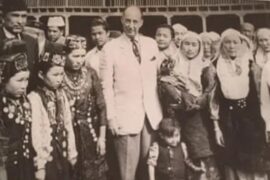
The Andamanese, Onge, Jarwas, Shompens, Nicobarese, and Sentinelese are among the world’s most vulnerable indigenous groups, with a combined population of just a few hundred. Anthropologists estimate they have lived on the islands for as long as 55,000 years. Two centuries ago, their numbers approached 10,000. The British rule decimated their populations. Since independence, their numbers have stabilised, but remain critically low.
These communities are not relics of the past. They are self-sustaining forest dwellers—fishermen, hunters, and gatherers. Their knowledge of herbs, animals, and seasonal cycles is unmatched. They forage for fruit, honey, and roots, and grow diverse crops. They live lightly, leaving almost no ecological footprint. Their reverence for the forest is not metaphorical; it is woven into every part of their lives.
As children in Port Blair, we were often treated with local remedies. If we injured ourselves—as we often did—our friends would crush the leaves of a plant called Budi Pati and apply its juice to our wounds. The healing was quick. We rarely took medication. I barely knew what paracetamol was. A fever was not a cause for alarm but a reason to stay home from school and enjoy some extra parental attention. When I was once bitten by a centipede, I remember the thrill of going with my father to a herbal doctor. I trotted beside him, proud and excited.
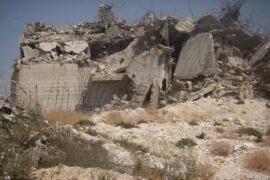
When the tsunami hit in 2004, the Nicobar Islands bore the brunt of the devastation. Many tribal communities were nearly wiped out. Survivors were moved to relief camps. Eventually, they were relocated to Campbell Bay, the administrative headquarters of Great Nicobar. It was supposed to be temporary. Twenty years have passed. There is still no sign that they will be allowed to return home. Their pleas go unheard.
Today, many displaced tribes live in cramped quarters, forced into wage labour. Alcohol use has increased. With altered diets and increased exposure to disease, their health has declined. Though they receive rations and some support, the pain of dislocation runs deep. They once lived on coconut and areca plantations, bartered goods, and shared resources. Now, they survive on cash—and the memory of lives they once led. They are strangers in their own lands.
But the worst may yet lie ahead.
In 2020, the Government of India announced the ₹75,000-crore Holistic Development of Great Nicobar Island Project, aimed at transforming the region into a self-sufficient zone—India’s answer to Hong Kong. Plans include a transhipment port, a gas and solar power plant, a residential township, an international airport, and “luxury eco-tourism infrastructure.”
In June 2024, former bureaucrat E.A.S. Sarma wrote to President Droupadi Murmu, raising alarms about how quickly environmental clearances had been granted, allegedly bypassing tribal councils and violating constitutional protections. I couldn’t help but ask: Why target a biosphere reserve declared as protected back in 1989 for aggressive modernisation?
The indigenous communities have made their stance clear. According to Dr Manish Chandi, a human ecologist who has worked closely with these groups, most do not oppose development outright—but they reject the commodification of their culture.
They want peace, not profit. They want to fish, rear livestock, harvest coconuts, and live by the sound of waves. Crucially, they still believe the government will return their land. But the truth is, no one has told them exactly where or how this massive project will unfold.
Earlier last year, thirty-nine academicians sent a letter to the President, calling the project a “death sentence” for these communities. I think of those indigenous people we once admired as children—quiet, resilient, deeply in tune with nature. We tried to imitate their ways in small, clumsy gestures. Yesterday, they were the owners of the land. Today, they are outcasts. What remains uncertain—and terrifying—is what tomorrow holds.
-30-
Copyright©Madras Courier, All Rights Reserved. You may share using our article tools. Please don't cut articles from madrascourier.com and redistribute by email, post to the web, mobile phone or social media.Please send in your feed back and comments to [email protected]