
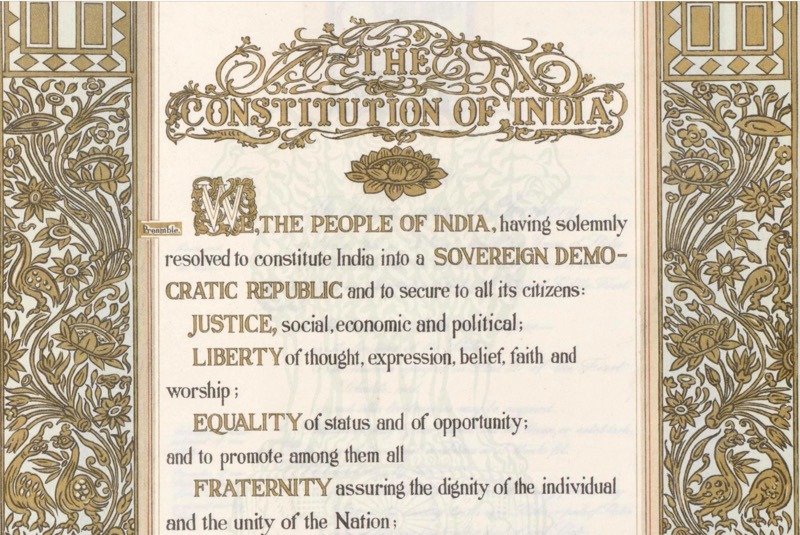
At the heart of the Indian Constitution lies the trinity of liberty, equality, and fraternity. These are not mere lofty ideals but foundational pillars of our collective life. In a country as diverse and deeply stratified as India—by caste, religion, language, gender, and class—these principles form a civilisational necessity, a moral compass, and the binding force that gives meaning to our democratic experiment. They constitute the emotional architecture of democracy, transforming formal citizenship into a sense of belonging and a commitment to brotherhood.
Crucially, liberty, equality, and fraternity are interdependent and mutually reinforcing; none can endure in isolation. Equality is essential to humanise an inherently unequal society and to enable fraternity, for without a sense of equal dignity and non-discrimination, the feeling of brotherhood cannot genuinely prevail. Fraternity, in turn, deepens liberty by grounding it in shared human experience and transforms formal equality into lived empathy. Liberty and equality, meanwhile, provide the structural conditions for fraternity to flourish—indeed, it cannot flourish in their absence. Yet fraternity remains the most neglected of the three in political discourse and social practice. Together, they form the moral, legal, and emotional framework that sustains India’s democratic ethos.
Copyright©Madras Courier, All Rights Reserved. You may share using our article tools. Please don't cut articles from madrascourier.com and redistribute by email, post to the web, mobile phone or social media.Please send in your feed back and comments to editor@madrascourier.com