The Persistence Of Caste In India’s Army

Caste-indian-army-madras-courier
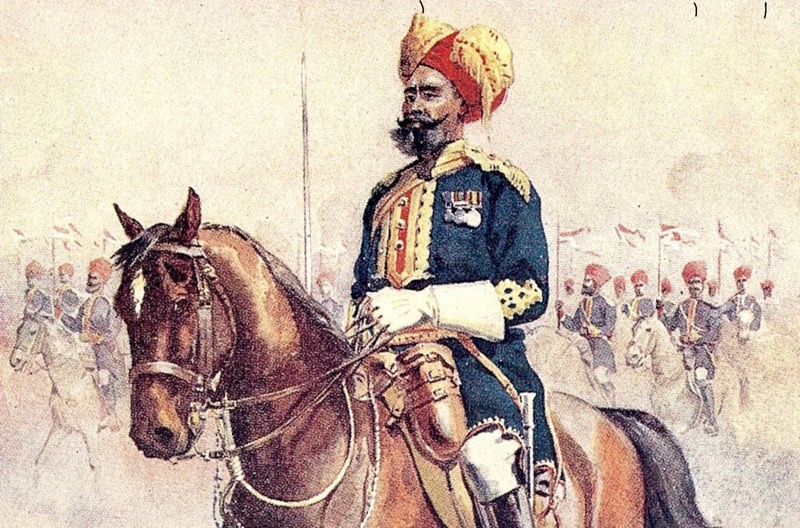
Representational image; public domain/wikimedia.
For the Indian Army to truly fulfil its promise of representing all of India, it will need to confront the enduring legacy of caste.

In India’s military, caste is not a relic of the past but an enduring force, subtly woven into the fabric of one of the country’s most celebrated institutions. The Indian Army, an organisation that symbolises national unity, seems an unlikely place for the caste system—a social hierarchy that dictates everything from whom you marry to where you live—to persist.

Yet, despite decades of reform and official policies that espouse meritocracy, caste remains deeply embedded in the army’s regimental structure, recruitment practices, and even the honour associated with military service.

Caste-based regiments in the Indian Army have their origins in colonial-era British policies that sought to divide Indian society into “martial” and “non-martial” races. After the Revolt of 1857, the British feared future uprisings and used the theory of martial races to ensure their control over the population.

According to this doctrine, certain castes—particularly those considered lower or “non-martial”—were seen as unfit for battle. In contrast, others, primarily drawn from the lower castes, were considered more “masculine” and, therefore, better suited for military service. The British argued that these “martial” castes were physically more robust and possessed a natural aptitude for warfare. Thus, certain communities, often from rural and agricultural backgrounds, were systematically recruited into military regiments.

This division, which was rooted in a colonial strategy to suppress resistance and strengthen imperial control, laid the foundation for a military culture that continues to shape India’s armed forces today. Regiments like the Rajput, Jat, and Sikh regiments continue to dominate the Indian Army, with the upper-caste soldiers in these groups benefiting from both the historical legacy of the British and their own community’s status.

The President’s Bodyguard, one of the most prestigious regiments, is still restricted to specific upper-caste groups: Rajputs, Jat Sikhs, and Hindu Jats. While the Indian Army officially rejects caste-based recruitment, these regiments continue to operate as if caste were a given, perpetuating the belief that some groups are better suited for military service than others.

The echoes of colonial-era classifications are not limited to the army’s elite regiments. Even today, soldiers from the lower castes—Dalits and those from the Other Backward Classes (OBCs)—are underrepresented in key units. In fact, a caste-based breakdown of soldiers who died in the 2019 Pulwama attack revealed a striking pattern: the majority of those killed were from lower-caste communities, particularly from the Ahir caste. These men, often from rural areas, are disproportionately represented on the front lines of battle, yet their service is often rendered invisible in the larger narrative of military honour.

Despite the widespread calls for greater recognition of these communities in the military, the idea of caste-based regiments has met with resistance. In a legal challenge brought before the Supreme Court, petitioners argued that communities like the Ahirs and Chamars, who have historically borne the brunt of caste discrimination, should be entitled to regiments named after their castes, akin to the Rajputs or the Gorkhas.

However, the Court dismissed these claims, citing the existence of regiments named after geographic regions, such as the Madras Regiment or the Dogra Regiment, and asserting that soldiers from all castes serve in these units. While this stance may hold legal water, it fails to account for the lived reality of caste discrimination within the army. The official narrative of unity and meritocracy in the military ignores the deeply ingrained caste prejudices that continue to affect how soldiers are treated and recruited.

The issue of caste-based regiments is not solely about the name of a regiment or the allocation of military honours—it is about representation and dignity. For instance, the Mahar Regiment, named after the Dalit community of the Mahars, is one of the few units that acknowledges the historical contributions of lower-caste communities to India’s military efforts.

The Mahars played a pivotal role in the Battle of Koregaon in 1818, where they fought alongside the British East India Company against the Peshwa’s forces. This victory is seen as a symbol of Dalit resistance to the upper-caste Peshwa regime. However, the Mahar Regiment’s existence was precarious; it was only during World War II that it was formally resurrected after the collapse of a previous attempt to establish a Dalit regiment during World War I. Even then, it never enjoyed the same prestige as its upper-caste counterparts, and Dalit soldiers have always had to fight for recognition within the broader military structure.

The lack of caste representation in the army has resulted in a demand for change. Some advocate creating a separate regiment dedicated solely to Dalit and OBC soldiers, one that would bear the names of iconic Dalit leaders, such as Dr B.R. Ambedkar, who fought for the rights and dignity of the oppressed classes. Others propose removing caste-based names from regiments altogether, replacing them with the names of national heroes like Subhash Chandra Bose or Rani Lakshmi Bai, in an effort to transcend the divisive legacies of caste.

However, these proposals have not gained traction. While the Indian Army may officially reject caste-based recruitment, the reality is that the caste of a soldier can still affect their chances of enlistment, especially in a system where subtle discrimination still plays a role in the selection process.

A caste breakdown of military personnel also exposes deeper issues in recruitment practices. Despite the Indian Army’s claim that it does not discriminate based on caste or gender, reports suggest that caste-based biases persist, particularly during the recruitment process. Soldiers from Dalit, OBC, and tribal communities often find themselves disproportionately excluded from recruitment or relegated to less prestigious roles.

Many from the Dalit-Bahujan-Adivasi (DBA) community report that they face not just institutional barriers but also social prejudices that affect their ability to secure a position in the military. Some have even suggested the introduction of a caste-blind recruitment process, where names are not revealed until after selection, to mitigate caste-based discrimination.

While this idea has its merits, critics argue that names are not the only indicators of caste. Factors like skin colour, attire, and the ability to speak English can also influence recruitment, making the issue of caste discrimination more complex than any one solution can address.

The persistence of caste in the Indian Army reflects a larger societal issue: India’s deeply ingrained caste system, despite being officially outlawed, continues to govern not just social interactions but also access to opportunities and power. The military, an institution that is supposed to be the great equaliser, often mirrors the inequalities that pervade the rest of Indian society. In this context, the calls for caste-based regiments are not just about institutional reform—they are a cry for dignity and recognition.

For many soldiers from the Dalit, OBC, and Adivasi communities, the fight for equal representation in the army is part of a broader struggle to be seen as equal citizens in their own country. The military, like the rest of India, remains a battleground for these fundamental questions of equality, identity, and power. India’s post-independence efforts to abolish caste-based regiments may have been a symbolic victory. However, the reality is that caste continues to shape military service in ways that cannot be ignored.

For the Indian Army to truly fulfil its promise of representing all of India, it will need to confront the enduring legacy of caste, not only in its regimental structures but in the very way it recruits, honours, and respects its soldiers. Until that happens, caste will remain an indelible part of the military’s landscape, a reminder that, in India, even the most powerful institutions are not immune to the divisive forces that continue to shape the nation.

-30-

Copyright©Madras Courier, All Rights Reserved. You may share using our article tools. Please don't cut articles from madrascourier.com and redistribute by email, post to the web, mobile phone or social media.
Please send in your feed back and comments to [email protected]

0 replies on “The Persistence Of Caste In India’s Army”