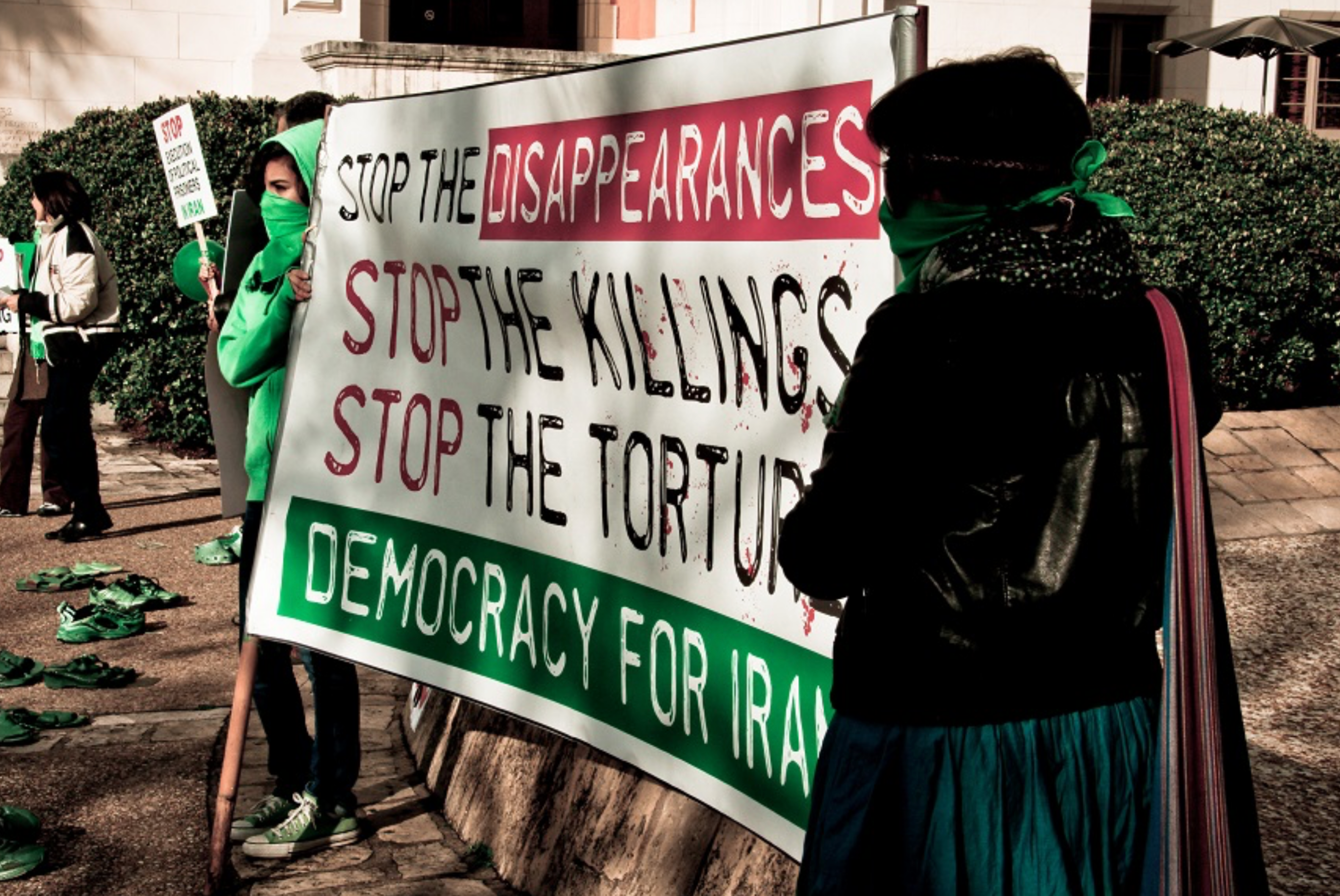
What happens when a society reaches a point at which its own people no longer fear their rulers? In Iran today, the answer is not some abstract political theory but a terrible continuing human experience: widespread, systematic repression by the organs of the state against the citizens they claim to serve.
The Islamic Republic’s apparatus of control, in particular the Islamic Revolutionary Guard Corps and associated security forces, has become the embodiment of a brutal logic in which dissent is met not with disagreement, but with lethal force, mass arrest, and structural intimidation.
What we are witnessing in Iran is far more than the suppression of protests; it is the engineered erosion of fundamental human rights and the ritual humiliation of a people’s aspiration for dignity.
Since the eruption of nationwide demonstrations against economic collapse and political stagnation, Iranian security forces have responded with a degree of violence that surpasses anything seen in recent years. Credible estimates from human rights groups and monitoring organisations describe scenes in which largely peaceful crowds are bludgeoned with live ammunition, heavy weapons, and collective punishment. Reports compiled by Amnesty International and Human Rights Watch documented unlawful use of force against protesters, including rifle fire and beatings, resulting in deaths and injuries among civilians, including children and bystanders.
Yet even these stark accounts capture only a fraction of the story. Independent activist groups and local medical personnel operating under extreme conditions have relayed information suggesting death tolls that climb into the thousands. Hospitals have been overwhelmed with gunshot wounds to heads and torsos; scores of young Iranians have lost their eyesight from pellet fire; and families confront the terrifying possibility that their loved ones have disappeared into an unaccountable system of detention.
To contextualise this moment, one must look back to the 2022 “Woman, Life, Freedom” uprising ignited by the death of Mahsa Amini in morality police custody. That earlier wave of protest exposed a recurring pattern of repression: security forces shooting at protesters’ faces and genital areas, arbitrary arrests, brutal beatings, and the torture of detainees, including children.
An independent United Nations fact-finding mission concluded that the violations during that period amounted to crimes against humanity—encompassing murder, imprisonment, enforced disappearance, torture, and sexual violence—directed at civilians demanding fundamental rights.
The recurrence and acceleration of repression today is not happenstance. For decades, the Revolutionary Guard has operated as an autonomous power centre within Iran’s political system, with its own economic interests and ideological imperatives. Tasked initially with defending the 1979 revolution, it has since evolved into a domestic security force that sees dissent itself as an existential threat.
In this framework, protest is not a plea for reform but a declaration of war against the state’s legitimacy. The result is a cycle: protests emerge, the Guard responds with disproportionate force, and the regime justifies the brutality as necessary to preserve order.
The human cost of this cycle is staggering. Scores of protesters in towns like Malekshahi and elsewhere have been shot dead by uniformed forces while attempting to voice grievances. Hospitals, often under siege by security forces, struggle to treat the wounded; in some cases, medics say they are blocked from providing basic care like blood transfusions.
Those fortunate enough to avoid bullets find themselves confronting mass arbitrary arrests without due process, often charged with nebulous crimes like “waging war against God” and denied legal representation before execution sentences are handed down.
What makes the repression so chilling is not only its physical brutality but its psychological and social reach. The regime has instituted comprehensive internet blackouts and digital black holes—cutting off communication to conceal the scale of violence and to isolate citizens from each other and the outside world.
Under these conditions, fear takes on a structural quality: it seeps into daily routine, into the calculus of every public gathering, into the silence that follows a message that never goes through. This digital darkness is not merely a communication outage; it is a tool of control.
And yet, to focus solely on the numbers, as visceral and urgent as they are, risks missing the deeper erosion of rights that accompanies them. Beyond shootings and arrests lies an extensive campaign to criminalise basic freedoms: the freedom of assembly, the freedom of speech, and even the freedom of personal autonomy for women and girls.
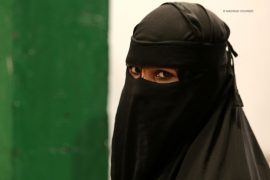
Long-standing compulsory hijab laws have functioned as a pretext for arbitrary detention and public humiliation. Still, in recent years, the regime’s use of these laws has become even more aggressive, entwined with an overall strategy to quash dissent in all its forms.
In this, the Revolutionary Guard operates not as an occasional enforcer but as a permanent mechanism of fear. Its presence on the streets and its imprimatur over judicial and security institutions blur the line between law enforcement and martial governance.
Mass detentions, beatings inside detention centres, and reports of torture are not aberrations but systematic features of a broader system of repression. The message from the state is clear: political expression, particularly when it challenges the core authority of the clerics, will be met not with dialogue but with lethal deterrence.
There is, in this narrative, a profound irony. Iran’s rich cultural history—its poetry, its philosophical traditions, its long history of urban public life—stands in stark contrast to the regimented violence of its present politics. The current repression is not merely an assault on bodies; it is an attempt to suffocate the imaginative space in which free societies grow. It equates visible dissent with sedition. In doing so, it seeks to collapse the civic sphere into a perpetual state of survival.
And yet, for all the suffering and the institutionalised cruelty, there remains a stubborn flame of resistance among the Iranian people. From the bazaars of Tehran to the small towns of Ilam province, we see evidence of a society that refuses to be subdued. The very existence of continuing protests—even under the threat of mass violence and digital isolation—is a testament to a human yearning that cannot be extinguished by force alone.
The international conversation around Iran’s internal repression often gravitates toward geopolitical stakes, but the lived reality for Iranians is not a matter of strategy; it is a matter of daily life and survival. These are individuals and families confronting impossible choices: whether to march in the streets or stay at home in fear, whether to speak out or be silenced, whether to endure repression in hope of change or to flee in search of safety. Each choice is a testament to the endurance of human dignity in the face of systemic coercion.
That endurance should compel us, as observers beyond Iran’s borders, to reflect not only on the scale of the atrocities but on the moral contours of the forces unleashed in their name. When a state systematically devalues the lives of its own citizens—when it responds to anguish and dissent with bullets, blackouts, and prisons—it confronts the universal principles of human rights and dignity at their core.
The question we face is not merely how many have suffered or how many will continue to suffer, but what it means when the very apparatus of sovereignty is wielded as an instrument of fear against the people it is supposed to protect. In contemplating the tragedy unfolding in Iran, we are reminded that the fight for human rights is not a static metric but a living testament to the resilience inherent in every human being.
Even in the darkest chapters of repression, the human spirit’s refusal to be extinguished is itself an indictment of tyranny—and a reason to bear witness with clarity, honesty, and sustained attention.
-30-
Copyright©Madras Courier, All Rights Reserved. You may share using our article tools. Please don't cut articles from madrascourier.com and redistribute by email, post to the web, mobile phone or social media.Please send in your feed back and comments to [email protected]