From the ancient Code of Hammurabi to modern international law —clearly articulated in Article 34 of the Convention on the Rights of the Child (CRC)—most societies have recognised the basic moral obligation to protect children from violence and sexual exploitation. Across millennia, legal systems have differed in form, but not in principle.
The protection of children has long been regarded as a foundational duty of justice. But as the war against Iran escalates, preliminary reports suggest that the deadly Tomahawk cruise missiles that killed more than 150 school girls in Shajareh Tayyebeh girls’ elementary school in Minab in southern Iran were likely fired by the United States. The attack reportedly involved a “double tap” strike (hitting the same target multiple times), which deepens suspicion about intent, particularly as first responders were attending to the victims.
For a military establishment that prides itself on technological superiority and precision-guided munitions, the explanation that an elementary school could be mistaken for an Islamic Revolutionary Guard Corps (IRGC) installation strains credulity. The controversy deepened when President Donald Trump, facing mounting international scrutiny, claimed that the school had been struck by an Iranian missile that had gone off course due to the inaccuracy of Iran’s weapons.
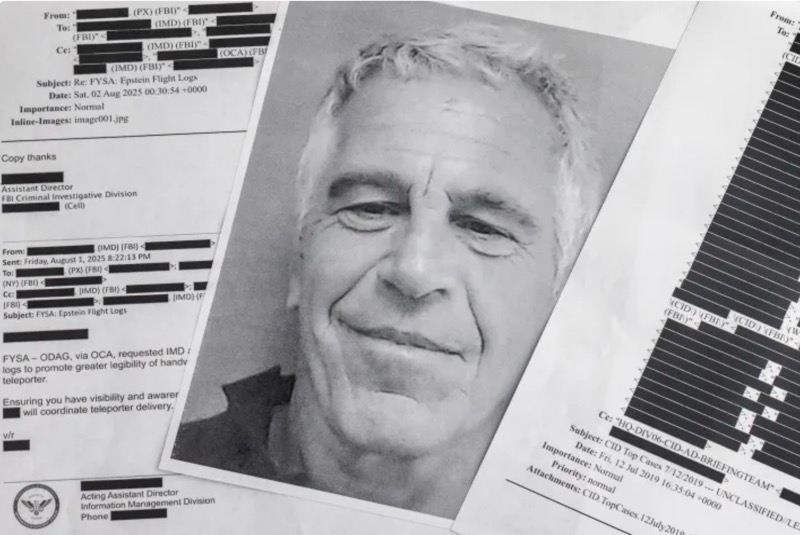
The claim also collapses under basic temporal logic: Iranian forces would have had no reason to launch retaliatory missiles before they knew they were at war. Amidst the spiralling conflict, on 6 March 2026, the US Department of Justice (DOJ) released an additional tranche of Epstein files with sordid details of Trump’s alleged dalliances with a minor girl in the 1980’s.
The long-running Epstein files case raises profound questions on the network of wealth, power and privilege regressing into a world of debauchery and vice. The global elites—in finance, politics, business, academia, and royalty—stand accused of perpetrating unspeakable crimes against underage girls.
In a world defined by volatility, uncertainty, complexity, and ambiguity, many structures of power are already under strain. If anything must remain constant, it is character. Leadership ultimately rests not only on authority or achievement, but on trust. Those who occupy positions of influence must continually earn that trust. It is not merely transactional but relational, and its erosion carries consequences far beyond individual reputations. Power without character corrodes institutions from within.
The defining characteristic of the Epstein Files is their destabilising quality. It transcends political parties and cuts across partisan boundaries. The scandal threatens not only the reputation of the lecherous shenanigans in the corridors of power, but also the credibility of institutions that govern public life.
When the highest office of American public life, the US presidency itself, is caught in the maelstrom of scandal, the US institutions and the universal values they sanctimoniously pontificate begin to crumble. Though the US is fighting an Israeli war of choice, President Trump’s decision to join an illegal act of aggression is driven by the need to distract public opinion from his role in the Epstein files.
The Prussian strategist, Carl von Clausewitz, encapsulated this diversionary strategy as “continuation of politics by other means.” Scandals unfold through exposure, steady accumulation of facts and protracted investigation. They generate competing sets of narratives and counternarratives from critics and incumbent governments. Since it is not time-sensitive, it has less moral urgency for speedy resolution. It offers rich fodder for prime-time debates and often regresses into tedious harangues between partisan camps. The political opposition leverages this theatre of moral reckoning through a continuous barrage of accusations and deliberations.
Scandal raises the spectre of waning popularity for the populist leader, especially for a leader like Trump, whose myopic economic and foreign policies are condoned by the MAGA verse without due diligence. Eventually, when a scandal threatens to puncture the myth of infallible leadership or tarnish the “cult of personality,” the temptation to change the political subject becomes irresistible.
In this context, there is nothing that stirs the American political imagination more than the country’s geopolitical tensions with Iran. An ongoing war with Iran arrives with an unprecedented force of urgency, augmented by a steady stream of propaganda and distortion in much of the Western media landscape.
The institutionalised narrative condemns the Iranians as the “evil regime”, a characterisation often invoked by Benjamin Netanyahu. The familiar logic is that if Iran is not contained, it will have devastating consequences not only for the Middle East’s peace and stability but also for the lives and property of Americans.
War narratives are accompanied by moral scripts that justify confrontation. In the case of Iran, these scripts often revolve around social freedom and women’s empowerment. While legitimate concerns exist, the portrayal is frequently selective. Iran today records remarkably high female university enrollment, strong participation of women in medicine, and notable achievements in STEM education—social realities that rarely find space within Western commentary.
The paradox is striking: the same society routinely depicted as irredeemably oppressive has produced one of the most highly educated female populations in the region. At the same time, structural reforms to address Iran’s persistently low female labour-force participation (FLPR) at 14.1% remain long overdue, highlighting a more complex reality than the simplified narratives often presented.
The Iran war has condensed the fragmented attention economy of the United States electorate, divided over the Epstein files, into a single consuming focus on the Iran war. Across millennia, external wars and geopolitical crises have often united the political class and fragmented the subjects. It had helped the empires and governments to thwart insurrections and societal fractures.
The Greek historian Thucydides observed in his account of the Peloponnesian War that conflict alters the emotional landscape of societies. He stated that “War takes away the supply of daily wants and so proves a rough master.” Throughout history, scandals waned when geopolitical crises intensified.
Donald Trump may have calculated that by joining Israel in this unprovoked war, he could redirect public anger over the Epstein files outward. History is replete with such political manoeuvres. External conflict has often served as a convenient instrument for governments confronting domestic controversy. The Roman historian Tacitus observed that Imperial Rome frequently redirected internal tensions toward frontier campaigns, turning public attention away from the fractures within.
The pacifist rhetoric that helped Donald Trump secure a second term—built on castigating previous American presidents for their supposed “fetish for war”—now appears increasingly hollow. Since returning to office, he has authorised military strikes across multiple countries, exposing the distance between campaign rhetoric and governing reality.
Donald Trump’s foreign policy has increasingly unsettled even America’s allies. His repeated public humiliation of allied governments, threats to annex Greenland, the military operation that led to the capture of Venezuelan leader Nicolás Maduro, and the growing focus on Cuba together suggest a troubling trajectory in U.S. diplomacy. These moves violate long-standing norms of sovereignty and international law. They have, understandably, drawn condemnation from allies and international institutions.
The rhetoric and methods employed evoke the image of a lawless American Wild West, not that of modern statecraft. Far from projecting strategic coherence, they risk exposing a deeper dysfunction in U.S. foreign policy. The problem is compounded by the appointment of sycophants and amateurs to key positions of governance, implying that ideological loyalty has replaced diplomatic competence at the highest levels of American decision-making.
When incompetence manifests as corruption, economic mismanagement, illegal tariffs, ICE atrocities on legitimate US citizens, compounded by Epstein files that seek to expose personal integrity and morality, the public sentiment towards the administration quickly turns hostile. Even the MAGA voter base, who consider Trump as their saviour to restore the heydays of white supremacy, begin to show signs of fatigue and disillusionment.
The ancient Chinese strategist Sun Tzu observed in The Art of War that political authority often relies on the ability to shape perception and direct collective attention. As he famously wrote, “In the midst of chaos, there is also opportunity.” The chaos of the Iran war is directed at unifying the American society that is fragmenting with increased economic malaise and social tensions, and more importantly, to divert public and media attention from the potentially devastating Epstein files.
Amidst the expanding Iran war, a religious vocabulary of the conflict has emerged in Washington. Prominent US pastors have prayed over Trump in the Oval Office and framed the war as one ordained by God, portraying the president as the chosen one to defend Israel and confront Iran.
Pete Hegseth, the US Secretary of War, has invoked Bible scriptures in his speeches to reposition this war in moral and theological terms. His signature statement, “we will not show them mercy,” is an anathema to the foundations of the Judeo-Christian worldview centred on mercy, justice and compassion. Such indifference to human pain and suffering corroborates the war crimes committed by US-Israeli forces in Iran, bombing civilian apartments, schools, and hospitals, and thus murdering innocent civilians. Allegations are rife that US military commanders have exhorted the troops to approach the warfront with unwavering conviction that they are participating in a Holy War.
The fusion of religion, politics, war, and divine sanction is hardly new and has been a quintessential characteristic of Abrahamic religions. During the Council of Clermont, where the First Crusade was proclaimed, Pope Urban II rallied European knights with the famous phrase, “Deus vult”, meaning “God wills it.”
Medieval European monarchs mobilised their societies through the language of holy war during the Crusades, while later empires frequently invoked divine providence to legitimise expansion and military campaigns. As the British American author and journalist Christopher Hitchens observed, religion often arrives armed with the exclusive certainty of divine approval. Once war assumes a sacred justification, geopolitical conflict is no longer debated as policy; it is defended as destiny. The religious symbolism embedded in the war against Iran is directed at transforming a catastrophic geopolitical decision into a moral obligation.
Amidst the visceral mental imagery of war punctuated by explosions, military movements, missile strikes, bombings and fireballs, rhetoric, death and destruction of the Iran war, Epstein files recede from the collective consciousness of American life.
But the justifications and religious connotation of this war don’t repudiate other perennial truths enshrined in the same tradition. The New Testament, especially Luke 12:3, reminds the world, “Therefore whatever you have said in the darkness will be heard in the light, and what you have whispered behind closed doors will be proclaimed on the housetops.”
-30-
Copyright©Madras Courier, All Rights Reserved. You may share using our article tools. Please don't cut articles from madrascourier.com and redistribute by email, post to the web, mobile phone or social media.Please send in your feed back and comments to [email protected]